Physical Address
304 North Cardinal St.
Dorchester Center, MA 02124
Physical Address
304 North Cardinal St.
Dorchester Center, MA 02124
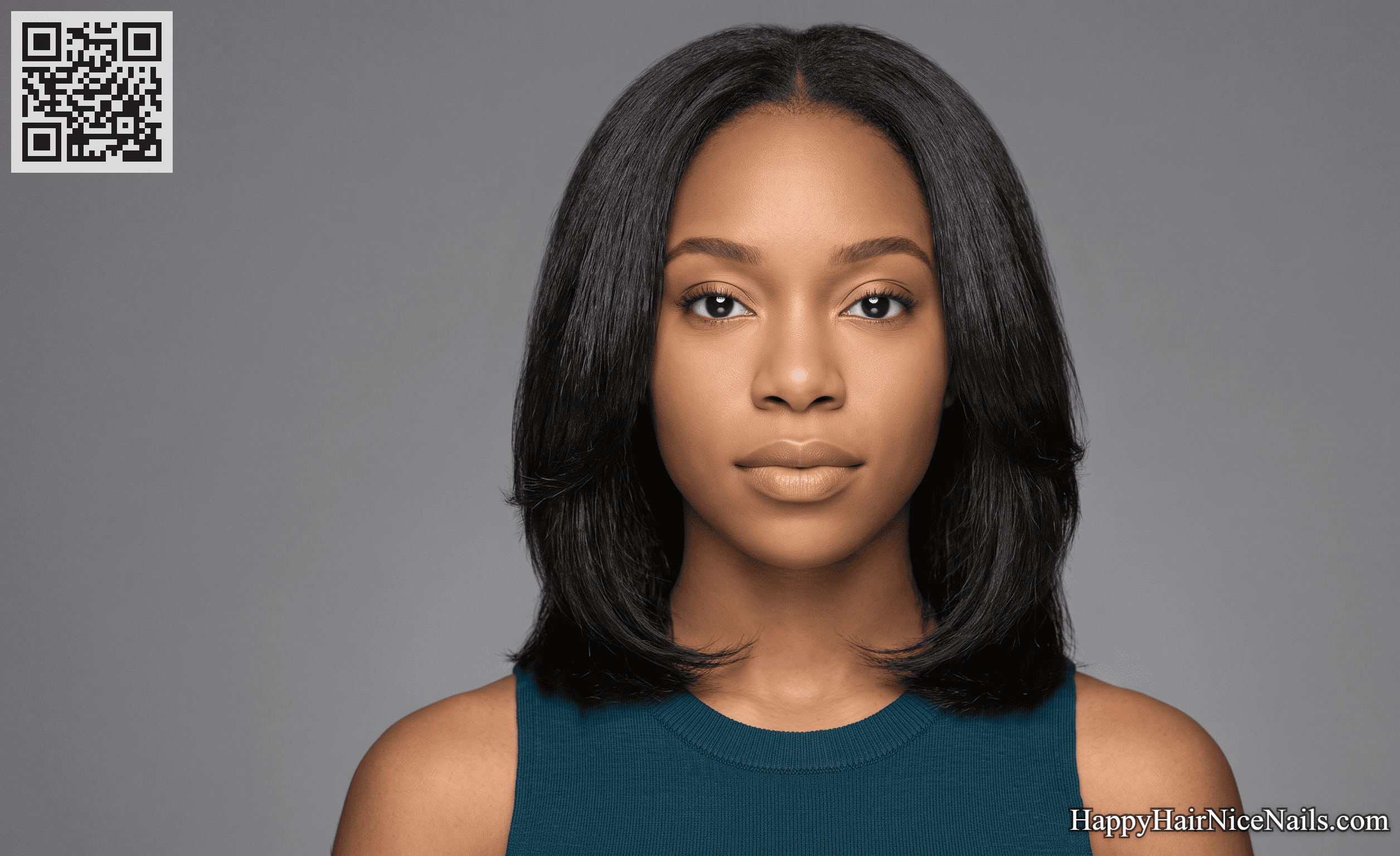
A round face has soft curves, a wide midpoint, and few sharp angles, which means the right haircut can add definition without fighting the natural shape. Lob hairstyles for round face shapes work so well because the length sits right at the jaw or below, drawing the eye downward and adding subtle length to the face. This sits neatly under the wider world of lob hairstyle options, but round face shapes need a slightly different approach than oval or square faces. Below are 21 distinct takes on lob hairstyles for round face types, each built around a different layering method, texture, or styling technique.
For a wider look at everything the lob has to offer, the Lob Hairstyle pillar article covers the full range of lengths and styles beyond round-face-specific cuts. For wide variety check Lob with Curtain Bangs, Lob for Fine Hair, Blunt Lobs and Lobs for Wavy Hair.
A lob (long bob) usually falls between the chin and the collarbone, which is exactly the zone that helps balance a round face. According to general hair-cutting theory on face shape and haircut proportion, layering and length placement can visually shift where the eye lands on the face, either widening or narrowing the perceived width. For lob hairstyles for round face shapes specifically, the goal is usually to avoid width at the cheekbone level and instead build movement below the jaw. That’s why layering placement, fringe style, and part direction matter so much more here than on other face shapes. Every entry below approaches that goal differently, using different hair types, densities, and finishing techniques.
This is one of the most requested lob hairstyles for round face types because the layering only begins at chin level, leaving the crown smooth and untouched. The lower sections fan out slightly, adding width at the ends rather than at the cheeks. It keeps the top close to the head while letting the bottom do the visual work.
Best for: Fine, straight hair
Face shape: Round, square
Styling technique: Blowout with round brush
Why it stands out: The layering placement is deliberate, adding body exactly where fine hair needs it without flattening the crown.
Ideal for: Fine-haired individuals who want structured volume with minimal daily effort.
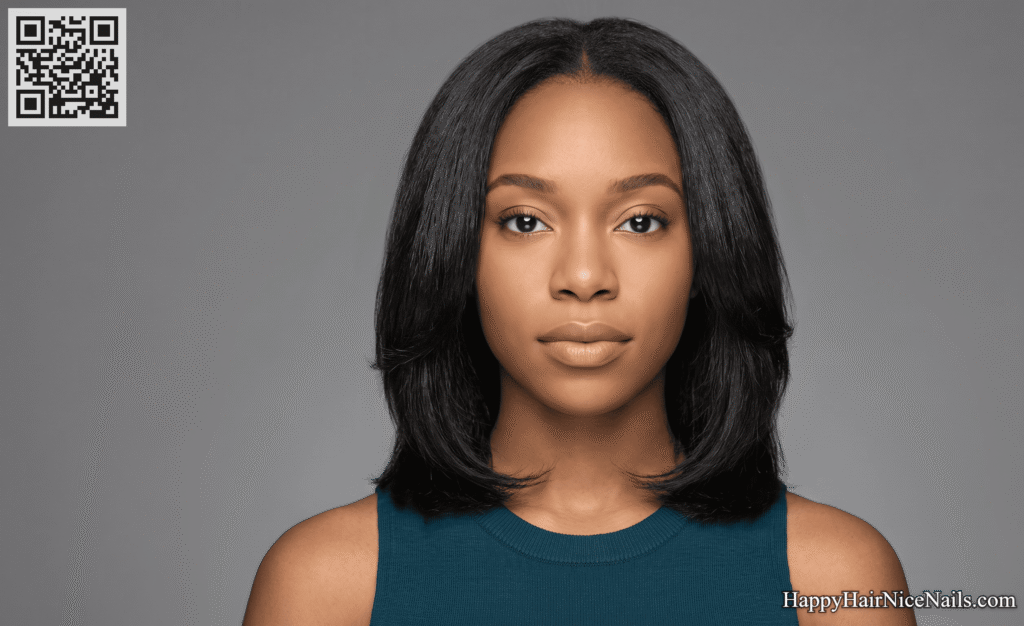
Curtain fringe splits down the middle and sweeps outward along the cheekbones, cutting across the widest part of a round face. Paired with a lob length, it breaks up horizontal width and adds diagonal lines that lengthen the face. The rest of the lob stays fairly blunt to let the fringe stand out as the focal point.
Best for: Wavy, medium-density hair
Face shape: Round, oval
Styling technique: Air-dried with light diffusing
Why it stands out: The diagonal fringe lines do more face-shaping work than the length itself.
Ideal for: Anyone wanting a soft, French-girl aesthetic without committing to a full fringe.

This lob keeps a completely blunt outer edge but hides internal texturizing cuts beneath the surface. From the outside it reads as sleek and geometric, but the interior layering removes bulk so it doesn’t sit like a heavy block around the cheeks. It’s one of the more tailored lob hairstyles for round face shapes that still want a clean silhouette.
Best for: Thick, straight hair
Face shape: Round, heart
Styling technique: Flat-ironed with a paddle brush blowout underneath
Why it stands out: The blunt outline looks sharp and modern while the hidden layers keep it lightweight.
Ideal for: Thick-haired individuals who want a graphic shape without excess bulk.
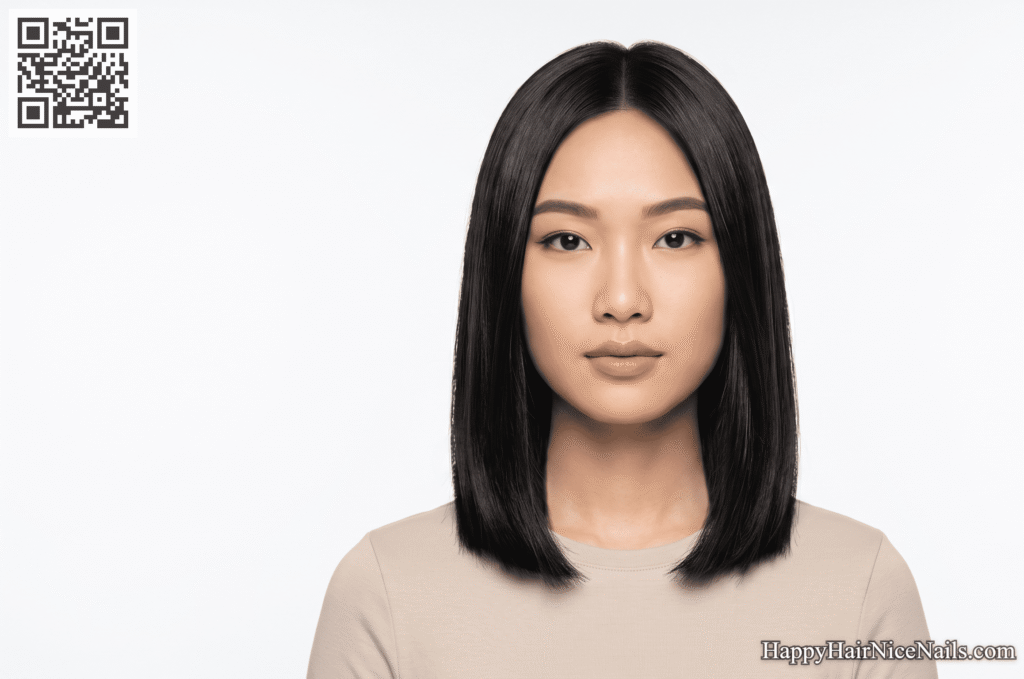
Rather than fringe, this variation uses long layers that start near the ear and taper down past the chin, hugging the sides of the face like soft brackets. The length pulls the eye vertically instead of horizontally, which is exactly what round face shapes benefit from. The back stays slightly shorter to keep the shape from looking heavy.
Best for: Medium-thickness, straight to slightly wavy hair
Face shape: Round, oblong
Styling technique: Round-brush blowout with an outward flick
Why it stands out: The layer placement is engineered specifically to stretch the face vertically.
Ideal for: Anyone whose main goal is a slimming, elongating effect.
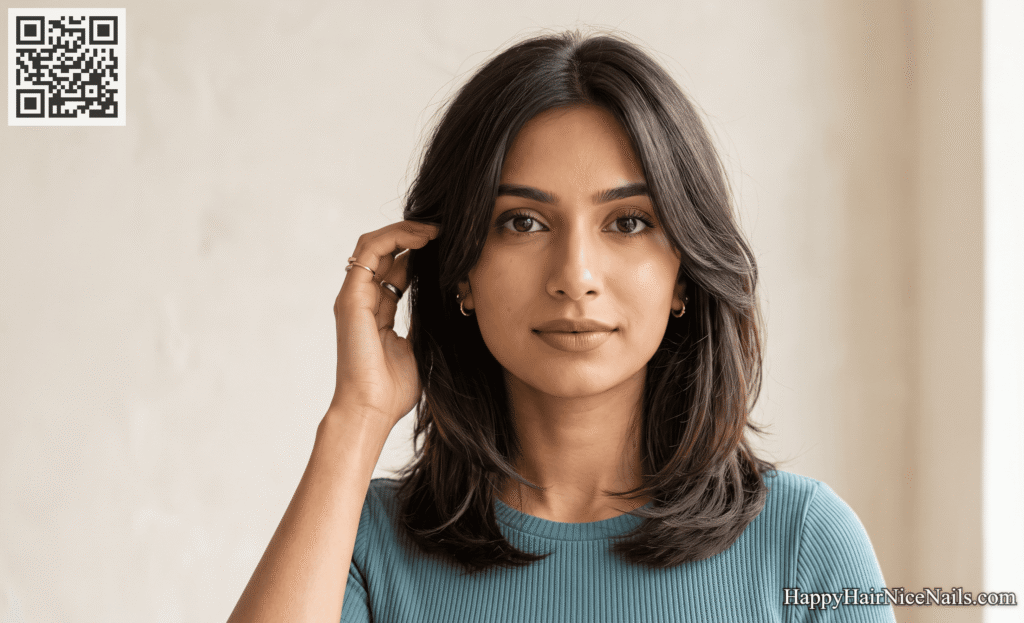
Choppy ends use disconnected, jagged cutting rather than smooth layering, giving the lob an undone, lived-in edge. On a round face, the irregular ends break up the roundness at the jawline instead of following its curve. This style pairs naturally with second-day hair and doesn’t need much styling to look intentional.
Best for: Wavy, medium to thick hair
Face shape: Round, square
Styling technique: Scrunched with a texturizing spray
Why it stands out: The deliberately uneven ends create asymmetry that a round face doesn’t naturally have.
Ideal for: Low-maintenance wearers who like an edgier, undone look.
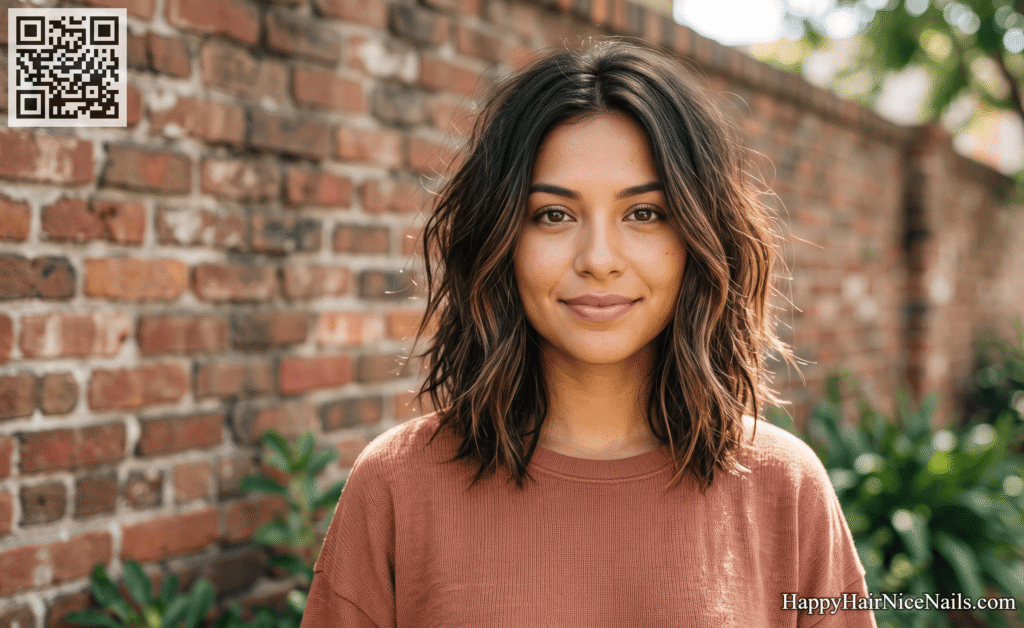
Feathering uses fine, delicate cuts along the ends rather than choppy chunks, so the hair tapers out gradually instead of ending in a hard line. On round faces, this softens the jaw without adding sharp angles, giving a gentler transition than blunt or choppy styles. It works especially well on hair with natural body.
Best for: Fine to medium wavy hair
Face shape: Round, heart
Styling technique: Diffused air-drying
Why it stands out: The feathering creates movement without any single dramatic focal point.
Ideal for: Those who want texture but find choppy or blunt cuts too severe.
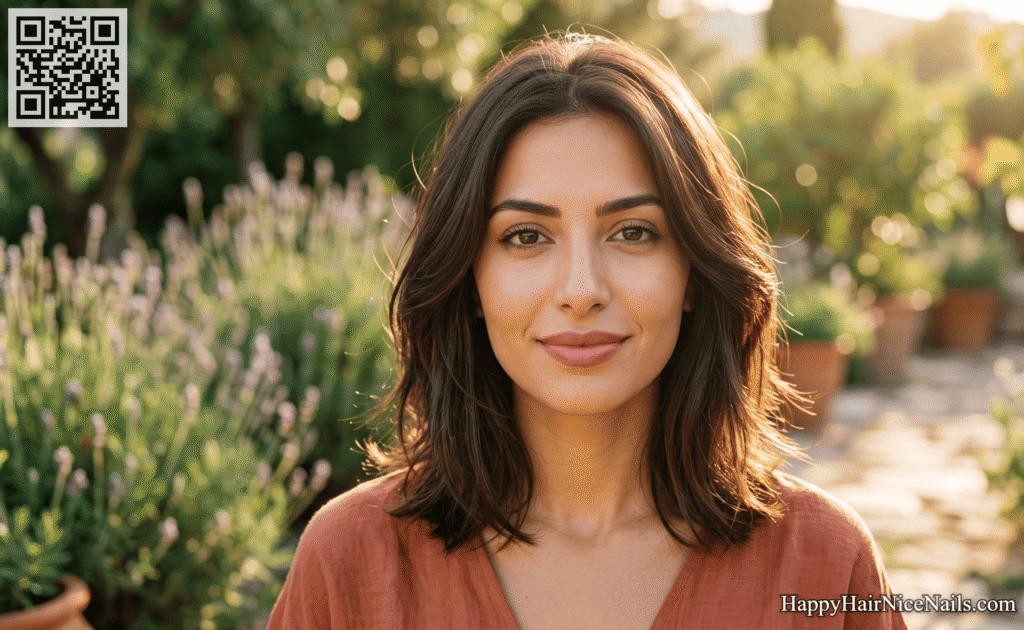
Invisible layering removes weight from underneath the hair while keeping the outer shape looking like one solid length. This is ideal for round faces that want the slimming effect of layering without any visible steps or separation. The result reads as a single clean line from the front, even though the interior is fully layered.
Best for: Thick, straight hair
Face shape: Round, oval
Styling technique: Blowout with a large round brush
Why it stands out: It delivers the benefits of layering while looking completely uncut from the outside.
Ideal for: Thick-haired individuals who want a lighter feel without a visibly layered look.
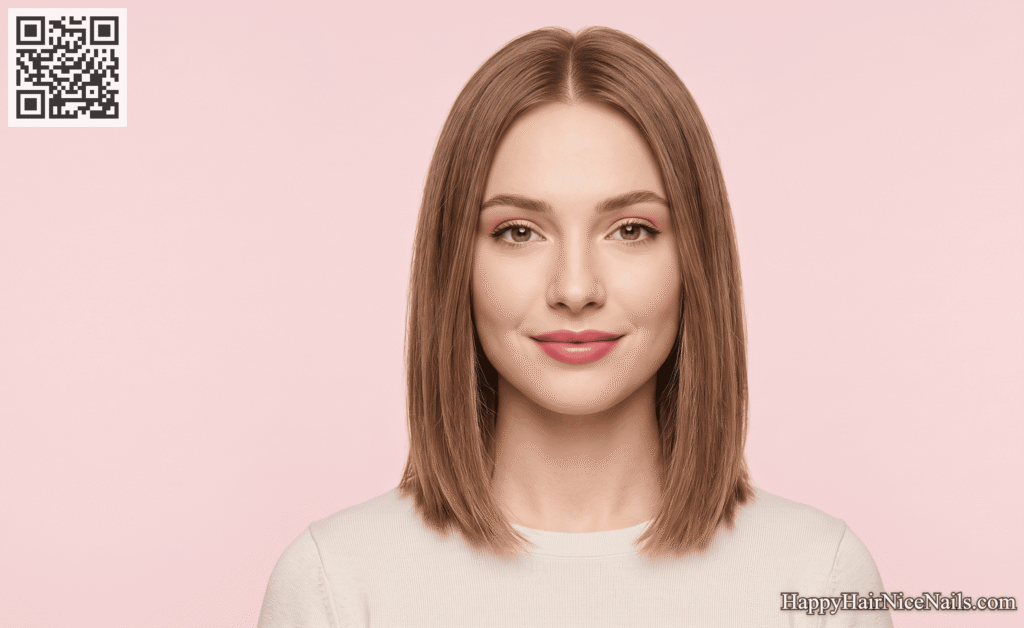
This version keeps one side noticeably longer than the other, creating a diagonal line across the jaw instead of a symmetrical curve. For round faces, the asymmetry introduces the sharp angle that the face shape naturally lacks. It’s a more dramatic option compared to the softer, evenly balanced styles on this list.
Best for: Straight, medium-density hair
Face shape: Round, square
Styling technique: Flat-ironed with directional styling
Why it stands out: It’s the only entry on this list built entirely around intentional asymmetry.
Ideal for: Bold style fans who want a graphic, editorial-leaning cut.
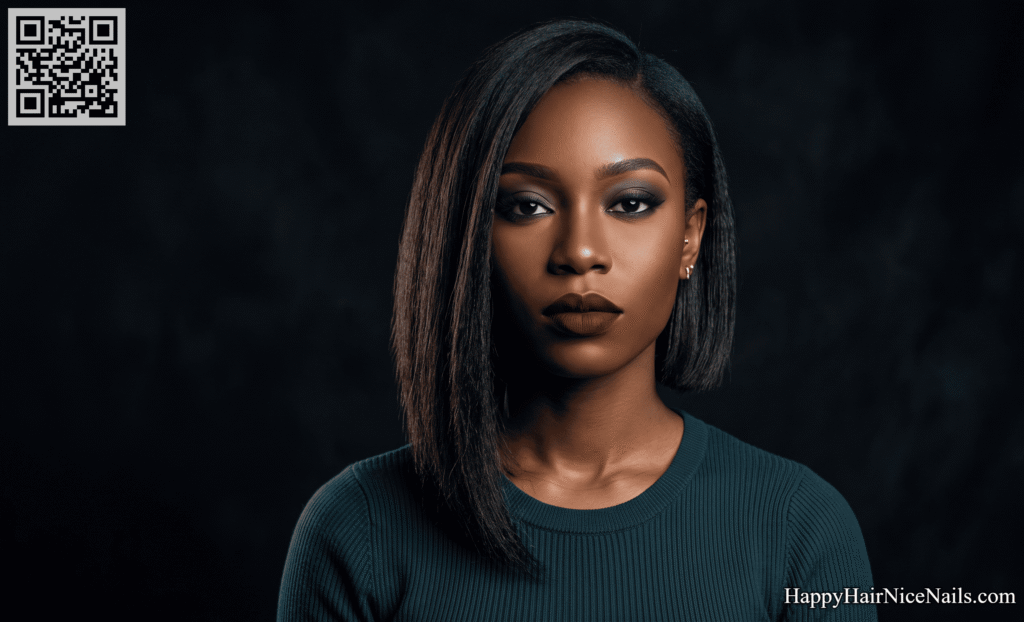
Built around loose, undone waves rather than precise layering, this style uses texture itself to break up roundness. The waves fall unevenly by nature, which prevents the hair from framing the face in one smooth, rounding curve. Sea-salt spray or texturizing mousse keeps the waves separated and matte rather than glossy.
Best for: Naturally wavy, medium-thickness hair
Face shape: Round, oval
Styling technique: Sea-salt spray with air-drying
Why it stands out: The texture does the shaping work instead of the cut itself.
Ideal for: Anyone who prefers a beachy, low-effort finish over a precise, styled look.

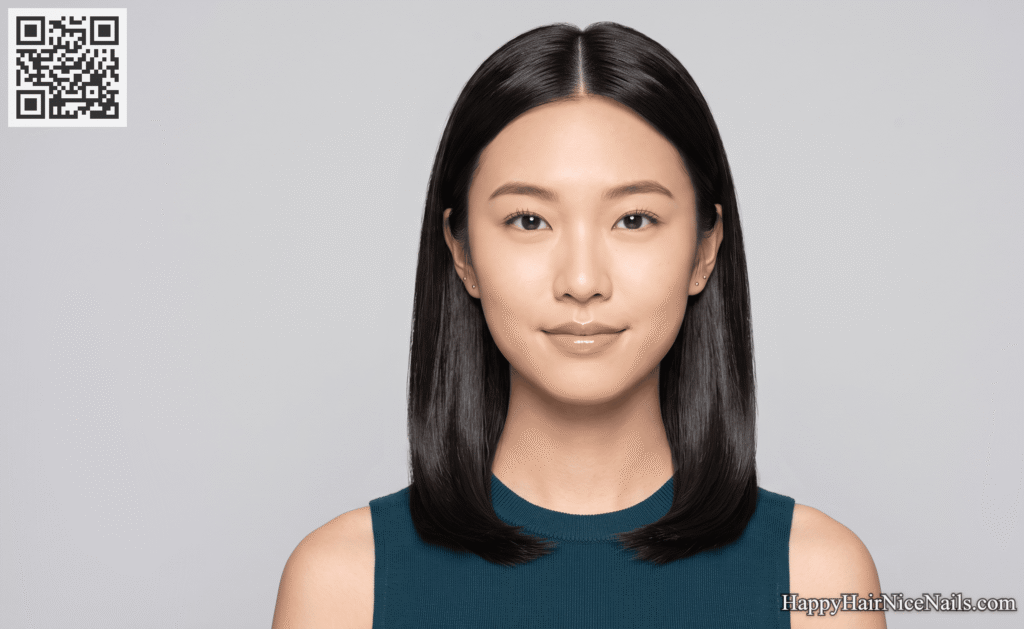
Straightened completely flat with a slight inward bend at the ends, this lob creates a clean vertical line down each side of the face. The inward curve at the tips gently cups the jaw and pulls attention downward, away from the width of the cheeks. It’s one of the more formal, polished lob hairstyles for round face shapes on this list.
Best for: Straight or chemically relaxed hair
Face shape: Round, oblong
Styling technique: Flat-ironed with an inward bend
Why it stands out: The subtle inward curve is a precise, engineered detail rather than a generic straight style.
Ideal for: Those who want a polished, office-appropriate finish.
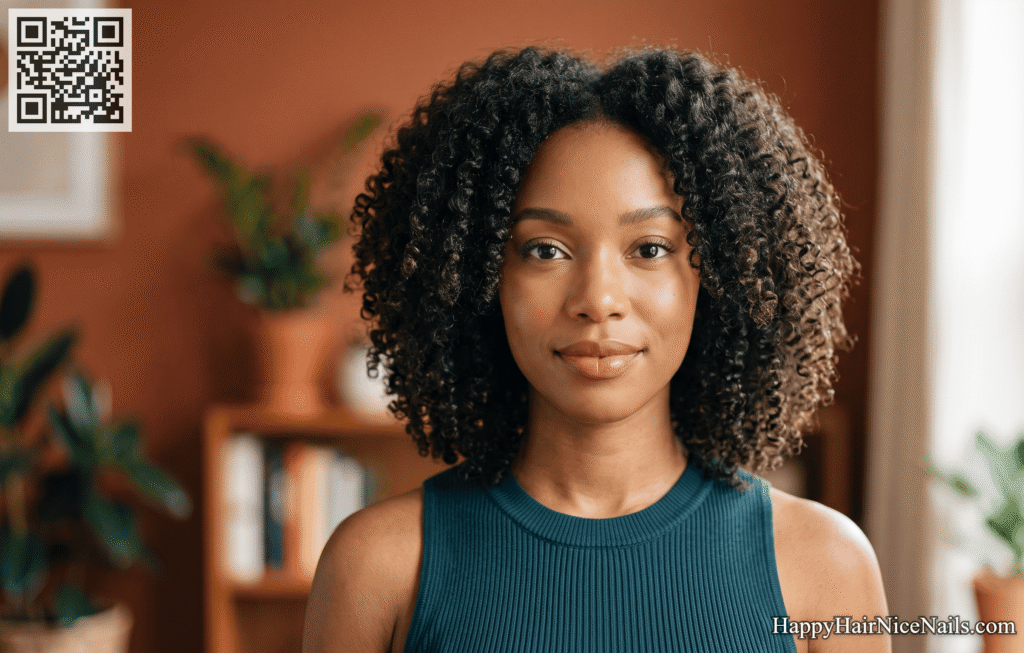
This entry focuses on natural curls cut into a lob length, diffused to encourage volume at the crown and definition at the ends. On round faces, the vertical bounce of defined curls counters the horizontal pull that curly hair can otherwise create. It’s shaped to keep width controlled at the sides.
Best for: Curly to coily hair
Face shape: Round, heart
Styling technique: Diffused with a curl-defining cream
Why it stands out: It’s the only fully curl-pattern-specific entry, built around natural texture instead of a cut technique.
Ideal for: Curly-haired individuals who want definition without excess width.
A deep side part shifts the weight of the hair unevenly across the head, which naturally narrows the appearance of a round face by breaking the usual center-symmetry. One side falls closer to the face while the other sweeps back, creating a diagonal line across the forehead and cheek.
Best for: Medium to thick, straight hair
Face shape: Round, square
Styling technique: Blowout with a deep side part set with a clip
Why it stands out: The part placement alone does most of the face-shaping, without needing added layers.
Ideal for: Anyone wanting a subtle change without cutting new layers.
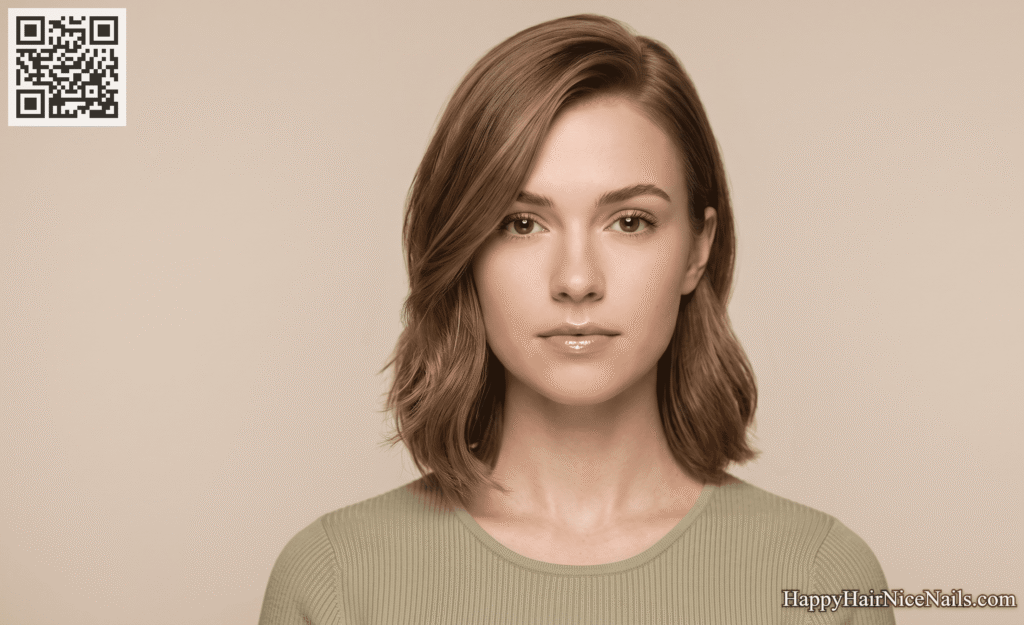
This version relies on a precise middle part and even length on both sides, paired with subtle layering that starts below the cheekbone. The symmetry keeps the style simple, while the layer placement prevents the roundness from being emphasized by two equal curves framing the face.
Best for: Straight to slightly wavy, fine to medium hair
Face shape: Round, oval
Styling technique: Blowout with a center part
Why it stands out: It proves symmetry can still work for round faces when layering is placed correctly.
Ideal for: Wearers who prefer simple, classic styling over asymmetry.
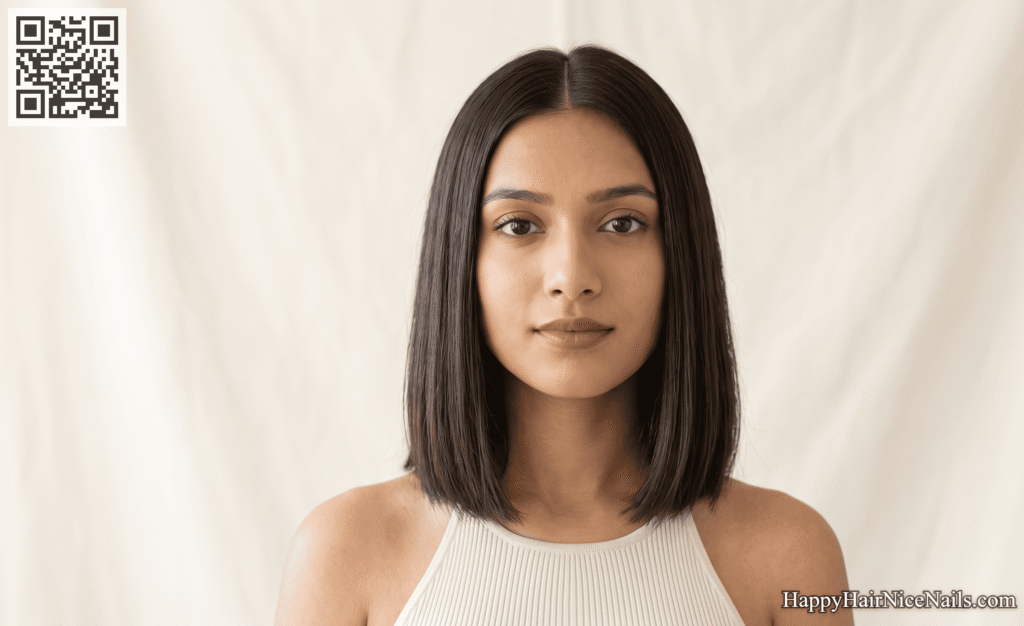
This cut is noticeably shorter in the back and gradually lengthens toward the front, creating a sharp diagonal line along the jaw. The forward-swept angle draws a strong vertical line past the chin, which counters the rounded width of the cheeks more aggressively than softer, symmetrical lobs.
Best for: Straight, medium-thickness hair
Face shape: Round, square
Styling technique: Flat-ironed with forward-directed styling
Why it stands out: The dramatic front-to-back length difference is more graphic than any other angled entry here.
Ideal for: Those who want a bold, modern silhouette with visible structure.
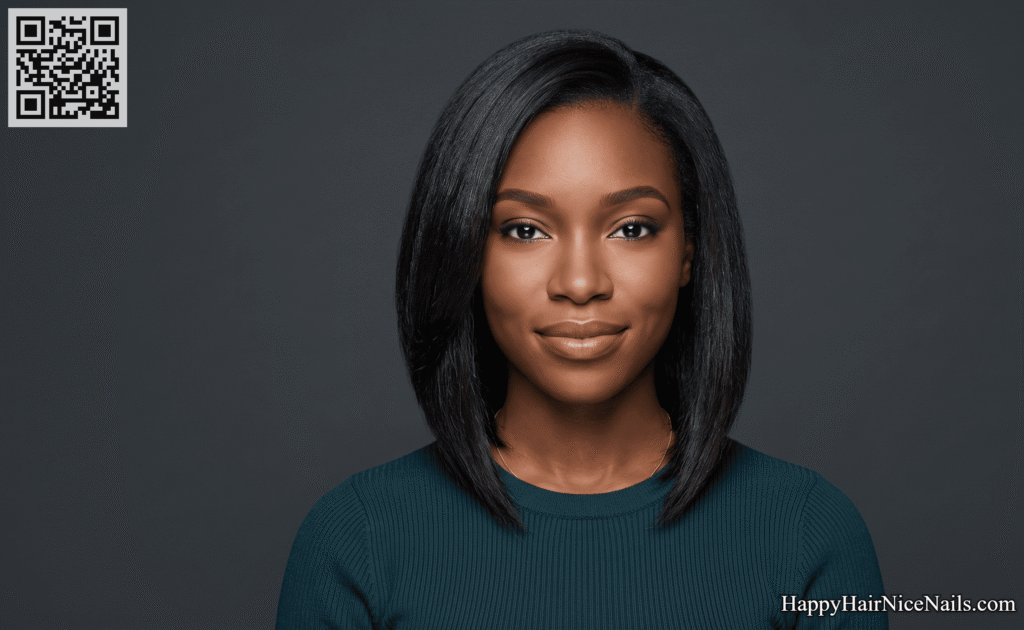
Point-cutting uses vertical snips into the ends rather than a straight horizontal cut, leaving the edges slightly frayed and irregular. This removes the smooth, rounded outline that can emphasize a round face and replaces it with soft, broken texture. It works especially well on hair with a bit of natural grip.
Best for: Medium to thick, slightly wavy hair
Face shape: Round, oval
Styling technique: Air-dried with a texturizing cream
Why it stands out: The point-cutting technique itself is the visual signature, not a specific length or part.
Ideal for: Anyone wanting texture that still looks intentional and tidy.
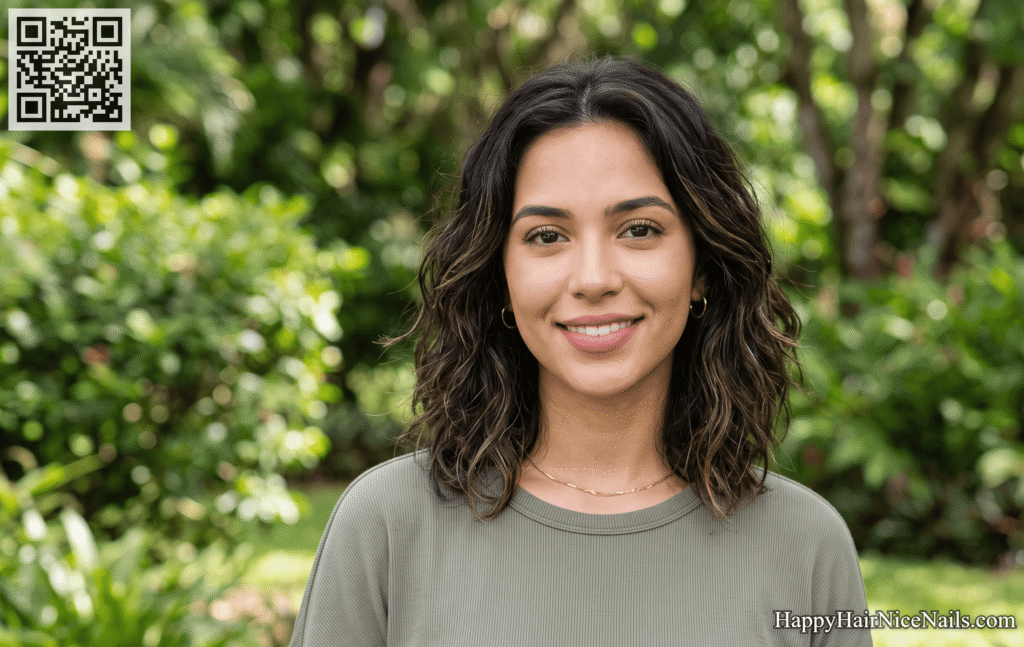
Designed specifically for dense, heavy hair, this lob uses multiple layers spaced evenly throughout to remove bulk while keeping length at the jaw. Thick hair can otherwise sit like a solid triangle around a round face, so the layering breaks that shape into softer, separated sections that move independently.
Best for: Thick, coarse hair
Face shape: Round, square
Styling technique: Blowout followed by a loose curling wand pass
Why it stands out: It’s built entirely to solve the specific problem thick hair creates on round faces.
Ideal for: Thick-haired individuals struggling with bulk and heaviness at the jawline.
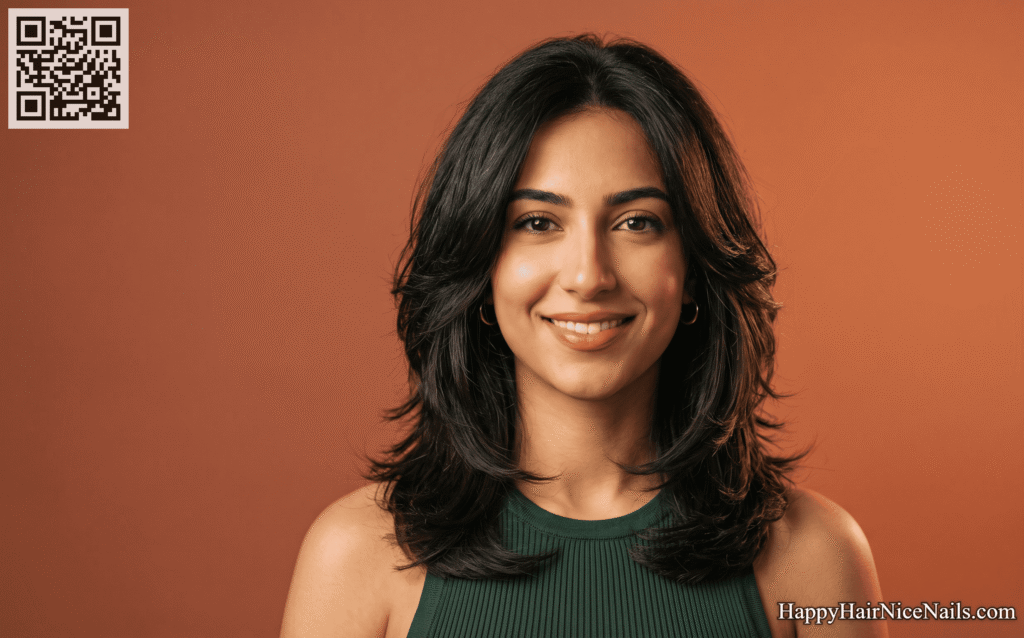
Built for the opposite problem, this lob uses minimal layering but relies on cutting technique and blow-dry direction to create the illusion of thickness. Volume is concentrated at the roots and mid-lengths rather than the ends, keeping the silhouette full without adding unwanted width near the cheeks.
Best for: Fine, thin hair
Face shape: Round, heart
Styling technique: Root-lifting blowout with a volumizing mousse
Why it stands out: It solves for fullness without relying on layering, unlike most other entries here.
Ideal for: Fine-haired individuals who want a fuller look without extensions.
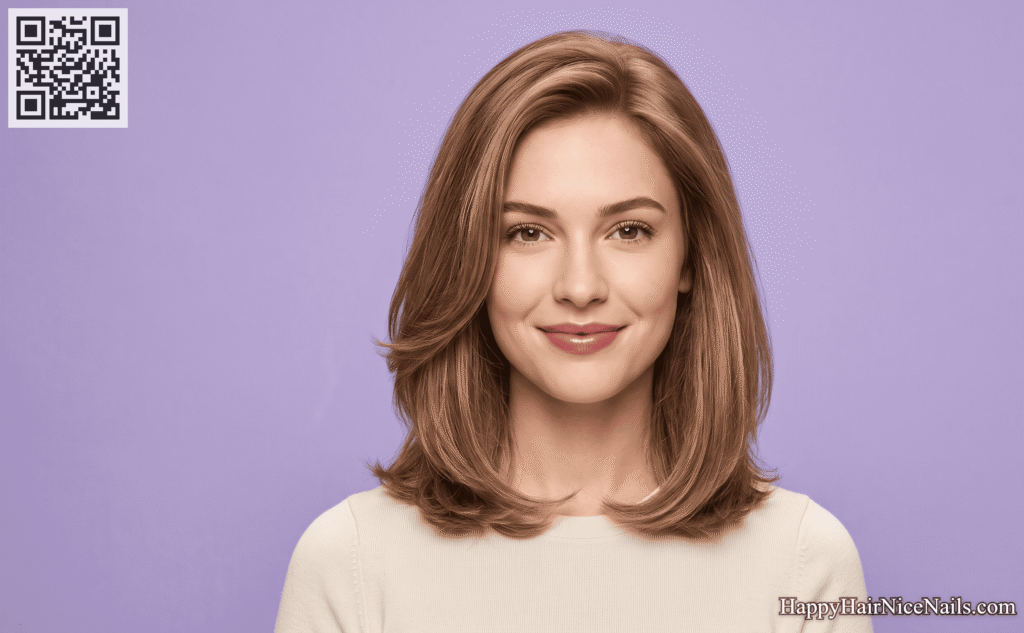
Borrowing from shaggier, wolf-cut inspired layering, this lob combines shorter face-framing pieces with longer layers underneath for a choppier, more textured overall shape. On a round face, the uneven layer lengths create visual breaks that a single smooth length wouldn’t provide, adding an edgier, less polished finish.
Best for: Wavy to curly, medium-thick hair
Face shape: Round, oblong
Styling technique: Diffused with a texturizing spray
Why it stands out: It borrows shaggy layering concepts and adapts them specifically to lob length.
Ideal for: Bold style fans wanting a trendier, more textured silhouette.
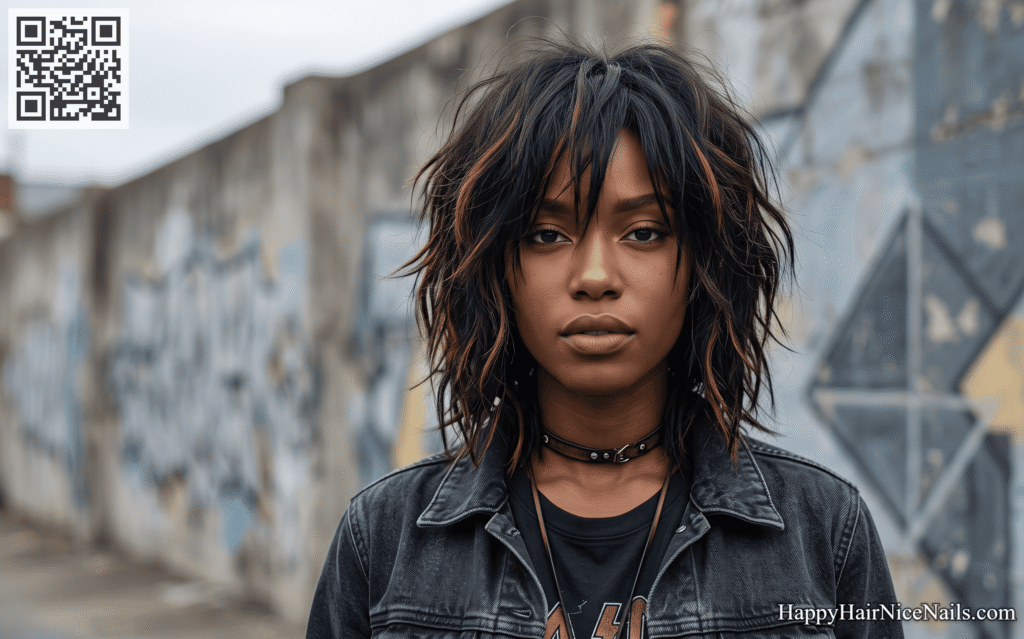
This style uses styling product rather than cutting technique to create distinct, separated pieces throughout the lob. Each section is defined individually, which breaks up what would otherwise be one continuous curved shape around the face. It’s a texture-driven finish rather than a specific cut pattern.
Best for: Straight to wavy, medium hair
Face shape: Round, square
Styling technique: Texturizing paste applied to dry hair
Why it stands out: The definition comes entirely from finishing technique rather than the underlying haircut.
Ideal for: Anyone who wants a textured look without committing to a heavily layered cut.
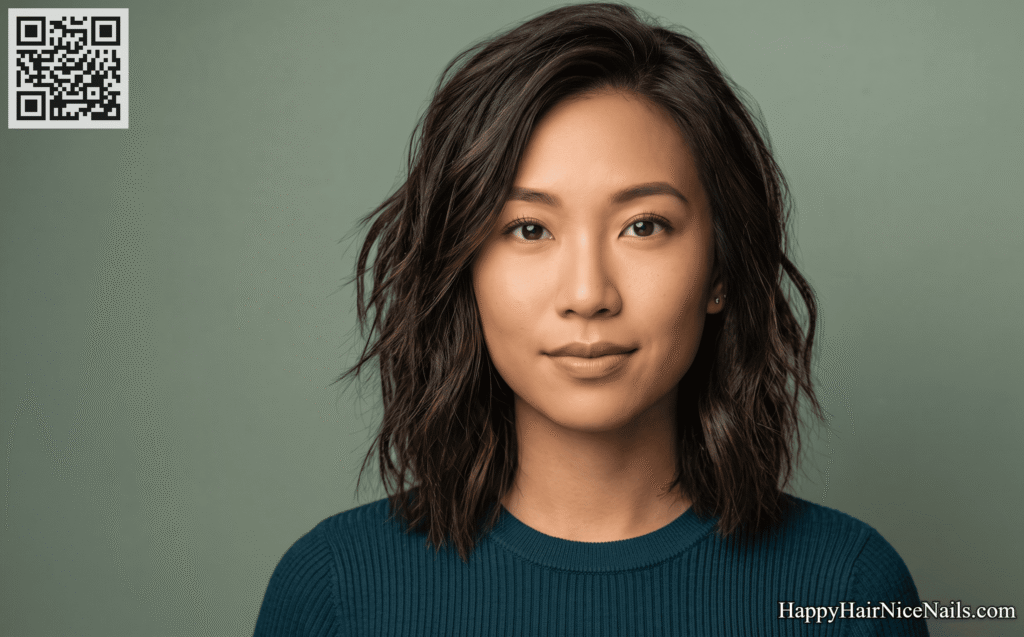
Here, the layers are cut entirely underneath the top section, invisible unless the hair is lifted or moved. From the front, the lob looks like one solid piece, but the hidden layering underneath reduces bulk and adds movement at the ends. It’s a quieter alternative to more visibly layered styles.
Best for: Medium to thick, straight hair
Face shape: Round, oval
Styling technique: Blowout with the ends flicked outward
Why it stands out: The layering is a hidden structural detail rather than a visible design feature.
Ideal for: Those wanting subtle movement without an obviously layered look.
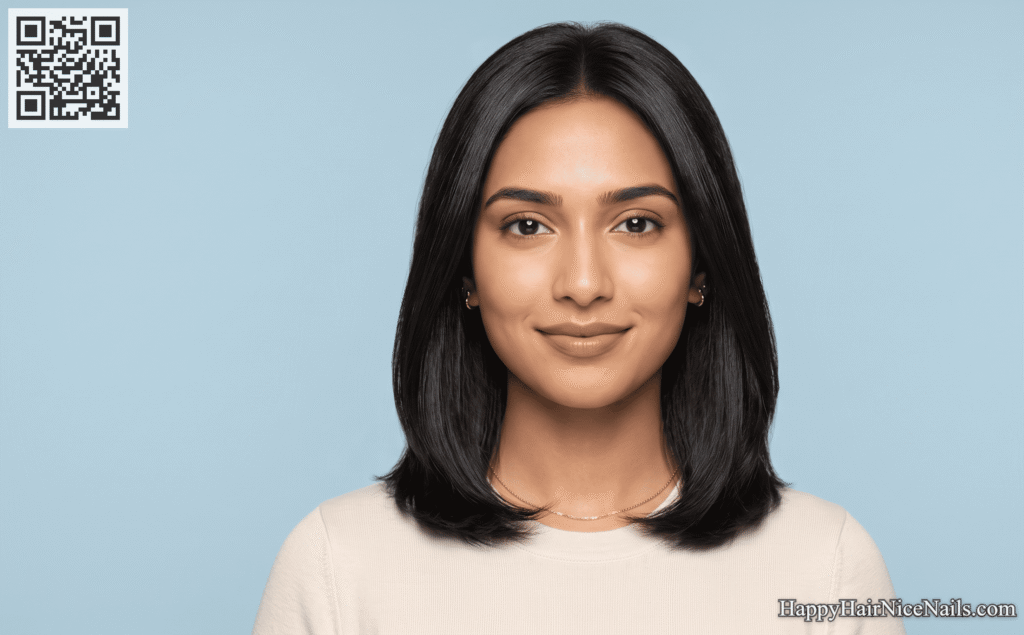
The final entry pairs a lob with a full, blunt fringe that sits just above the brows, shortening the visual length of the forehead while the rest of the lob elongates the lower half of the face. The two elements work together to rebalance the proportions of a round face from top to bottom.
Best for: Straight, medium-thickness hair
Face shape: Round, square
Styling technique: Blowout with a round brush focused on the fringe
Why it stands out: It’s the only entry that addresses the forehead area directly rather than just the jawline.
Ideal for: Anyone wanting a complete proportion shift rather than just a length or texture change.
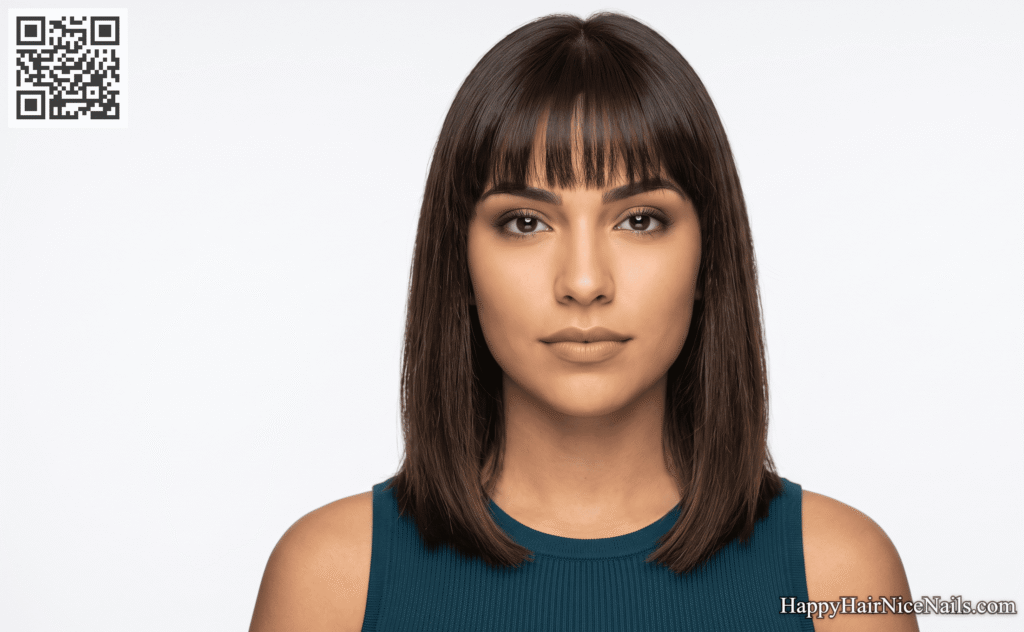
These 21 lob hairstyles for round face shapes prove that one face shape doesn’t mean one single cut. Whether the goal is more volume, more angles, or more softness, there’s a layering approach, fringe style, or texture technique here to match almost any hair type. Readers can also explore related guides on Blunt Bob Hairstyles, Layered Bob Haircuts, French Bob Styles, and Textured Bob Ideas for more inspiration.