Physical Address
304 North Cardinal St.
Dorchester Center, MA 02124
Physical Address
304 North Cardinal St.
Dorchester Center, MA 02124
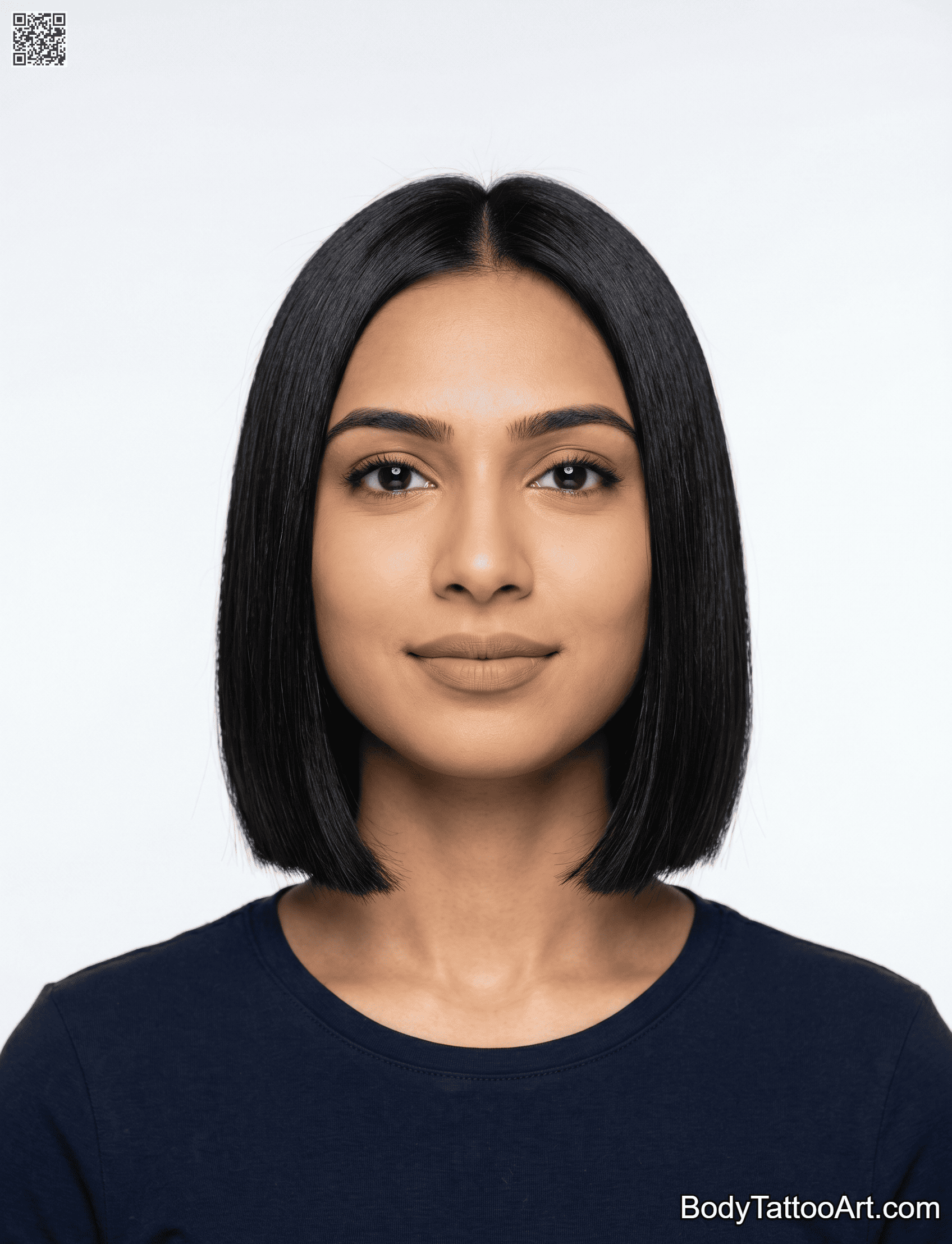
Bob hairstyles have been reinvented so many times that calling it “just a bob” no longer does the style justice. From sharp, geometric cuts to soft, wispy shapes that barely look styled, the range of bob hairstyles available today is genuinely impressive. This is a cut that works across hair types, lifestyles, and aesthetics — whether someone is after something polished and professional or messy and textured. The variety makes it one of the most searched haircut categories for a reason. Here are 28 distinctly different bob hairstyles worth exploring.
A bob is a short-to-medium cut where the hair is typically cropped somewhere between the chin and the collarbone. It’s one of the oldest and most culturally significant short hairstyles in modern history. The cut surged into mainstream fashion in the 1920s, when women began adopting it as a symbol of independence and departure from traditional femininity. Over the following decades, designers, stylists, and subcultures reshaped it into dozens of variations — from the precision geometric bob popularized by Vidal Sassoon in the 1960s to the tousled, effortless bobs seen on runways today.
For a detailed look at the bob’s history, evolution across decades, and cultural significance, the Wikipedia article on the bob cut is a well-documented resource.
Today, bob hairstyles are defined less by a single shape and more by the infinite range of ways the basic structure can be adapted — layered, stacked, razored, undone, structured, or left entirely to the hair’s natural texture.
A perfectly even, one-length bob cut precisely at the jaw — no layers, no graduation, no internal texture. Every strand lands at the same horizontal point, creating a dense, uniform weight line that sits right at the chin. On straight hair, it moves as one solid panel. The clean geometry of this cut is its entire identity — nothing interrupts the line.
Best for: Straight Bob Hairstyles, fine-to-medium density hair
Face shape: Square, oval
Styling technique: Blowout with a paddle brush, ends tucked inward with a flat iron
Why it stands out: The complete absence of layers means the entire visual weight sits at the perimeter. The result is a perfectly architectural bottom edge that reads as one seamless line from ear to ear.
Ideal for: Minimalists, those in corporate environments, anyone who prefers structure over movement.
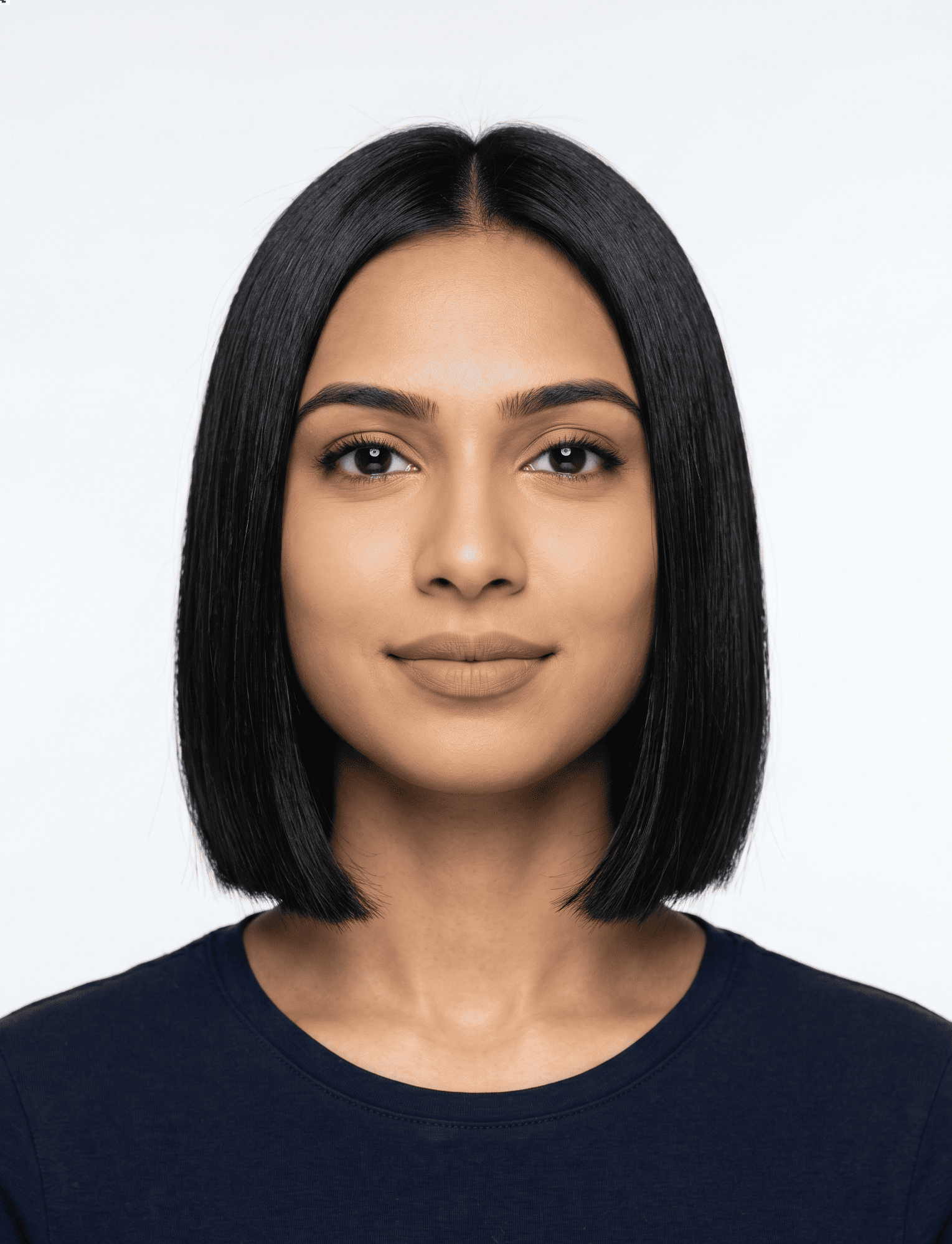
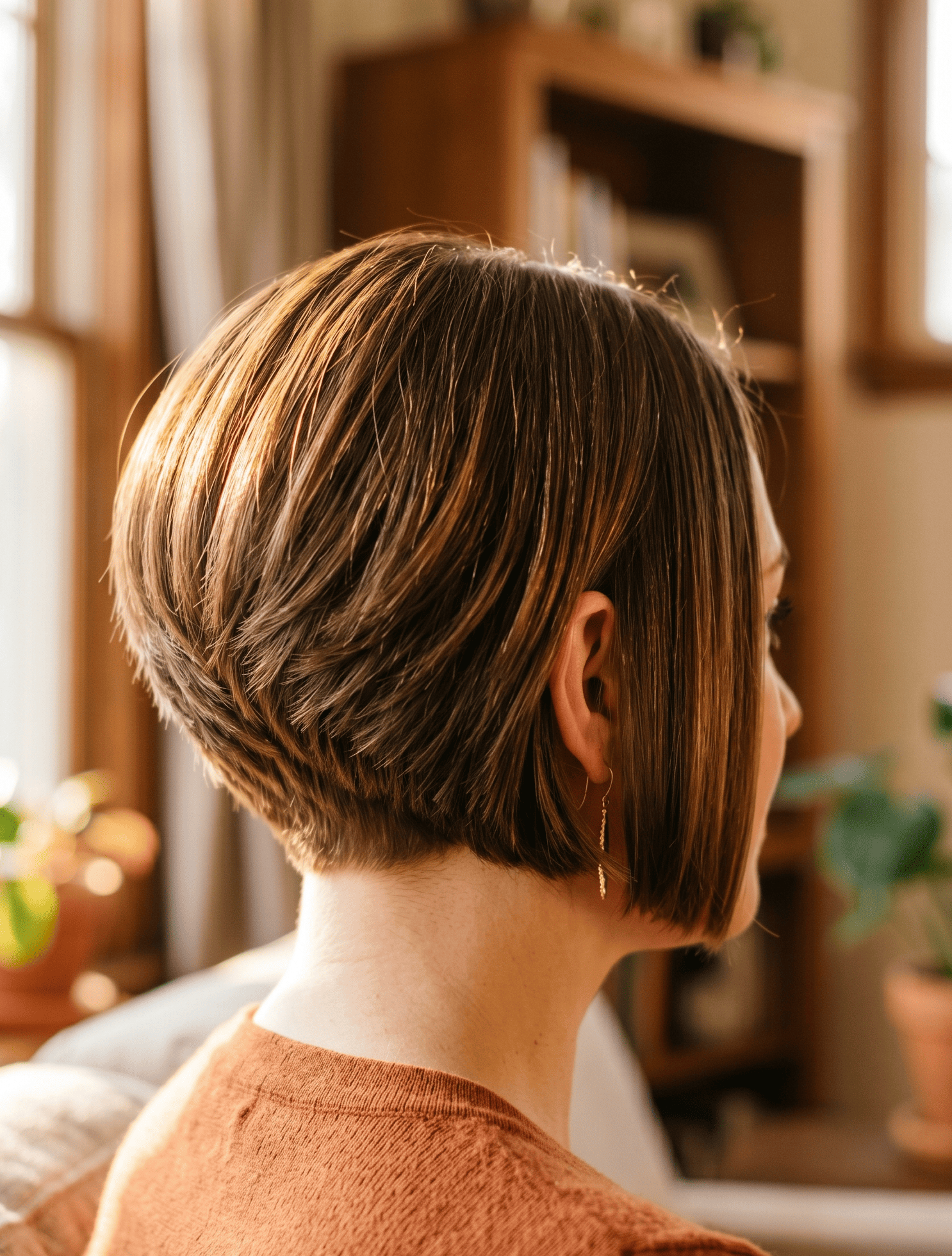
Short and rounded at the nape with closely stacked graduation that creates a convex curve at the back of the head. The front sections stay longer — falling to the chin — while the back layers build upward in tight, stacked increments. Seen from behind, the stacked section creates a smooth dome shape. From the front, it reads like a regular chin-length bob.
Best for: Straight to slightly wavy, fine to medium hair
Face shape: Round, square, oblong face Bob Hairstyles
Styling technique: Blowout directed toward the back of the head at the nape to maximize the rounded shape
Why it stands out: The architectural contrast between the very short, tightly stacked nape and the longer chin-length front panels creates a silhouette that looks completely different depending on the angle.
Ideal for: Those who want volume and structure at the back without adding bulk at the sides.
A jaw-length bob loaded with heavy internal shag layers and topped with long curtain bangs that part softly in the center and sweep outward past the eyebrows. The shag layers create multiple break points throughout the hair so no section falls as one flat mass. The curtain bangs blend into the layers rather than sitting as a separate piece.
Best for: Wavy or lightly wavy, medium-density hair
Face shape: Heart, oval, round face Bob Hairstyles
Styling technique: Diffused on damp hair with a curl cream for soft wave definition
Why it stands out: The curtain fringe dissolves into the shag layers seamlessly, so the whole cut reads as one connected, lived-in texture rather than a bang-plus-bob combination.
Ideal for: Retro-inspired dressers, those who want movement and personality from a single cut.

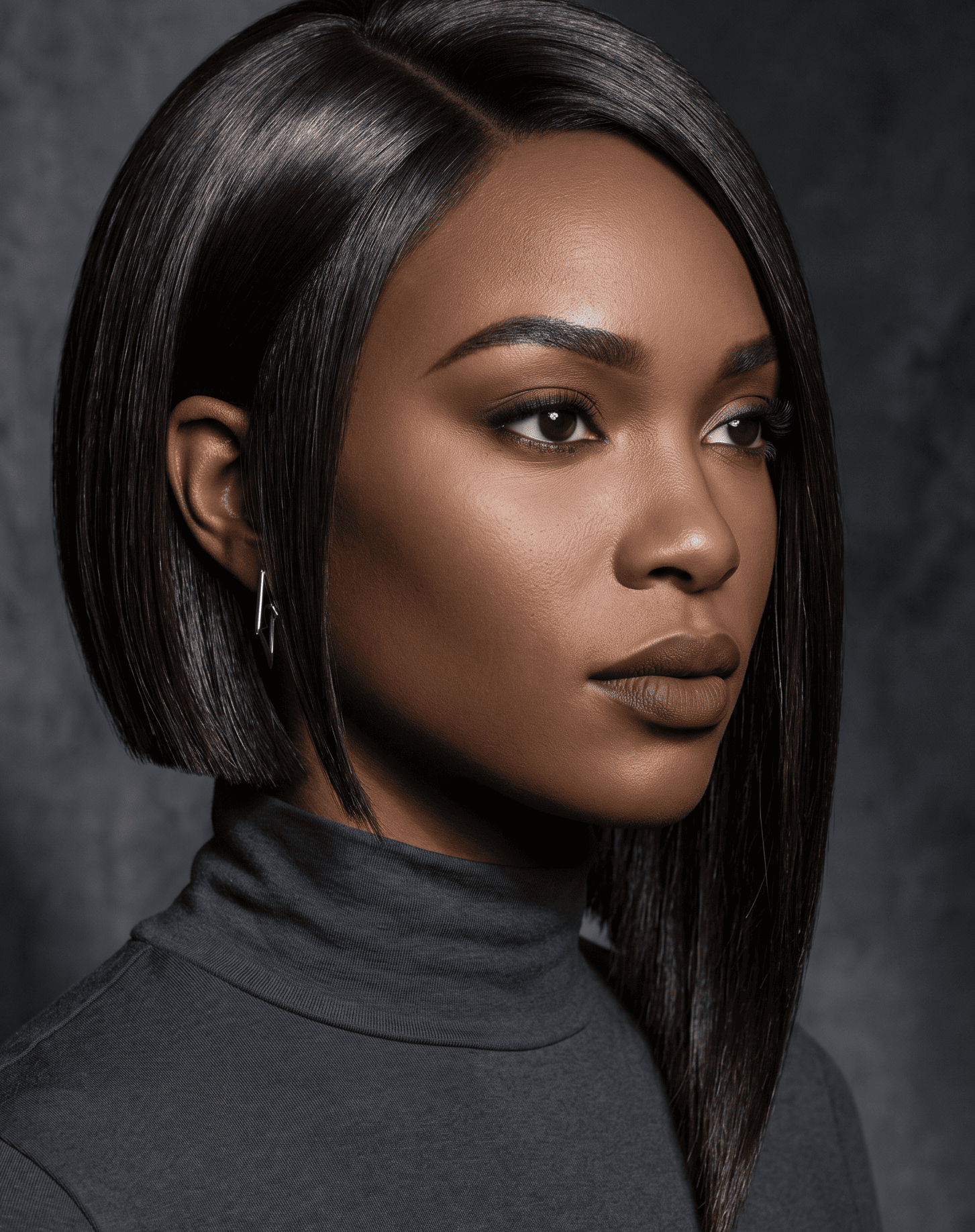
One side is cut to just below the earlobe while the other sweeps to the collarbone, creating a steep diagonal line from right to left (or left to right). The hair is flat-ironed to a complete glass finish — not a wave or kink in sight. The sharp length contrast is the structural statement of this bob, and the sleek finish ensures the asymmetry reads as intentional rather than uneven.
Best for: Straight or chemically straightened hair, medium to thick density
Face shape: Oval, oblong face Bob Hairstyles
Styling technique: Flat-ironed with shine serum, parted on the heavier side
Why it stands out: While most bob hairstyles are symmetrical, this one makes the imbalance its defining feature. The steepness of the diagonal from one side to the other creates a dramatic side profile.
Ideal for: Editorial fashion lovers, those wanting something bold without color.
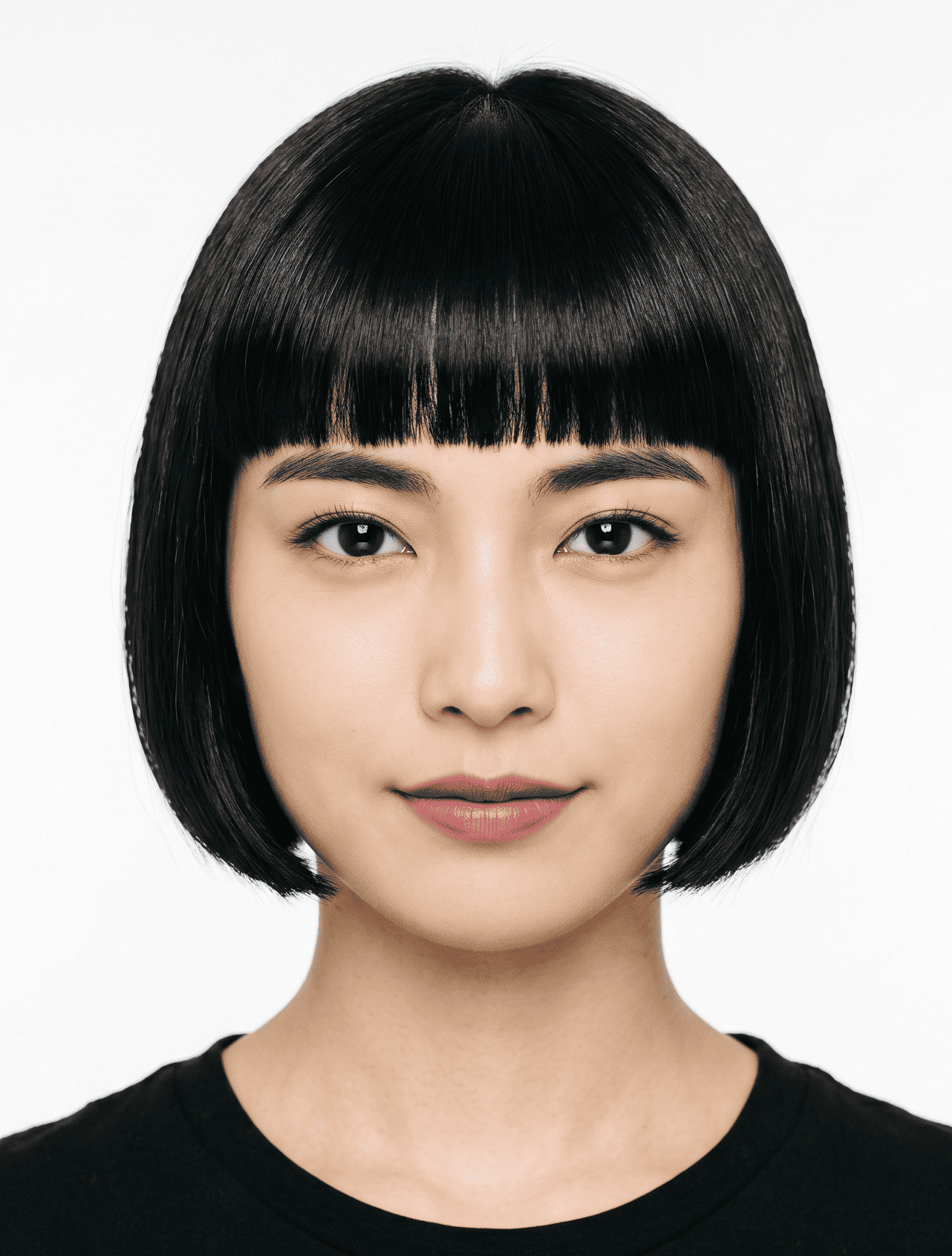
A very short bob cut at or slightly below the cheekbone paired with thick, eyebrow-grazing blunt-cut bangs. The overall shape is compact and deliberate — the short length and full fringe create a strong rectangular frame around the face. No layers, no softness at the ends. The whole cut is precision-first.
Best for: Straight or blow-dried smooth hair, fine to medium density
Face shape: Oval, heart face Bob Hairstyles
Styling technique: Blowout with a round brush, bangs pressed flat with a fine-tooth comb
Why it stands out: The combination of the very short bob and the dense blunt fringe creates an almost graphic quality — it looks like a deliberate design decision rather than a casual haircut.
Ideal for: Retro minimalists, those who like their haircut to make a statement without color or texture.
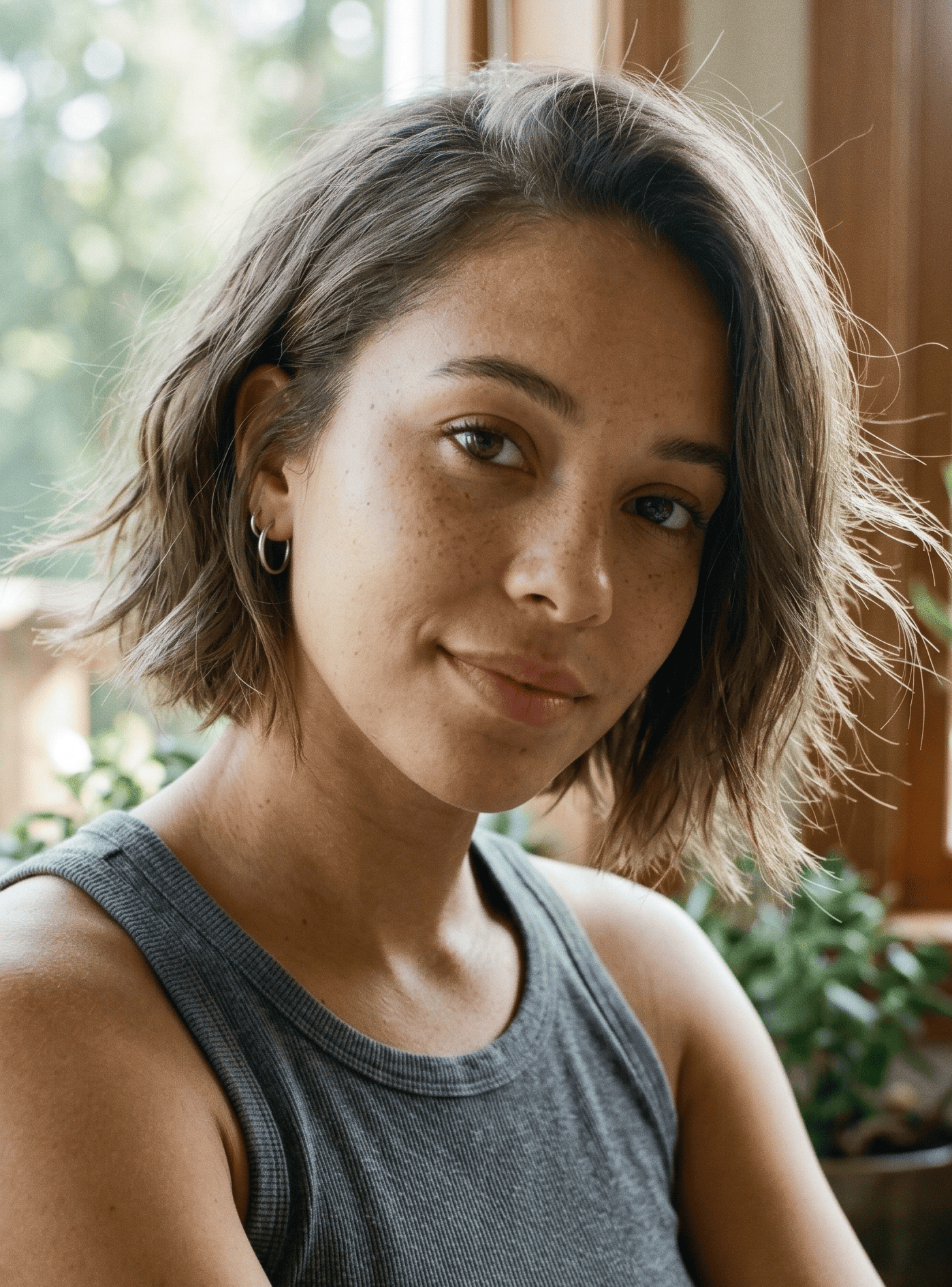
Cut entirely with a razor blade rather than scissors, leaving the ends thin, scattered, and feathered in all directions. The perimeter has no single clean line — the ends dissolve into soft, wispy points. The interior has weight, but the edges feel light. This bob hairstyle sits at jaw length and looks best when air-dried with minimal product.
Best for: Medium-density, straight to wavy hair
Face shape: Oval, round face Bob Hairstyles
Styling technique: Air-dried with a small amount of lightweight mousse scrunched through damp hair
Why it stands out: The razor-cut technique completely changes the quality of the ends — instead of a clean cut-off, the hair appears to taper and feather outward, giving this bob a soft, almost romantic finish.
Ideal for: Those who want a bob with softness rather than structure, texture-first dressers.
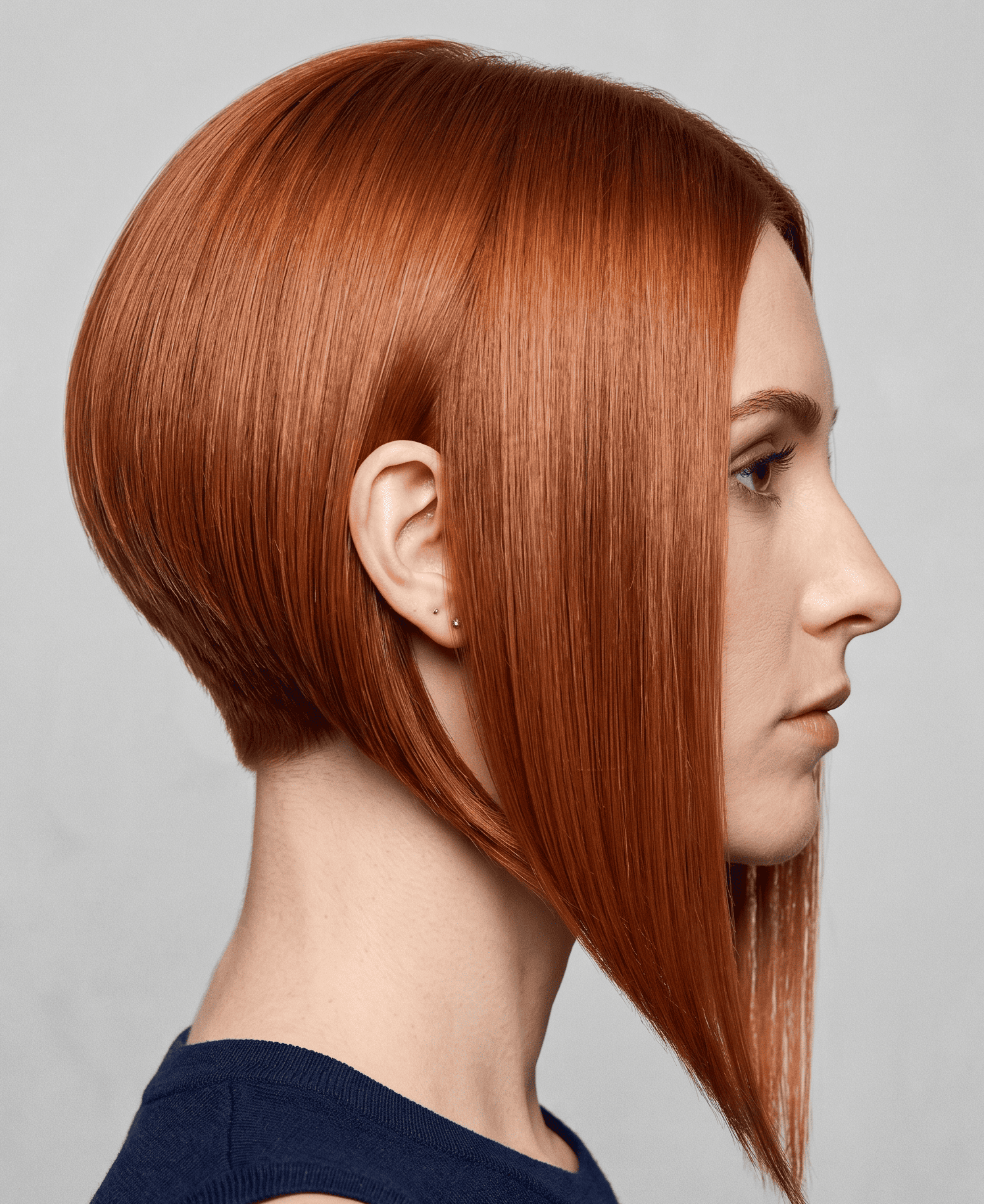
The back is cut very short — almost at the occipital bone — and the hair angles dramatically downward toward the front, creating a steep wedge shape. The front pieces extend significantly below the jaw while the back is neat and close. From a profile view, the dramatic slope from nape to chin is the defining visual element.
Best for: Straight to wavy, medium to thick density
Face shape: Round, square face Bob Hairstyles
Styling technique: Blowout with a round brush, ends directed downward and forward
Why it stands out: The angle between the back and front is far steeper than a standard angled bob — the wedge shape is almost architectural when viewed from the side.
Ideal for: Those who want to create the illusion of a longer neck and defined jawline.
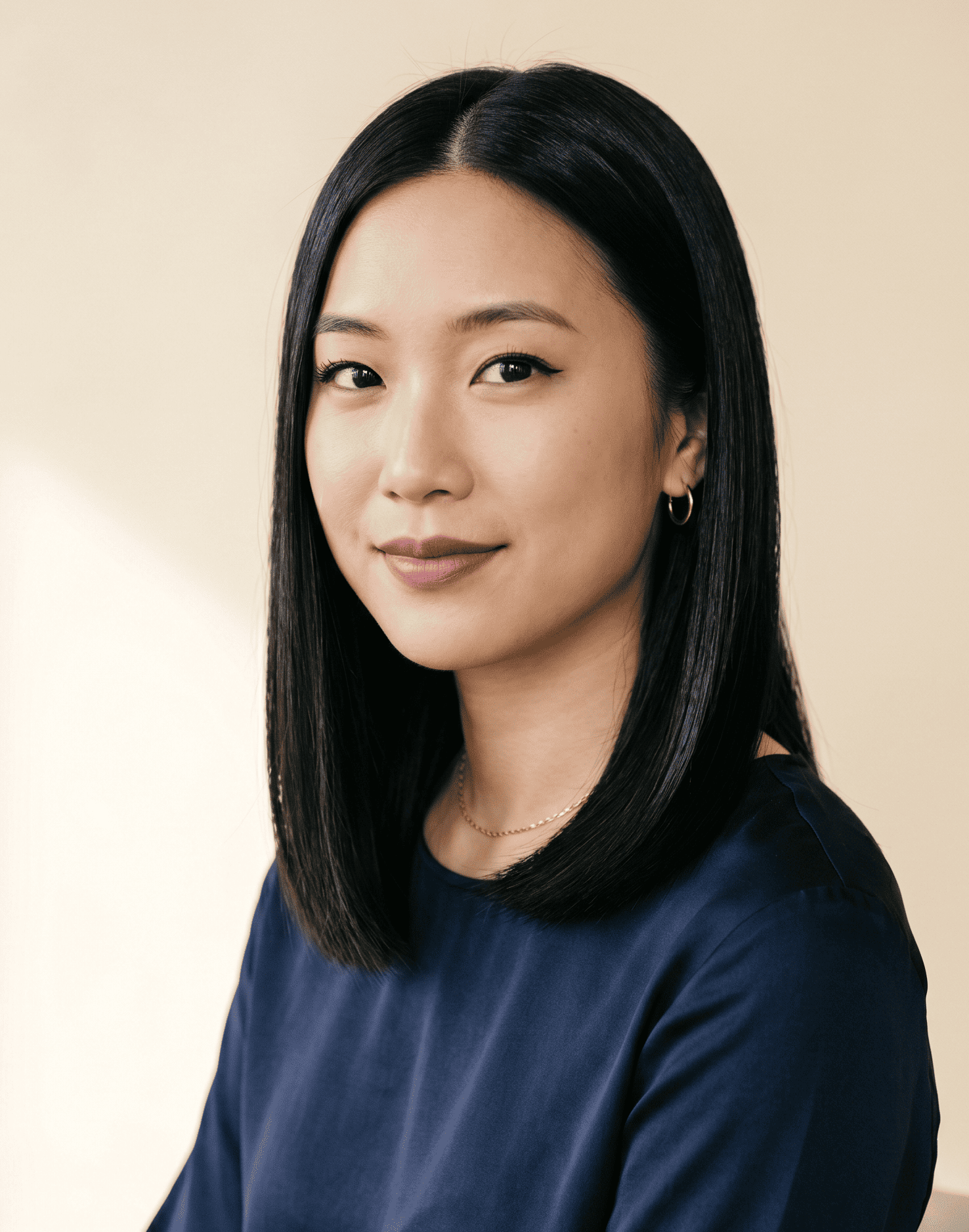
A longer bob (lob) where the ends sit right at the collarbone — the longest variation that still qualifies as a bob hairstyle. The cut is single-length and blunt, with no internal layers. The length allows the hair to drape against the neck and collarbone in a very composed way. This is a polished, grown-out look that doesn’t look unintentional.
Best for: Straight to slightly wavy, medium to thick hair
Face shape: Heart, oblong face Bob Hairstyles
Styling technique: Flat iron for a sleek finish, or large-barrel iron for one lazy bend at the ends
Why it stands out: At this length, the hair has enough weight to fall completely flat and still — which creates a very different visual quality from shorter bob hairstyles that have more lift and movement.
Ideal for: Those growing out shorter bobs, those wanting an understated cut that still looks considered.
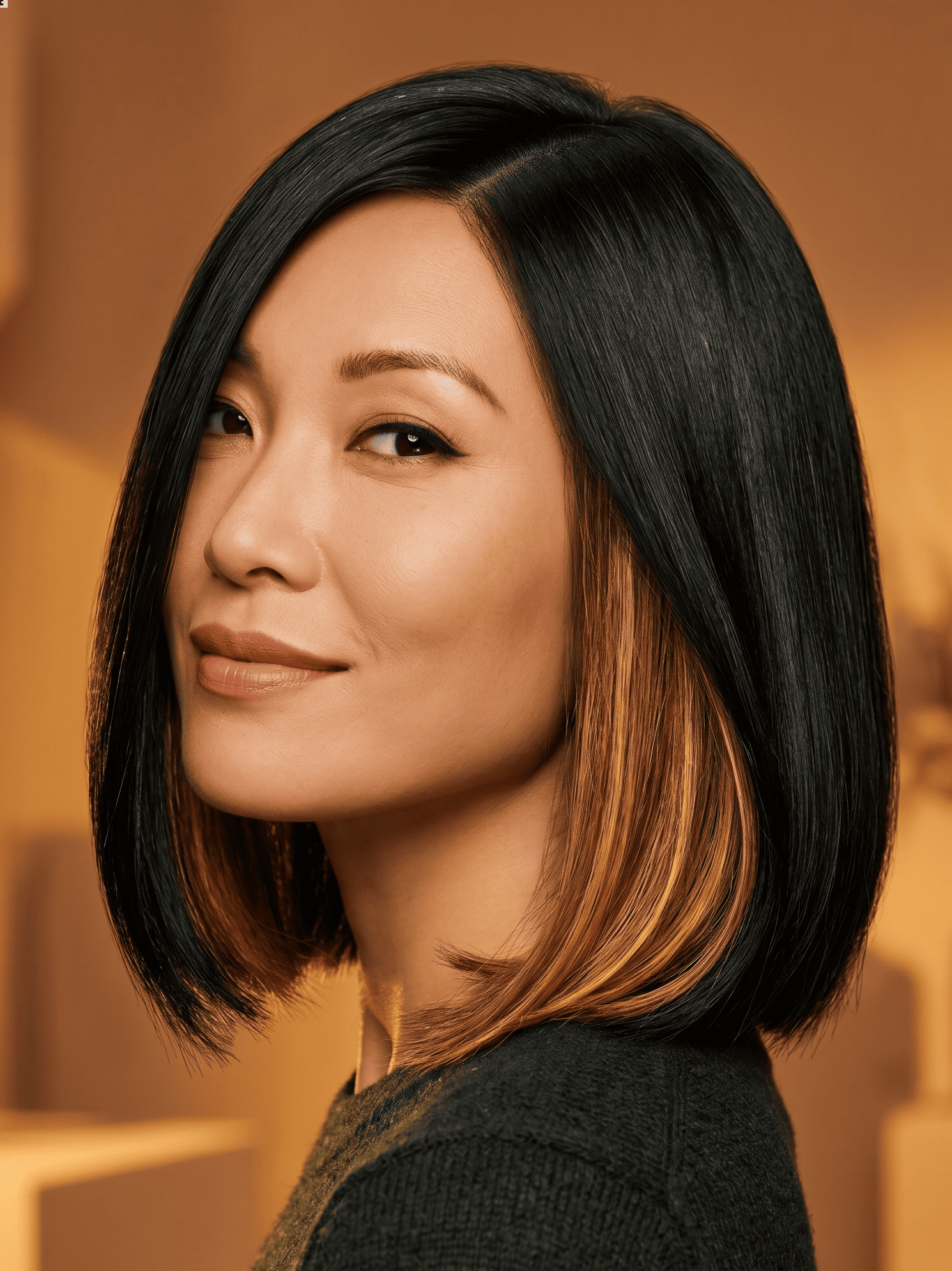
A chin-length blunt bob on naturally dark hair where strategically placed highlights are hidden beneath the top layer — running through the under-sections and mid-panels rather than on the surface. When the hair is still, it looks like a solid dark bob. When the hair parts, shifts, or is tucked behind the ear, flashes of bright highlight — blonde, copper, or caramel — peek through from underneath the darker top layer.
Best for: Straight to slightly wavy, medium to thick density dark hair
Face shape: Oval, square, oblong face Bob Hairstyles
Styling technique: Blowout with a flat iron to keep the top layer smooth and the underlayer slightly separated so the highlights catch the light
Why it stands out: The highlights are placed specifically to be invisible at rest — the color only becomes visible through movement or when the hair is physically shifted. Unlike a standard highlighted bob where color is a surface feature, here it’s a hidden detail that rewards closer attention.
Ideal for: Those who want color without obvious commitment, professionals who prefer a subtle pop of dimension over full-coverage highlights.
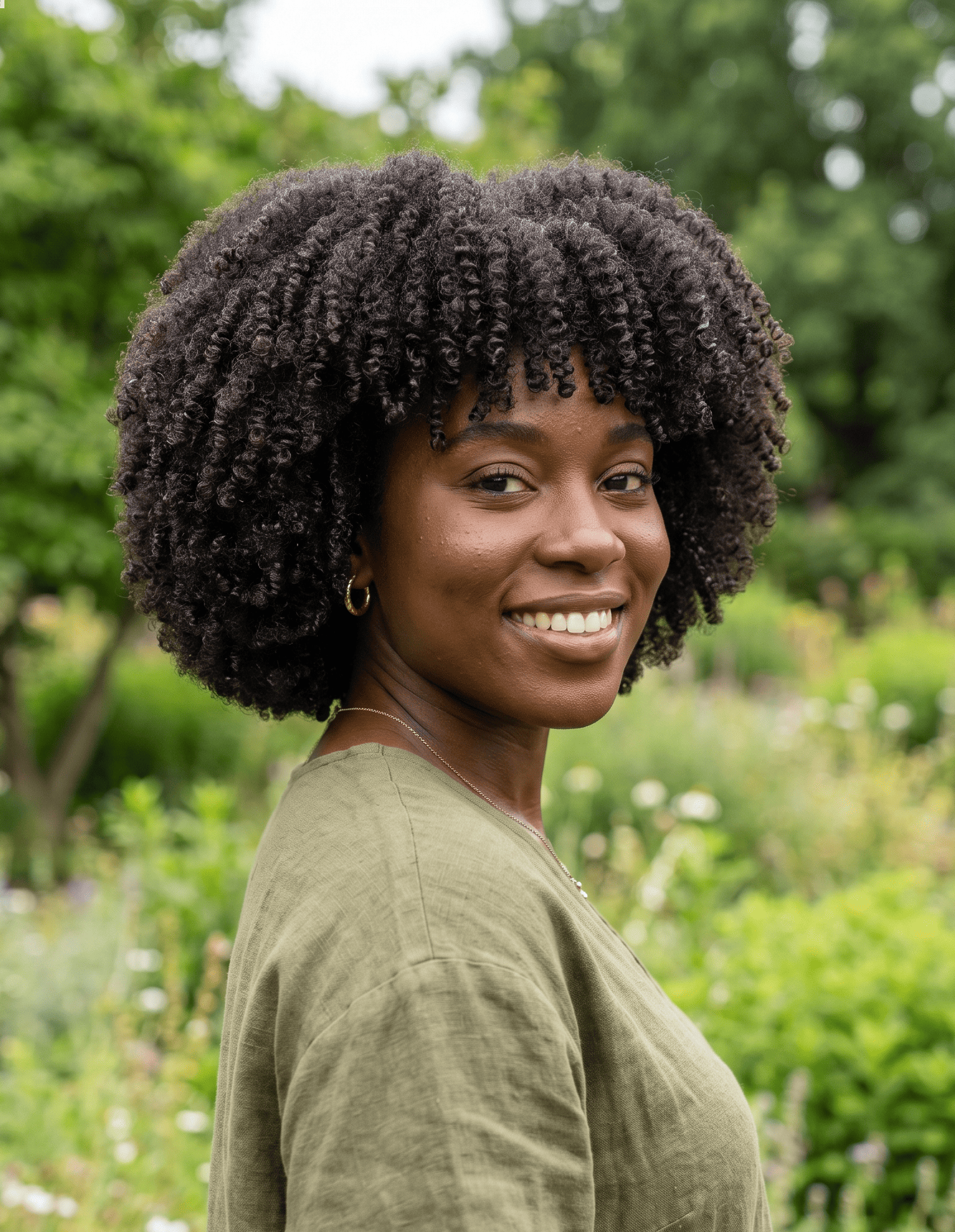
A bob cut on 4B to 4C coily hair where the natural shrinkage factor reduces the apparent length dramatically. The perimeter is cut longer to allow the coils to contract into the final bob shape when dry. The silhouette that results is compact, dense, and rounded — with incredible volume from root to tip without any product buildup. No heat, no stretch — just the coil doing what it does.
Best for: Coily hair, 4B to 4C curl pattern
Face shape: Oval, heart, square face Bob Hairstyles
Styling technique: Moisturize-and-seal on damp hair, air-dried or diffused at low heat
Why it stands out: The volume and density of a 4C coily bob is unlike any other bob hairstyle — the shrinkage creates a rounded, full silhouette that can’t be achieved with heat or product on other hair types.
Ideal for: Natural hair wearers, those who want protective-style-adjacent length without braids or locs.
A jaw-length bob styled with a matte paste or wax worked through section by section, separating the hair into small, defined pieces. The ends separate into individual points rather than falling as one flat surface. The overall shape reads as slightly spiky and intentionally undone — like the hair was styled with fingers rather than a brush.
Best for: Fine to medium, straight to slightly wavy hair
Face shape: Oval, square, heart face Bob Hairstyles
Styling technique: Matte paste applied to dry hair, worked through from mid-shaft to ends
Why it stands out: The piece-y finish adds visual texture and dimension to a cut that has no internal layers — it’s entirely about how the styling product separates the ends rather than what the cut itself does.
Ideal for: Those with fine hair who want the appearance of more texture, anyone who prefers matte finishes over shine.

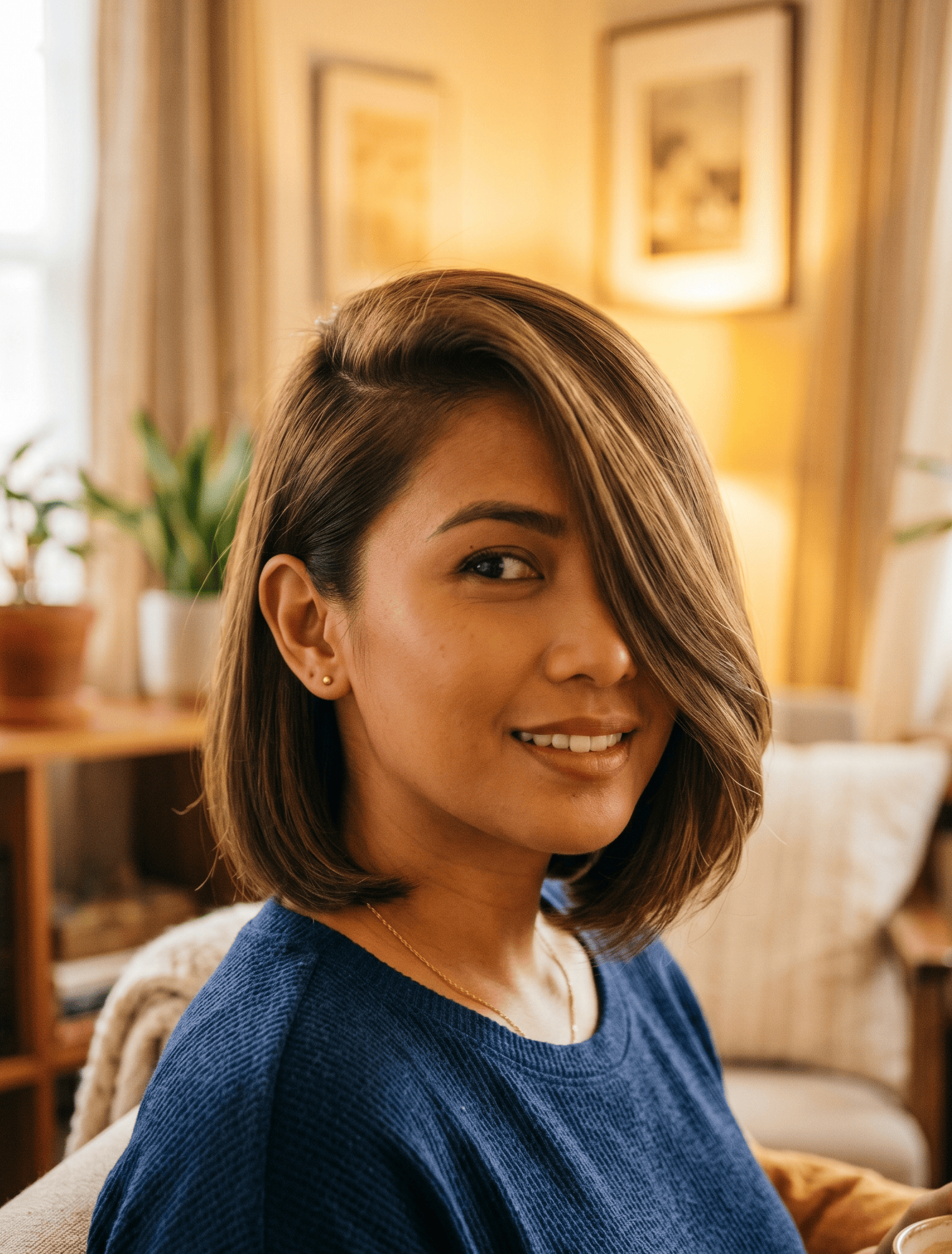
A chin-length bob with an extreme deep side part — almost ear-to-crown — that sweeps the majority of the hair to one side. One side has a large volume of hair sweeping across the forehead, covering one eye partially, while the other side is close to the head and shows the ear fully. The asymmetry of the part creates an entirely different visual weight than a centered or standard side part.
Best for: Straight to wavy, fine to medium density
Face shape: Round, oblong, heart face Bob Hairstyles
Styling technique: Blowout with root lift on the heavy side, pressed smooth on the lighter side
Why it stands out: The extreme depth of the part shifts all the visual weight to one side of the face — it changes the silhouette more dramatically than any change to the cut itself would.
Ideal for: Those who want to change the feel of their current bob without a new cut, oval face-shape maximizers.
A jaw-length bob left completely to the hair’s own devices — no heat, no product beyond a light leave-in. The natural wave pattern creates an irregular, slightly unpredictable texture where some ends curl inward and others flip out. The lack of symmetry between the two sides is intentional. This bob hairstyle is for hair that already has movement built in.
Best for: Wavy hair, 2A to 2C wave pattern, medium density
Face shape: Oval, heart face Bob Hairstyles
Styling technique: Air-dried after applying a small amount of leave-in conditioner on damp hair
Why it stands out: The asymmetry is organic, not cut — the wave pattern determines where the hair flips, curls, or falls, which means this bob looks slightly different every single day.
Ideal for: Low-maintenance wearers, those who embrace their natural texture, anyone who wants a cut that does more work on its own.

Cut above the chin — closer to the cheekbones — this is the shortest version of the bob before crossing into pixie territory. The entire jawline and neck are fully exposed. The silhouette is compact and very tight to the head, and the cut reads as strong and graphic because there’s very little hair left to soften anything.
Best for: Straight to wavy, medium to thick density
Face shape: Oval, oblong face Bob Hairstyles
Styling technique: Flat iron or blowout for a polished finish, or rough-dry for a more casual look
Why it stands out: The length is the statement — cut at cheekbone level, the bob hairstyle enters unconventional territory and reads more boldly than any chin-length variation.
Ideal for: Those wanting a dramatic change, anyone with strong bone structure they want to highlight.
A jaw-to-collarbone bob styled with sea salt spray applied to damp hair and scrunched before air-drying. The finish has a slightly gritty, matte texture — not quite wavy, not quite straight — like hair that spent a day near the ocean. Clumps of hair form loose, uneven sections that separate differently from each other.
Best for: Straight to lightly wavy, medium density hair
Face shape: Heart, oval, round face Bob Hairstyles
Styling technique: Sea salt spray applied generously to soaking-wet hair, scrunched and air-dried with no diffuser
Why it stands out: The salt spray creates a texture that no other styling product mimics — the slightly dry, gritty, clumped finish is entirely specific to this method and gives the bob a very casual, coastal identity.
Ideal for: Warm-weather dressing, low-effort styling, those who want their hair to look naturally lived-in.

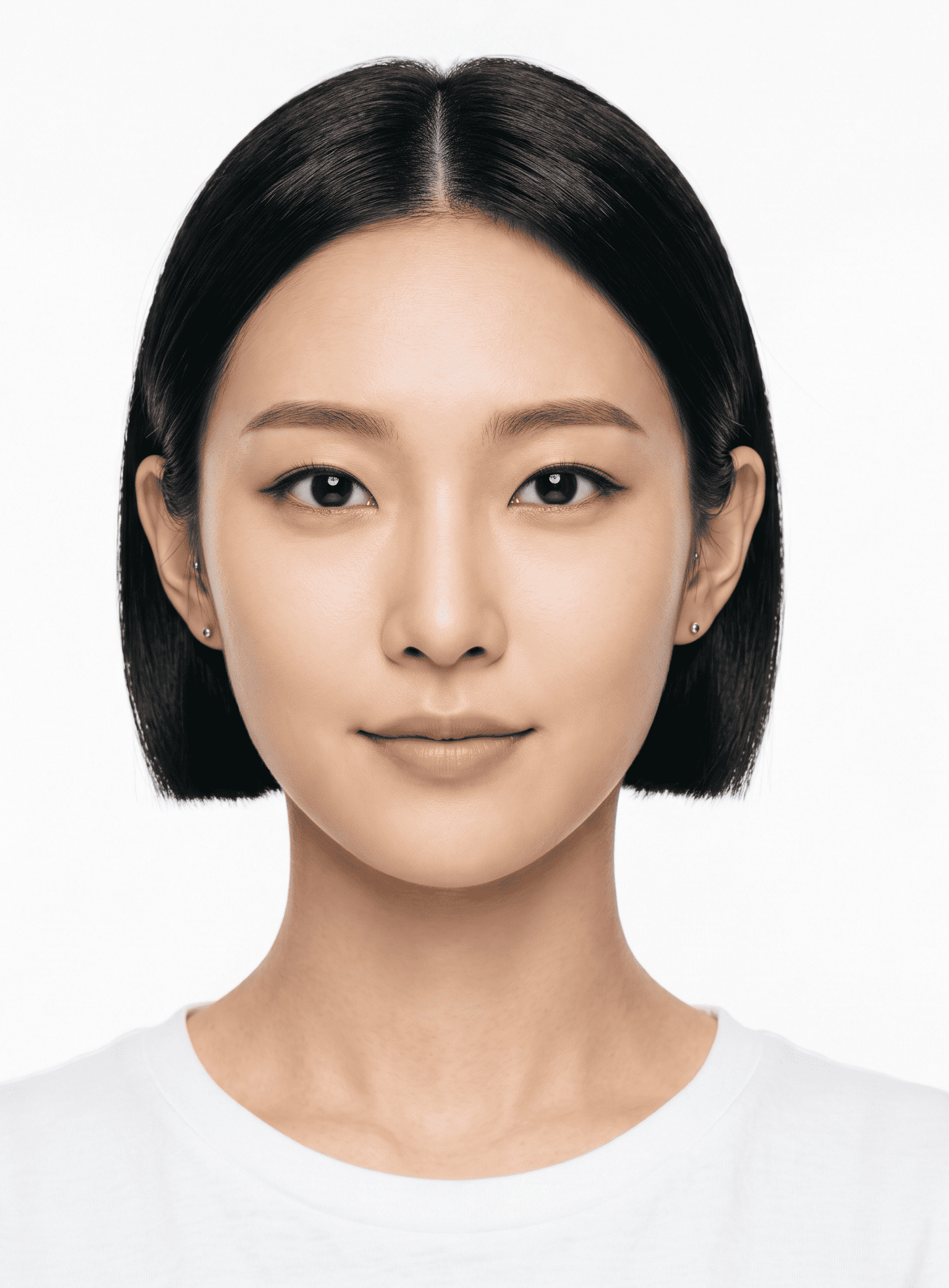
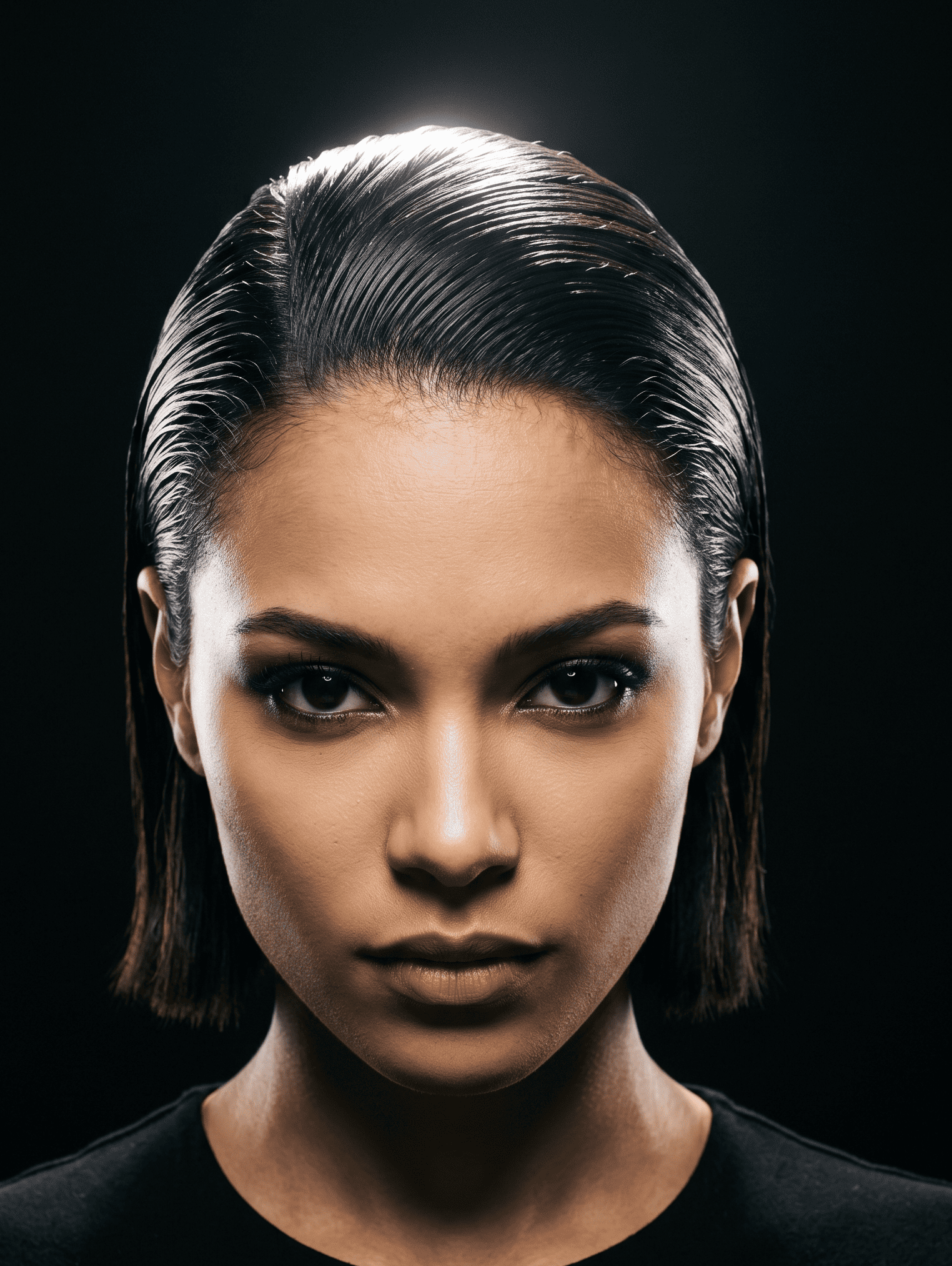
A short bob — just at the chin or above — styled fully back away from the face. Gel or strong-hold pomade is applied to damp hair and combed back completely so no hair falls forward. The hairline is fully exposed. The result is sleek, severe, and extremely intentional — not a strand out of place.
Best for: Straight to wavy, fine to medium density
Face shape: Oval, oblong face Bob Hairstyles
Styling technique: Strong-hold gel on damp hair, wide-tooth comb followed by fine-tooth comb directed fully backward
Why it stands out: Most bob hairstyles are defined by how they fall forward and frame the face. This one does the opposite — every strand is directed away, removing all softening and framing to create something architecturally stripped-back.
Ideal for: High-fashion moments, editorial shoots, those who want a statement look without accessories.
A jaw-length bob with very heavy shag layering throughout — the layers are cut at multiple different levels so the hair has distinct horizontal break points from root to end. The ends are point-cut so they appear choppy rather than blended. The overall silhouette is full at the crown but broken up into individual floating layers that don’t sit on top of each other.
Best for: Thick to medium, wavy or straight hair
Face shape: Heart, oval, square face Bob Hairstyles
Styling technique: Diffused with a curl mousse on damp hair, then finger-combed to separate layers
Why it stands out: The weight distribution across multiple layer levels creates a completely different visual structure than a standard layered bob — this one has distinct, visible breaks rather than soft blending.
Ideal for: Those with heavy hair wanting movement and visual interest, texture-forward dressers.

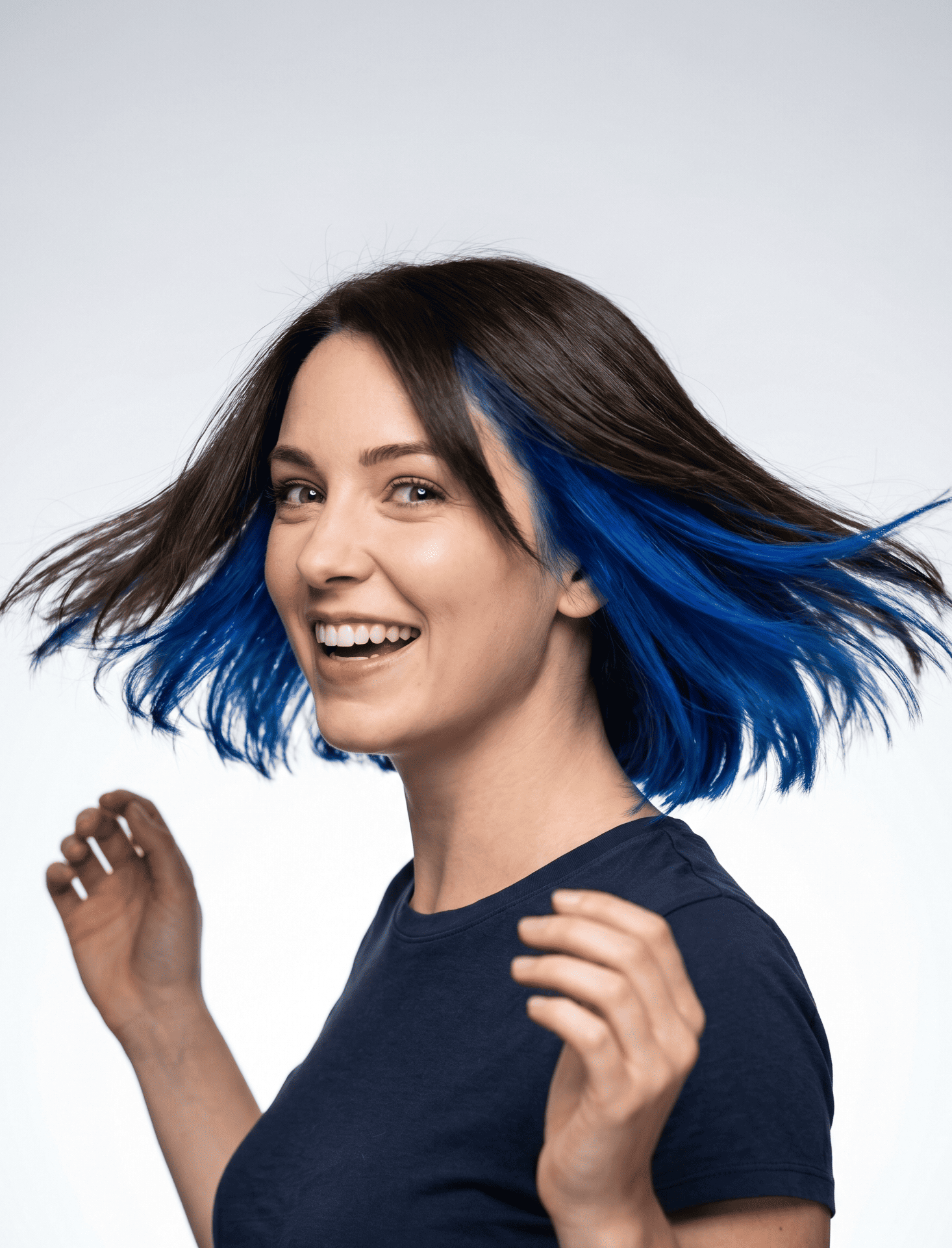
A chin-length blunt bob where the entire top layer is a natural or neutral shade and the inner underlayer has been colored in a high-contrast tone — often vivid or significantly lighter. When the hair rests flat, only the natural color shows. When the hair moves, is pushed behind the ear, or is flipped, the inner color is revealed along the perimeter and underlayer.
Best for: Straight to slightly wavy, medium density
Face shape: Oval, heart face Bob Hairstyles
Styling technique: Blowout to create subtle movement that allows the underlayer to peek through
Why it stands out: The color is completely invisible in a still photo taken from above — it only reveals itself through movement, which makes this one of the most interactive bob hairstyles in terms of how it performs as the wearer moves.
Ideal for: Color experimenters, those wanting bold detail with professional plausibility.
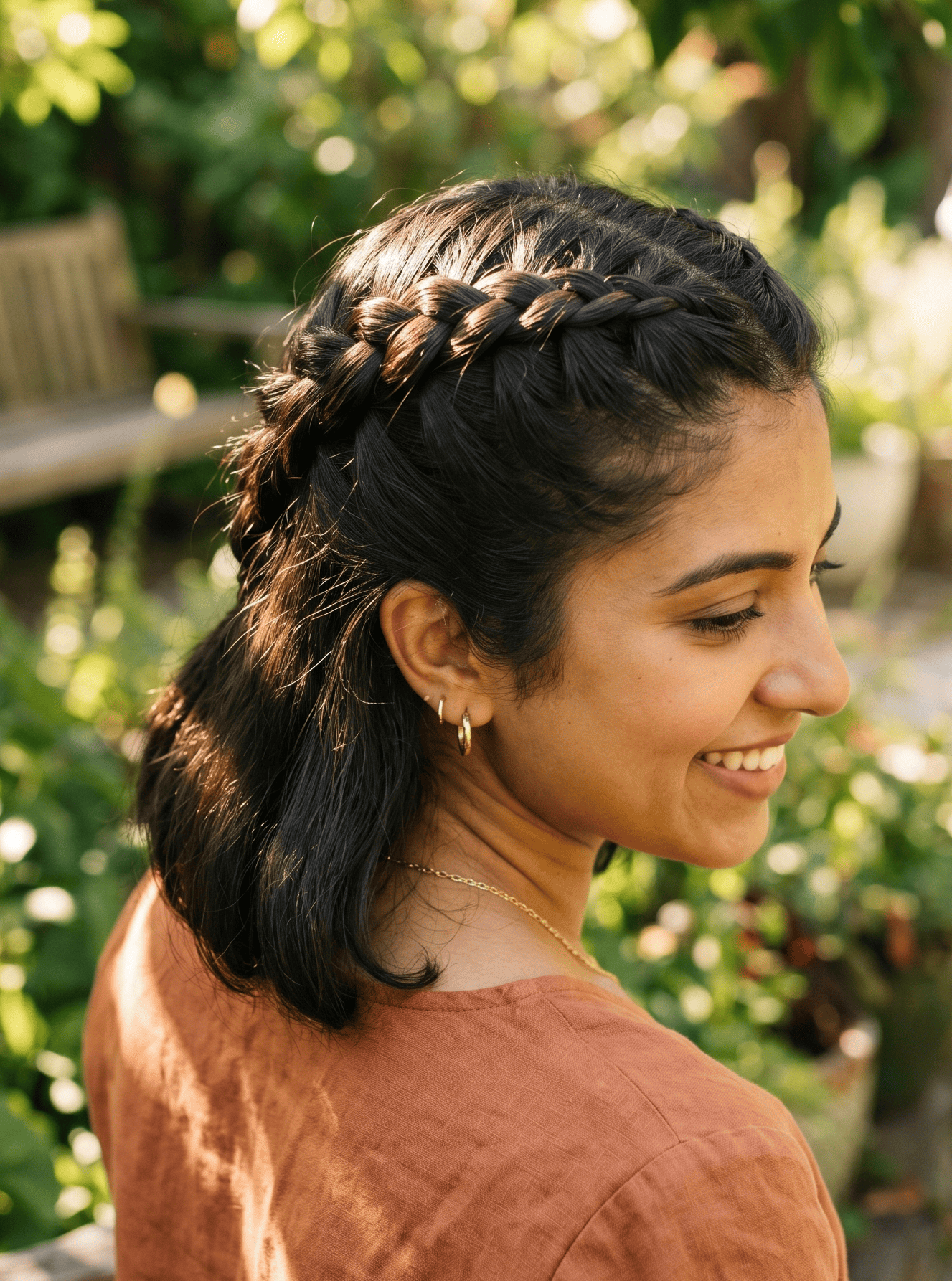
A bob-length hairstyle where the hair at the crown is separated and braided in a flat French braid or Dutch braid across the top of the head while the remaining bob-length hair hangs loose beneath. The crown braid sits like a structured header above the freely falling bob below, creating a distinct contrast between the two sections.
Best for: Thick, wavy or natural-textured hair, medium density
Face shape: Oval, square, heart face Bob Hairstyles
Styling technique: Crown braid pinned flat, remaining bob air-dried or lightly diffused
Why it stands out: The structural braid across the crown repurposes the bob’s limited length into a completely different silhouette — one half is architectural and controlled, the other is loose and free.
Ideal for: Festivals, outdoor events, those who want a creative look from an everyday cut.
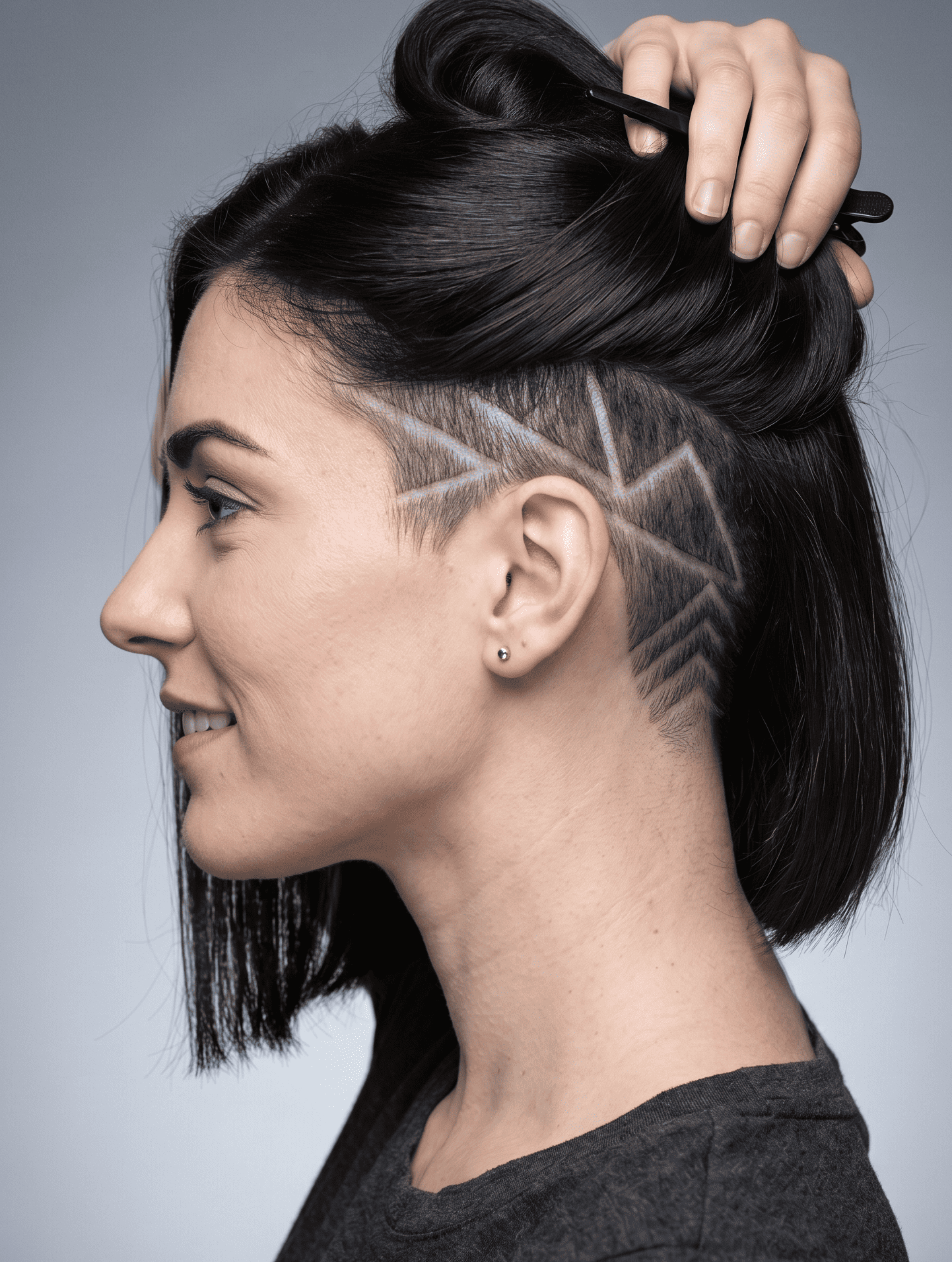
A standard jaw-length bob with a hidden undercut shaved close to the scalp beneath the top layer. When worn down, the cut reads as a regular bob hairstyle. When the wearer tucks the top layer behind the ear or pulls it up, the shaved or clippered section is fully revealed along the side or nape.
Best for: Medium to thick, straight to wavy hair
Face shape: Square, oval face Bob Hairstyles
Styling technique: Worn down for a conventional look or pinned up on one side to reveal the undercut
Why it stands out: The duality of the cut — completely conventional from the outside, unexpectedly edgy underneath — is something very few bob hairstyles can offer. The visual reveal is entirely controlled by the wearer.
Ideal for: Those who need professional presentation at work but want personal expression off the clock.
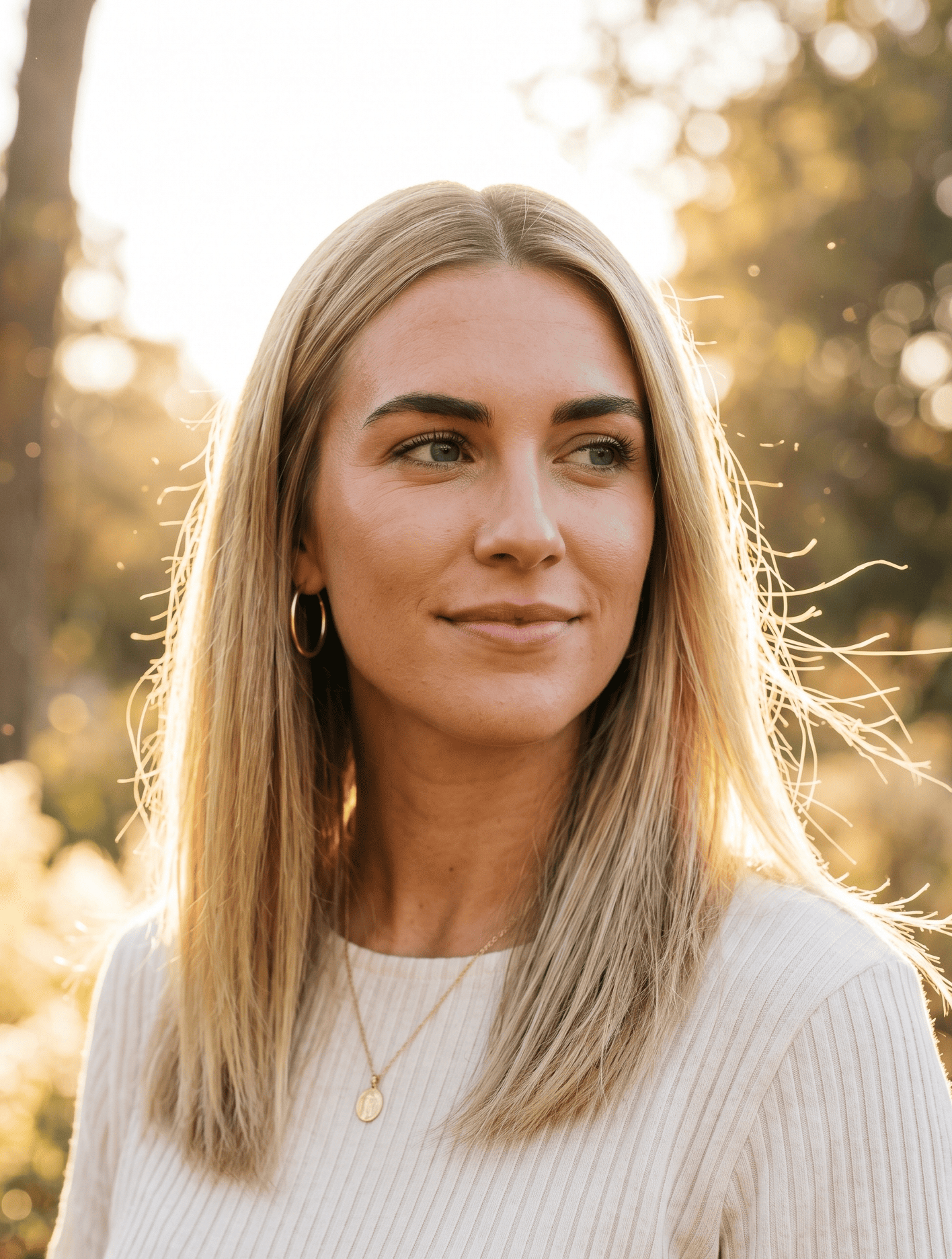
A collarbone-length lob with ends that have been point-cut and thinned so heavily they appear wispy and barely-there. The interior of the hair is full and weighted, but the final inch of each strand tapers into barely-visible thread-like points. The hair is worn with a center part and left almost entirely natural, making the airy, dissolving ends the only real visual detail.
Best for: Fine to medium, straight to slightly wavy hair
Face shape: Heart, oval face Bob Hairstyles
Styling technique: Air-dried with a lightweight leave-in, no heat applied
Why it stands out: At collarbone length, most bobs look full and structured at the ends. The aggressive thinning here does the opposite — the perimeter almost disappears, giving the lob a barely-there quality at the tips that reads as deliberately delicate.
Ideal for: Those transitioning from longer hair, those who want their bob to feel light rather than heavy.
A jaw-length bob with internal layers focused specifically around the front face-framing sections. The layers closest to the face are significantly shorter — falling at the cheekbone — and styled to curl or bend inward toward the face. The rest of the bob stays at jaw level. This creates two small curled or bent tendrils that hug the cheekbones and frame the eyes.
Best for: Wavy or lightly curly, medium density hair
Face shape: Square, oblong face Bob Hairstyles
Styling technique: Light curl cream on the face-framing sections only, diffused; rest of the hair rough-dried
Why it stands out: The deliberate shortening and inward styling of the front pieces creates a very specific face-framing effect that’s intentional and personalized rather than generic.
Ideal for: Those who want their haircut to complement their eye shape and cheekbone structure, those who feel bob hairstyles don’t do enough at the front.

A mid-length bob between the chin and collarbone with gentle internal layers blended so softly that the hair reads as nearly one-length. The movement comes from how the layers allow the hair to bend slightly at different points rather than from any visible layering. Nothing about the cut looks deliberate — it appears to simply fall that way naturally.
Best for: Fine to medium, straight to lightly wavy hair
Face shape: Oval, oblong face Bob Hairstyles
Styling technique: Blowout with a round brush to encourage slight bend, serum for smoothness
Why it stands out: The blending is so seamless that the layers are nearly invisible — the only evidence of them is the gentle, organic movement the hair has when it falls, which a truly one-length cut wouldn’t have.
Ideal for: First-timers getting layers, those who prefer a quietly polished look over anything that reads as obviously styled.

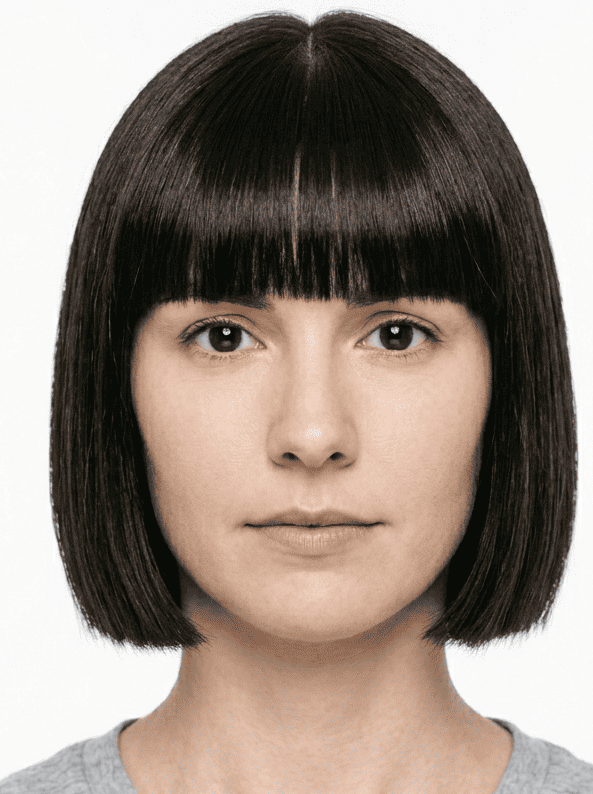
A very specific combination: a standard chin-length blunt bob paired with heavy, straight-across blunt fringe that sits at eyebrow level, and a subtle underline — the ends of the bob are cut with a slight visible horizontal shadow line created by the weight of the blunt cut on thick hair. The result is a haircut defined by clean, parallel horizontal lines across the head: one at the eyebrows, one at the chin.
Best for: Thick, straight hair, medium to high density
Face shape: Oval, square face Bob Hairstyles
Styling technique: Blowout with a flat iron pass on the fringe and ends to keep both lines razor-sharp
Why it stands out: The repeat of the horizontal line — at the fringe level and at the perimeter — creates a visual rhythm that makes the face look very proportioned and framed in an almost graphic way.
Ideal for: Those with thick, heavy hair who want the bob’s structure to do architectural work, graphic design sensibilities.
A jaw-length bob where the interior weight has been removed through slicing cuts — the stylist slides the scissors down the hair shaft at an angle to remove bulk from the mid-shaft without affecting the length. The result is a bob with a normal perimeter but dramatically lightened interior, which makes the hair behave in a more fluid, mobile way. On wavy hair, the reduced interior weight lets the wave move more freely.
Best for: Thick to medium, wavy or straight hair with high density
Face shape: Heart, round face Bob Hairstyles
Styling technique: Air-dried with a small amount of lightweight oil worked through damp hair
Why it stands out: The weight removal happens invisibly inside the hair — from the outside, the perimeter looks like a standard bob. But the behavior of the hair is completely different: lighter, more mobile, and less prone to puffing out at the sides.
Ideal for: Those with very dense or heavy hair that tends to expand outward, those who want a bob that moves rather than sits.

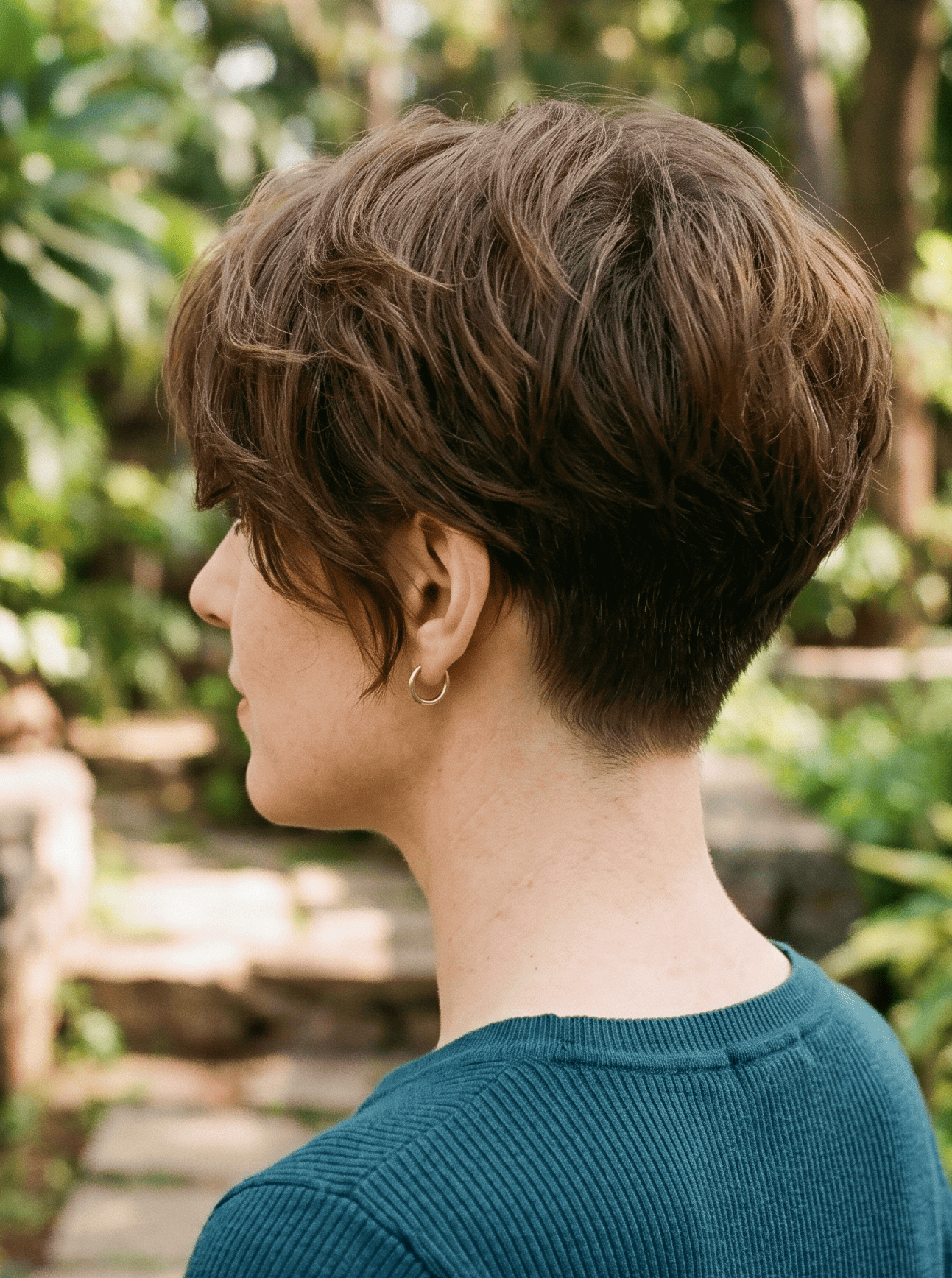
The nape and sides are clippered or cut close like a pixie, but the top and front sections are left long enough to fall forward in a bob-like fashion. From the front, the hair reads as a very short, face-framing bob. From behind, the nape is closely cropped with barely any length. The cut lives between two categories without fully committing to either.
Best for: Straight to wavy, medium to thick density
Face shape: Oval, oblong, heart face Bob Hairstyles
Styling technique: Texturizing cream worked through the top and front sections, styled loosely forward or swept to one side
Why it stands out: Most bob hairstyles are defined by their perimeter at the face — the bixie is defined by the absence of that perimeter at the back, which creates a completely different silhouette in the round.
Ideal for: Those wanting something short and distinctive, a first step toward committing to a pixie.
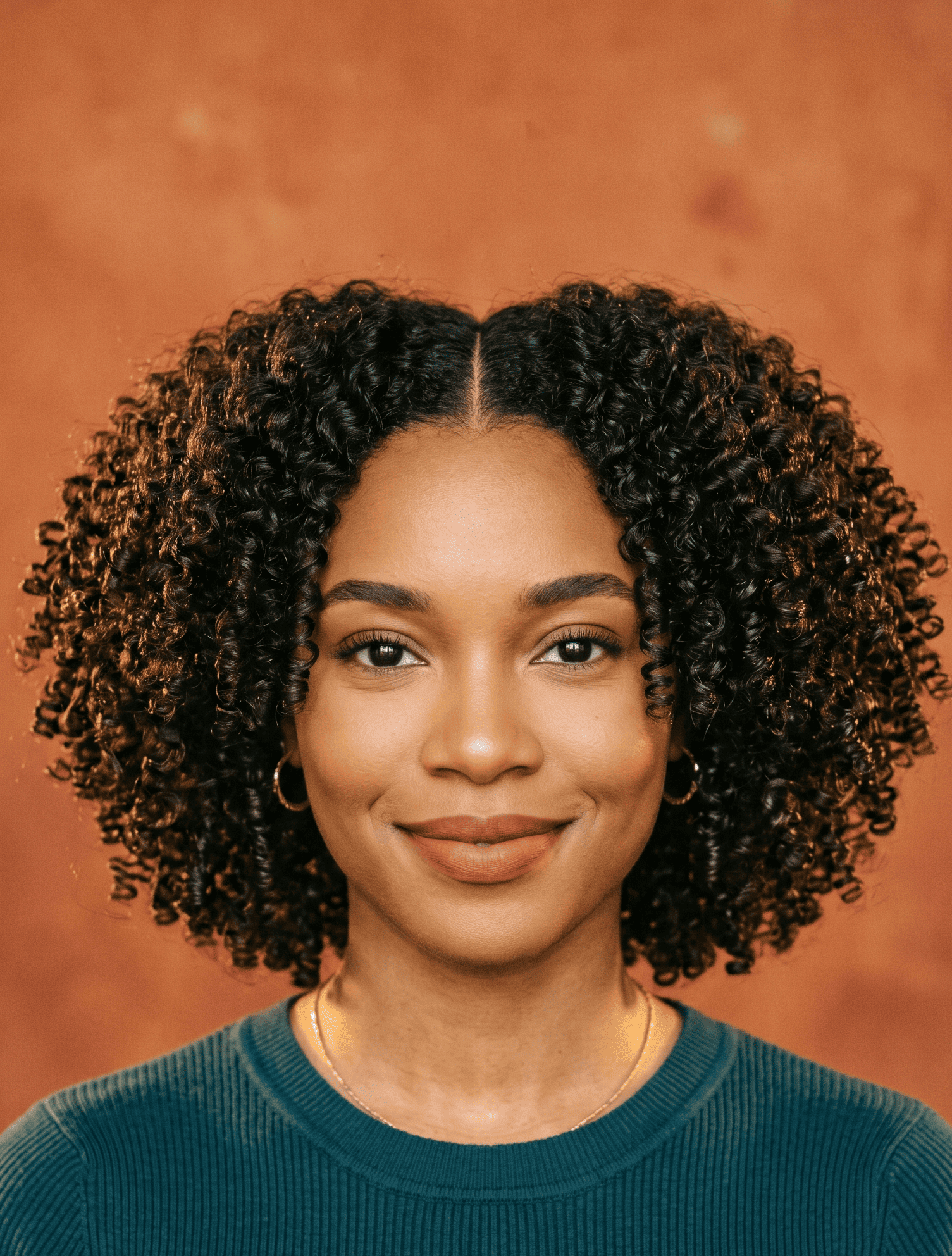
A bob on curly hair (3B to 3C) styled with a rattail comb to create deliberate, structured parts — either a defined center part or a zigzag pattern — so the curl clusters on each side fall in organized, separated sections. The curls themselves are fully defined and clump together naturally. The parts add a deliberate graphic element to what might otherwise be an unpatterned mass of curls.
Best for: Curly hair, 3B to 3C, medium to thick density
Face shape: Oval, square face Bob Hairstyles
Styling technique: Gel applied to soaking-wet hair, parts created with a rattail comb, diffused at medium heat
Why it stands out: The addition of intentional parts to a curly bob changes the visual narrative from “natural texture” to “structured texture” — the curls are still doing their own thing, but the parts impose geometry on top of them.
Ideal for: Those who want their natural texture to look intentional rather than unstructured, curl-pattern maximizers.
A bob that has grown past the collarbone slightly — the ends are uneven, the layers from the previous cut have grown into different lengths, and the overall shape is no longer uniform. Rather than hiding this, the styling leans into the imperfection: the hair is worn loosely, with the natural texture allowed to express itself. The unevenness of the grown-out perimeter becomes part of the aesthetic.
Best for: Wavy to straight, any density, any hair in a grow-out phase
Face shape: Oval, heart face Bob Hairstyles
Styling technique: Air-dried with leave-in conditioner; no attempt to smooth or reshape the grown-out layers
Why it stands out: Unlike every other entry in this list, this bob hairstyle is defined by what it’s becoming rather than what it is. The grown-out state reads as intentional when the texture and styling work with the unevenness rather than against it.
Ideal for: Those growing out a shorter bob, those who wear their hair in its most natural current state regardless of cut timing.

Bob hairstyles remain one of the most genuinely varied categories in hair — and this list only covers a fraction of what’s possible within this one cut. Whether it’s a tight micro bob that exposes the jaw completely or a wispy lob that barely shows its own ends, the range of visual experiences available within the bob framework is enormous. The right version comes down to hair type, face shape, and how much daily styling someone actually wants to do.
Those drawn to shorter face Bob Hairstyles might also find inspiration in a roundup of pixie haircuts, which share structural similarities with micro bobs and bixie cuts. For anyone interested in how texture changes a cut’s personality, a guide to wavy face Bob Hairstyles or naturally curly hairstyles covers many of the same principles applied to longer lengths.
If you are looking for nail inspirations for Spring, check out this Ultimate Spring Nails Guide for the reference.