Physical Address
304 North Cardinal St.
Dorchester Center, MA 02124
Physical Address
304 North Cardinal St.
Dorchester Center, MA 02124

The Italian bob has quietly become one of the most versatile bob hairstyles in the modern hair playbook. Rooted in European elegance, it brings a softness and movement that sets it apart from sharper, more structured cuts. Whether worn sleek, tousled, or somewhere in between, the Italian bob works across hair textures, lengths, and face shapes in a way few other bobs can claim. This article explores 20 distinct takes on the Italian bob — each one designed to solve a different hair challenge or serve a different aesthetic entirely.
For anyone exploring bob cuts more broadly, the full guide to Bob Hairstyles covers everything from classic one-length cuts to graduated and stacked variations. Looking for a sharper silhouette? The French Bob Hairstyles guide breaks down the blunter, more structured cousin of the Italian bob.
The Italian bob is defined by its soft, lived-in finish and its emphasis on natural movement over geometric precision. Unlike the sharp blunt bob of French or Japanese styling traditions, the Italian bob leans into texture — feathered ends, subtle layers, and face-framing pieces that feel effortless rather than engineered. According to Wikipedia’s entry on bob cuts, the bob has evolved through dozens of cultural variations since the early 20th century, with European iterations typically prioritizing softness and wearability over rigid structure. The Italian bob sits squarely in that tradition, favoring a “just stepped out of the wind” quality that still looks intentional.
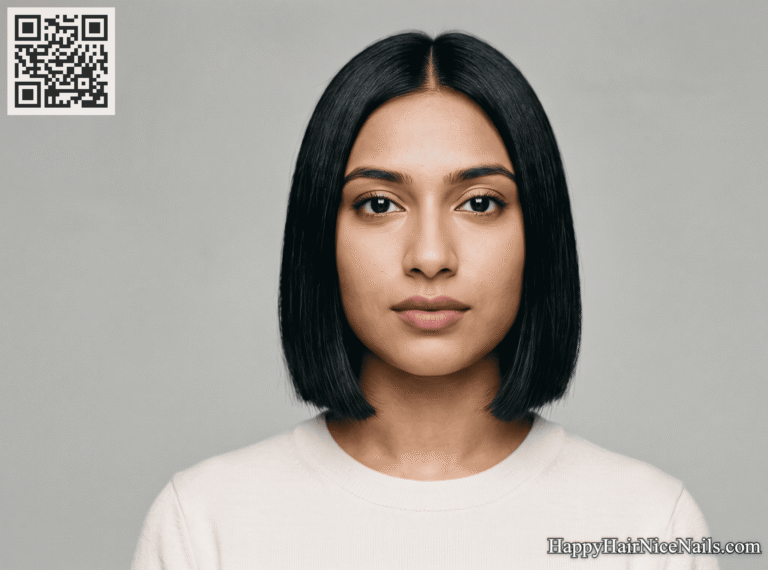
This Italian bob keeps the overall perimeter blunt and even, but the ends are point-cut to give them a feathered, slightly wispy finish. The contrast between a clean baseline and softened tips creates a look that reads polished from afar but relaxed up close. The feathering prevents the ends from appearing heavy, making this especially effective on thick, straight hair that can otherwise look blocky at the bottom.
Best for: Thick, straight hair
Face shape: Square, oblong
Styling technique: Blowout with a paddle brush, ends curled slightly under
Why it stands out: The deliberate tension between a blunt perimeter and feathered ends gives this Italian bob a dual personality — structured enough for professional settings, soft enough for casual ones.
Ideal for: Thick-haired individuals who want a bob hairstyle that doesn’t look heavy or wall-like at the ends.

A centre-parted Italian bob with curtain layers that sweep outward from the face creates an open, symmetrical silhouette. The layers begin above the cheekbone and fall in a gentle arc around the jaw, framing the face without adding excessive volume. The crown stays smooth and close to the head, while the lower sections carry all the movement. This works particularly well on wavy hair, where the curtain layers enhance the wave pattern rather than fighting it.
Best for: Wavy, medium-density hair
Face shape: Heart, oval
Styling technique: Air-dried with a curl-defining cream, parted down the centre
Why it stands out: The curtain layering is positioned specifically to draw attention inward toward facial features — an effect that feels more like contouring than haircutting.
Ideal for: Those with natural waves who want their Italian bob to work with minimal heat.

From the outside, this Italian bob looks almost blunt — but invisible layers underneath remove bulk and allow the hair to move freely without showing any visible layer lines. The ends are choppy and slightly irregular, giving the impression of a relaxed, undone cut. On fine to medium hair, this approach delivers movement and lightness without sacrificing the fullness that blunt cuts typically provide.
Best for: Fine to medium, straight or slightly wavy hair
Face shape: Round, oval
Styling technique: Blow-dried smooth, then ends texturized with a flat iron
Why it stands out: The invisible layering is the entire concept — the Italian bob looks one way from across the room and reveals its complexity only up close.
Ideal for: Fine-haired wearers who want the visual weight of a full bob without the heaviness.

The back of this Italian bob is stacked close to the nape, building volume and roundness at the crown while the front layers are kept long and face-framing. The contrast between a compact, graduated back and a softer, flowing front section creates a silhouette that is interesting from every angle. On curly hair, the stacking at the nape encourages the curl pattern to spring upward and outward beautifully.
Best for: Curly, medium-density hair
Face shape: Square, heart
Styling technique: Diffused on low heat, scrunched at the roots
Why it stands out: Most Italian bob variations focus on the front — this one makes the back the focal point while keeping the front wearable and flattering.
Ideal for: Curly-haired individuals who want shape and lift without losing length around the face.
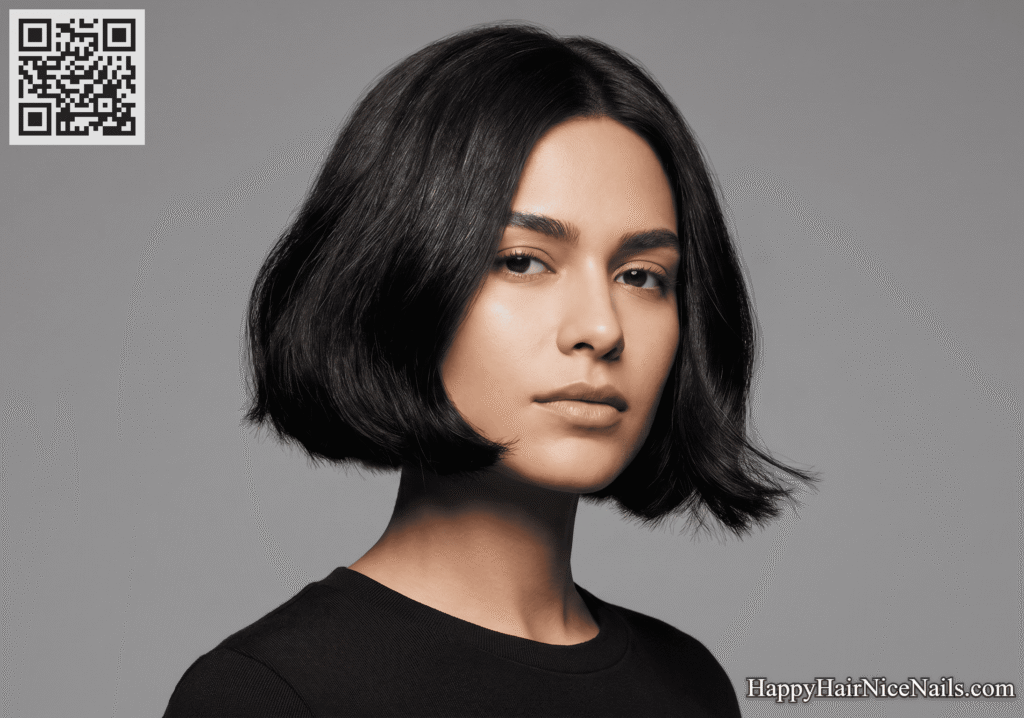
A chin-length Italian bob paired with a soft, curtain-style fringe that parts naturally in the middle. The rest of the cut is kept blunt and even, with no layering below the fringe. The fringe itself is point-cut at the ends so it doesn’t sit heavy on the forehead. This combination gives the style its own quiet drama — the fringe frames the upper face while the clean bob perimeter frames the lower.
Best for: Straight, fine to medium hair
Face shape: Oblong, oval
Styling technique: Blowout with a round brush on the fringe, flat iron on the length
Why it stands out: The fringe and the blunt bob rarely coexist this cleanly — the point-cutting on the fringe prevents the style from looking overly structured or dated.
Ideal for: Those with longer face shapes who want to shorten the visual length and add softness at the forehead.

This Italian bob sits at collarbone length — longer than most bob interpretations — and relies on face-framing highlights rather than heavy layering to create dimension. The cut itself has minimal layers with a slight graduation toward the front. The highlights are placed specifically around the face to mimic the effect of layers without altering the overall shape. On dark hair, this contrast between the highlighted face frame and the darker body of the bob is visually striking.
Best for: Dark, thick, straight or wavy hair
Face shape: Round, square
Styling technique: Blowout with soft bends using a large-barrel curling iron
Why it stands out: The colour placement does the structural work that layers usually handle — making this Italian bob a colour-forward variation rather than a cut-forward one.
Ideal for: Dark-haired wearers who want a bob hairstyle with dimension but prefer not to cut heavily into their length

One side falls to the jaw, the other grazes the collarbone. This asymmetric Italian bob keeps both sides soft and textured — no sharp geometric lines — so the asymmetry reads as intentional but organic rather than architectural. The longer side is layered lightly so it doesn’t pull flat against the neck, and the shorter side has choppy ends that prevent it from looking too rigid.
Best for: Straight to slightly wavy, medium-density hair
Face shape: Oval, oblong
Styling technique: Flat iron on the length, ends flicked outward on the longer side
Why it stands out: The asymmetry is handled with a softness that makes it feel current rather than dated — a common pitfall of asymmetric bob cuts when the lines are too sharp.
Ideal for: Bold-style individuals who want a bob hairstyle with visible personality without going extreme.

This Italian bob is built around a natural wave pattern that’s been encouraged rather than controlled. The cut has light internal layers, and the ends are left piece-y — meaning individual strands and small sections separate slightly instead of sitting in a solid mass. This gives the bob a tousled, beachy finish without looking unkempt. The wave movement at mid-length creates the visual interest, and the piece-y ends add to the undone quality.
Best for: Naturally wavy, medium to thick hair
Face shape: Heart, square
Styling technique: Scrunched with sea salt spray, air-dried
Why it stands out: The piece-y ends on a wavy Italian bob add an editorial edge that separates it from softer, more polished wave styles.
Ideal for: Wavy-haired wearers who prefer low-maintenance styling and want a bob hairstyle that looks better on day two than day one.

A polished, chin-length Italian bob with a hidden undercut at the nape that removes bulk and makes the style sit tighter and flatter at the back. From the front, the bob looks classic and smooth. The undercut is only visible when the hair is lifted or tied up. This approach is particularly effective on very thick hair, where the nape often pushes the bob outward and disrupts the silhouette.
Best for: Very thick, coarse, straight hair
Face shape: Square, round
Styling technique: Blow-dried smooth and flat with a paddle brush
Why it stands out: The undercut is entirely invisible in the finished style — it does its job silently, giving the Italian bob a sleekness thick hair rarely achieves without it.
Ideal for: Thick-haired individuals whose bob consistently looks bulky at the nape, and those who want a sleek bob hairstyle without thinning shears throughout.
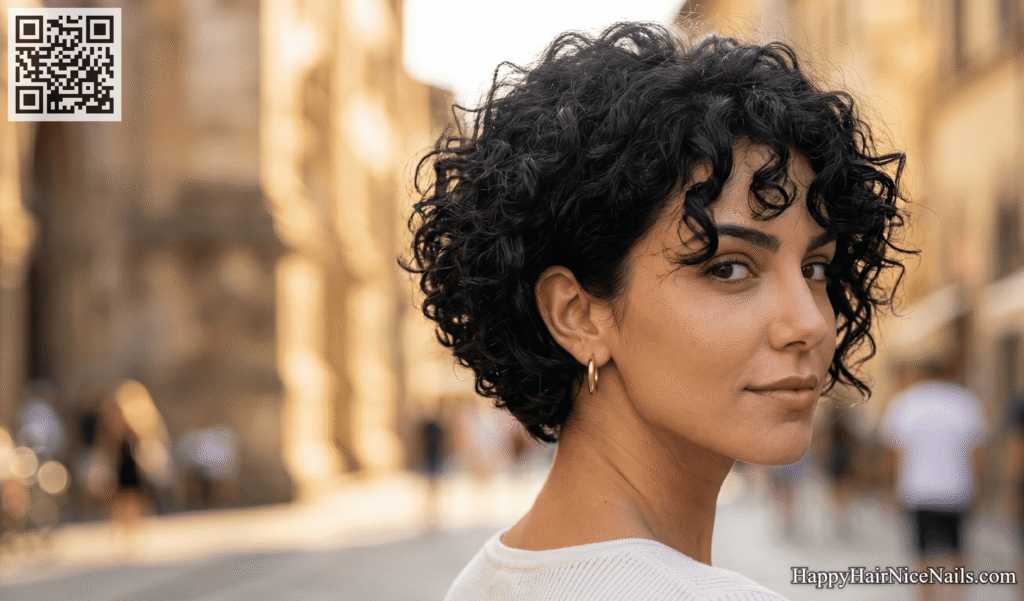
A short-to-medium curly Italian bob where individual ringlets are defined and separated rather than left in a frizzy mass. The cut removes length from underneath while keeping the top sections longer, allowing the ringlets to stack upward and outward for a rounded silhouette. The perimeter is diffused rather than trimmed into a hard line, so the curl pattern determines the final shape of the bob.
Best for: Curly to coily, high-density hair
Face shape: Oblong, heart
Styling technique: Diffused on medium heat with a curl-defining gel
Why it stands out: The silhouette is determined entirely by the curl pattern, not the scissor line — making every version of this Italian bob genuinely unique to the individual wearing it.
Ideal for: Naturally curly individuals who want a bob hairstyle that works with their curl pattern rather than suppressing it.

A near-blunt Italian bob where the only layering is a single, subtle graduation that removes about a centimetre of weight from the interior. The result looks blunt from the outside but moves more freely than a true one-length cut. On fine hair, this barely-there layering approach is often more effective than aggressive layering, which can make fine hair look stringy.
Best for: Fine, straight hair
Face shape: Oval, round
Styling technique: Blowout with a small round brush for lift at the roots
Why it stands out: The restraint is the point — this Italian bob shows that minimal intervention often produces more elegance than heavy layering.
Ideal for: Fine-haired individuals who’ve been over-layered before and lost volume, and those who want a bob hairstyle with movement that doesn’t look thin.

A jaw-length Italian bob where the ends are flicked slightly outward — not dramatically, just enough to lift the tips away from the neck — paired with a heavy curtain fringe that sweeps wide across the forehead. The wide fringe and the outward flick at the ends create a style that is very 1970s in its proportions but reads contemporary when executed in a modern colour.
Best for: Straight to mildly wavy, medium-density hair
Face shape: Square, oblong
Styling technique: Blow-dried with a round brush, tips flicked out with a flat iron
Why it stands out: The proportions are specific and retro-informed — the wide fringe and the outward flick work together to widen the silhouette in a way most Italian bob cuts don’t attempt.
Ideal for: Those who love vintage-inspired cuts with a current finish, and those with strong jawlines they want to soften

A chin-to-nape graduated Italian bob worn on fully natural grey hair. The graduation is steeper than average, building significant volume at the crown while the nape sits close and flat. The grey hair is styled smooth but not lacquered — there’s visible texture in the finish. The sheen of natural grey on a well-shaped bob carries its own visual weight, making excessive layering unnecessary.
Best for: Coarse, natural grey, straight to wavy hair
Face shape: Round, heart
Styling technique: Blown dry smooth, light shine serum at the ends
Why it stands out: Most Italian bob references default to brunette or highlighted tones — this one leans fully into natural grey as the visual asset rather than treating it as something to work around.
Ideal for: Women who have embraced natural grey hair and want a bob hairstyle that makes the colour the focal point.

A below-chin Italian bob where the ends are razored rather than scissor-cut, creating a frayed, slightly spiky finish at the tips. The body of the cut is light — razoring removes bulk from the interior as well — and the overall effect is a bob that looks deliberately undone, with lots of separation and movement throughout. Works best on medium-density hair that can hold the razored texture without looking damaged.
Best for: Medium-density, straight to wavy hair
Face shape: Oval, square
Styling technique: Air-dried with a texturizing paste worked through the ends
Why it stands out: Razor-cutting changes the entire character of an Italian bob — the ends behave differently, separate more, and create a rock-influenced edge that scissor-cut bobs can’t replicate.
Ideal for: Those who want an Italian bob with attitude and movement rather than polish.

This longer Italian bob grazes the collarbone and features ends that flip outward rather than curling under. The flip is created with a large-barrel iron and adds a retro-modern energy to the style. The cut itself is lightly layered through the mid-section to support the flip, with the perimeter left clean and even. The silhouette opens outward at the bottom, creating a bell-like shape.
Best for: Medium-density, straight to slightly wavy hair
Face shape: Heart, oval
Styling technique: Large-barrel curling iron on the ends, flipped outward
Why it stands out: The outward flip at this length is an unusual choice — most longer Italian bob variations curl under or sit straight, making the bell silhouette genuinely distinctive.
Ideal for: Those who love a retro touch in a contemporary cut, and those with heart-shaped faces who want to add width at the jaw.

A chin-to-jaw-length Italian bob worn on coily hair that has been lightly stretched — not straightened — using a tension method during diffusing. The coils retain their pattern but elongate slightly, giving the bob more length and structure than fully shrunken coily hair would show. This approach reveals the true cut shape while still honouring the natural texture.
Best for: Coily, type 4 hair
Face shape: Round, square
Styling technique: Diffused with tension stretching, no heat straightening
Why it stands out: This Italian bob variation makes visible a cut that coily hair in its fully shrunken state would obscure — it bridges natural texture and cut definition without compromise.
Ideal for: Coily-haired individuals who want the Italian bob shape to read clearly without altering their curl pattern through heat.

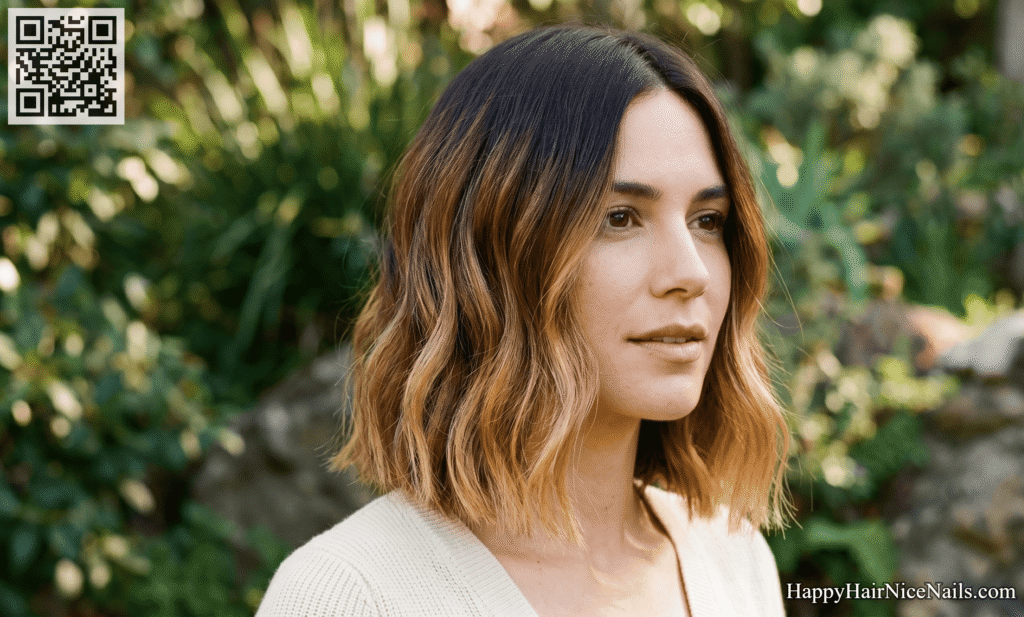
A jaw-length Italian bob where the colour technique does as much visual work as the cut. A dark root shadow blends into a lighter mid-shaft and ends, giving the bob depth and dimension. The ends are lightly dusted to maintain freshness without removing the grown-out quality. The cut has a single layer through the interior that allows the lighter ends to fall separately and catch the light.
Best for: Medium-density, straight to wavy hair
Face shape: Oblong, oval
Styling technique: Blow-dried with soft, loose bends using a medium-barrel iron
Why it stands out: The root shadow adds vertical depth to a relatively flat silhouette — this is a colour-architecture bob hairstyle that uses shade placement to create structure.
Ideal for: Those who want their Italian bob to look expensive and intentional without heavy styling effort.
A classic jaw-length Italian bob styled with a deep side part. The heavier side sweeps across the forehead and falls past the cheek, and the end on that side is tucked behind the ear, creating an asymmetric visual even though the cut itself is symmetrical. The tucked end reveals the jaw and ear on one side while the full length frames the opposite cheek. On straight, fine hair, this simple styling trick changes the entire personality of the bob.
Best for: Fine, straight hair
Face shape: Round, heart
Styling technique: Flat-ironed smooth, one side tucked behind the ear with a light-hold serum
Why it stands out: The asymmetry comes entirely from styling, not the cut — this Italian bob demonstrates how much variation is possible from a single base cut through placement alone.
Ideal for: Low-maintenance wearers who want a bob hairstyle that can change character with a simple styling adjustment.
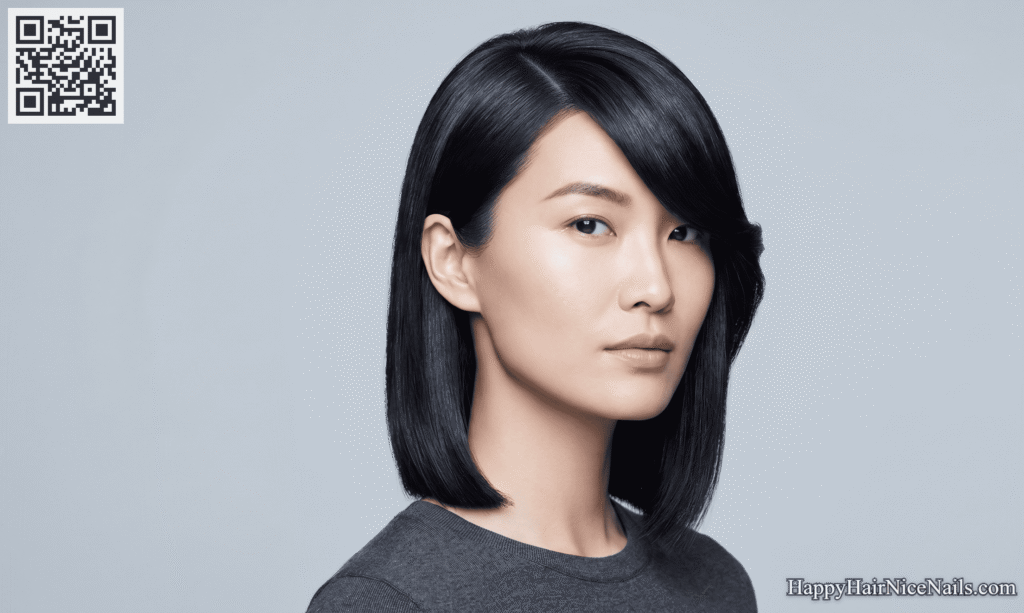
A shoulder-grazing Italian bob with curtain layers that begin at the ear and fall outward through the mid-lengths and ends. There is no fringe at all — the focus is entirely on the layering through the body of the bob, which creates significant movement when the hair is in motion. The no-fringe choice keeps the forehead clean and the face fully open. On thick wavy hair, the curtain layering here does heavy lifting in reducing bulk.
Best for: Thick, wavy hair
Face shape: Square, oblong
Styling technique: Diffused loosely, then touched up with a wide-barrel iron
Why it stands out: Curtain layers without a fringe are an underused approach — the layering does all the face-framing work without committing to a full fringe, making it especially easy to grow out.
Ideal for: Thick-haired individuals who want an Italian bob that handles the bulk between appointments without looking shapeless.

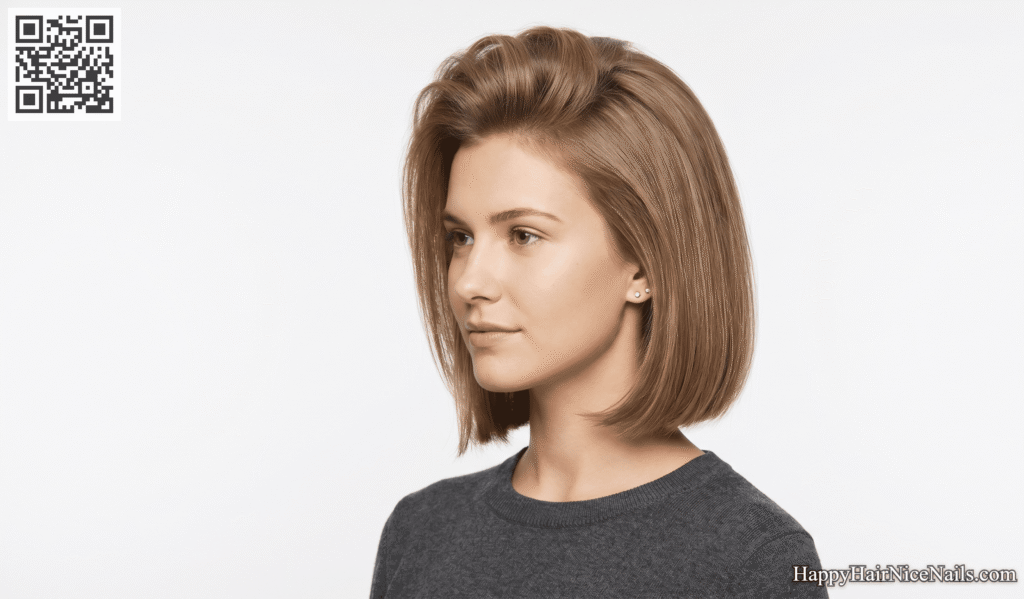
An Italian bob where the layering is concentrated entirely at the crown rather than distributed through the mid-lengths or ends. The crown layers create height and volume at the top section while the rest of the hair falls in a clean, solid mass. From the side, there’s a visible lift at the top that transitions into a smooth, even bottom section. On flat, fine hair, crown layering is often more effective than full-length layering, which can strip out the little density that’s there.
Best for: Fine, flat, straight hair
Face shape: Round, square
Styling technique: Blowout with a round brush lifting only at the crown, the rest smoothed flat
Why it stands out: Layering only the crown is an unusual, precise decision — it creates structure and proportion without introducing movement below, where fine hair needs fullness most.
Ideal for: Fine-haired individuals who’ve struggled with layered bobs that look flat or thin by the afternoon.
The Italian bob proves, across all 20 of these variations, that a single category of bob hairstyle can contain multitudes. From the coily-hair stretch technique to the razored edge, from the tucked side part to the crown-only micro layers, every version here is shaped by a different hair type, a different face, and a different set of priorities.