Physical Address
304 North Cardinal St.
Dorchester Center, MA 02124
Physical Address
304 North Cardinal St.
Dorchester Center, MA 02124
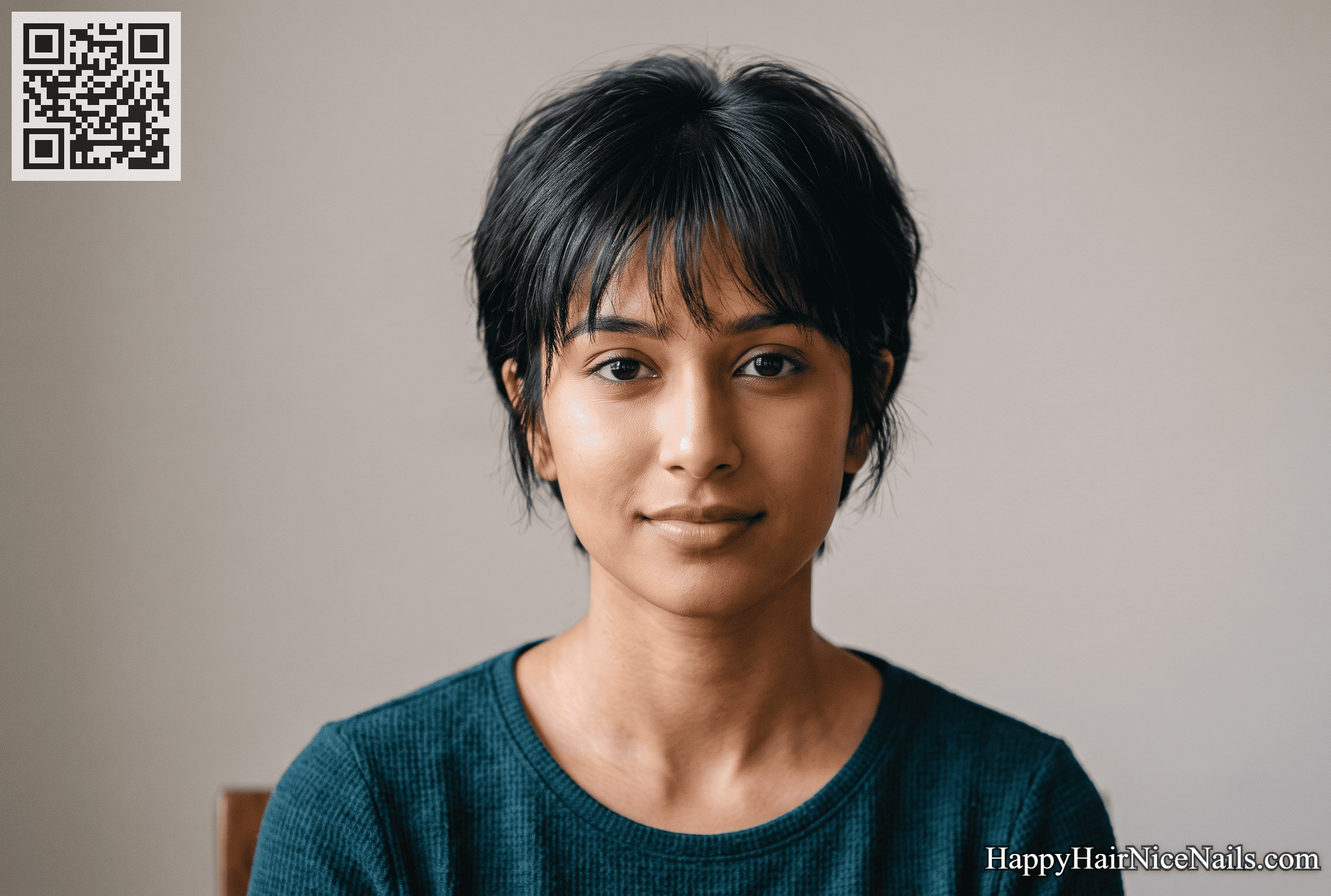
Textured pixie cuts have become one of the most requested variations under the pixie cut umbrella, and it’s easy to see why. Where a classic pixie cut leans clean and structured, a textured pixie cut brings in movement, piece-y layers, and a lived-in finish that feels less rigid and more expressive. This sub-article breaks down 21 distinct textured pixie cuts, each built around a different layering technique, length, or texture pattern. Whether the goal is soft curls, sharp choppy ends, or a longer fringe, there’s a textured pixie cut here that fits.
A textured pixie cut relies on internal layering and point-cutting techniques to break up the solid mass of hair that a traditional pixie cut usually has. Instead of one smooth silhouette, the layers create separation, which changes how light and movement interact with the hair. According to hair texture in a scientific sense is determined by the shape of the hair follicle, which affects whether hair grows straight, wavy, curly, or coily, and this natural texture plays a huge role in how a textured pixie cut falls and holds shape day to day.
For a deeper look at how layering and follicle shape affect hair behavior, see this Wikipedia entry on human hair. Every textured pixie cut on this list is shaped to work with that natural texture rather than against it.
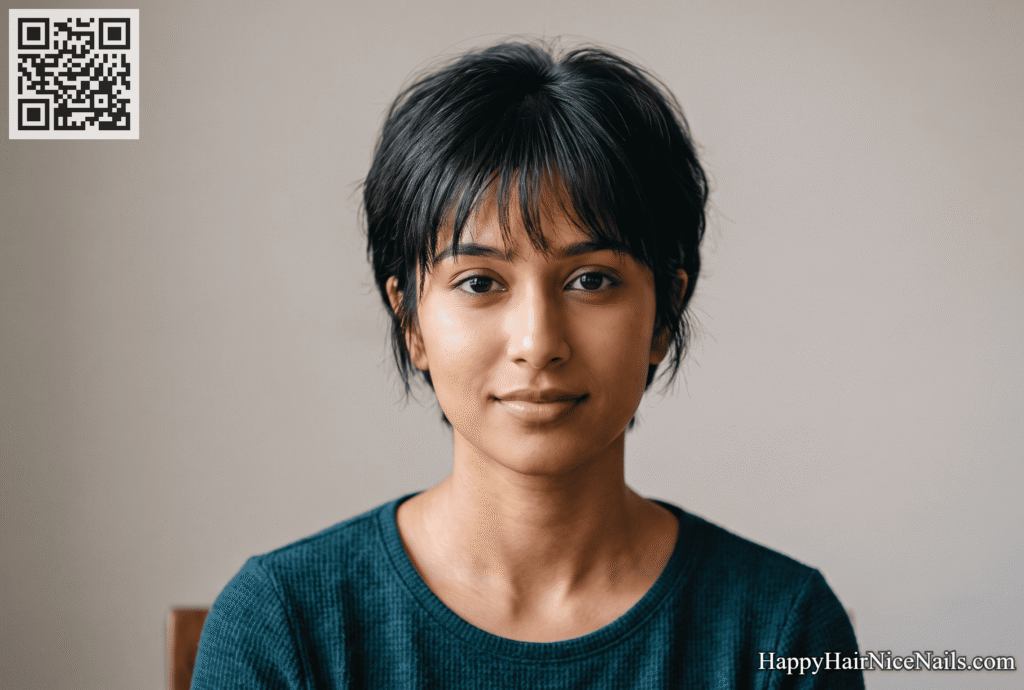
This textured pixie cut keeps the crown short and rounded while the fringe is feathered into soft, wispy pieces that skim just above the brow. The feathering technique removes bulk from the ends, so the fringe moves freely instead of sitting in one heavy block. It’s a textured pixie cut that softens strong features without overwhelming a smaller face.
Best for: Fine, straight hair
Face shape: Square, heart
Styling technique: Diffused with a small round brush
Why it stands out: The fringe does all the visual work here — feathered rather than blunt, it adds softness without adding length anywhere else on this textured pixie cut.
Ideal for: People who want a soft entry point into shorter hair without losing femininity.
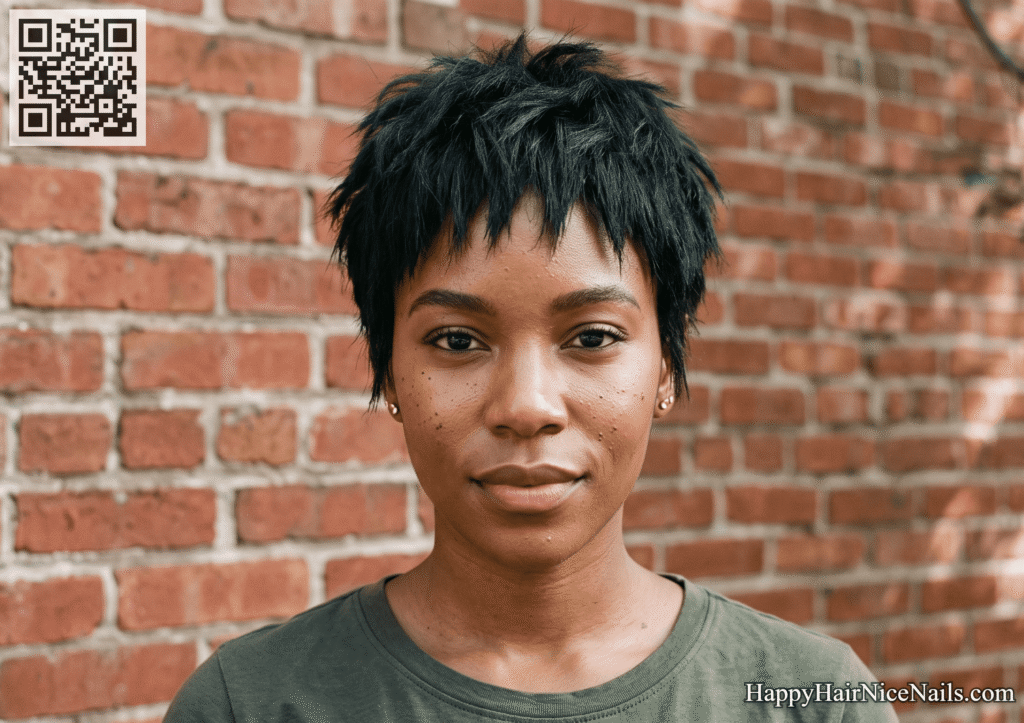
Built around jagged, uneven ends, this choppy textured pixie cut uses heavy point-cutting throughout the crown and nape to create maximum texture. Every section looks slightly different in length, which gives the whole style an intentionally undone edge. It reads as one of the more rebellious takes on the textured pixie cut family.
Best for: Thick, coarse hair
Face shape: Oval, round
Styling technique: Air-dried with texturizing paste
Why it stands out: The unevenness is deliberate, not accidental — this textured pixie cut thrives on visible chop marks rather than smooth transitions.
Ideal for: Bold style fans who want an edgy, low-fuss look.
On naturally curly hair, this textured pixie cut is cut slightly longer at the crown to let ringlets form without collapsing into a helmet shape. The layering follows the curl pattern instead of cutting against it, so each curl retains its own spring and definition. It’s a textured pixie cut designed specifically around curl behavior.
Best for: Curly, medium-density hair
Face shape: Oval, oblong
Styling technique: Scrunched with curl cream
Why it stands out: The cut respects curl shrinkage, giving this textured pixie cut natural volume that straight-cut layers can’t replicate.
Ideal for: Curly-haired individuals tired of pixie cuts that flatten their curl pattern.
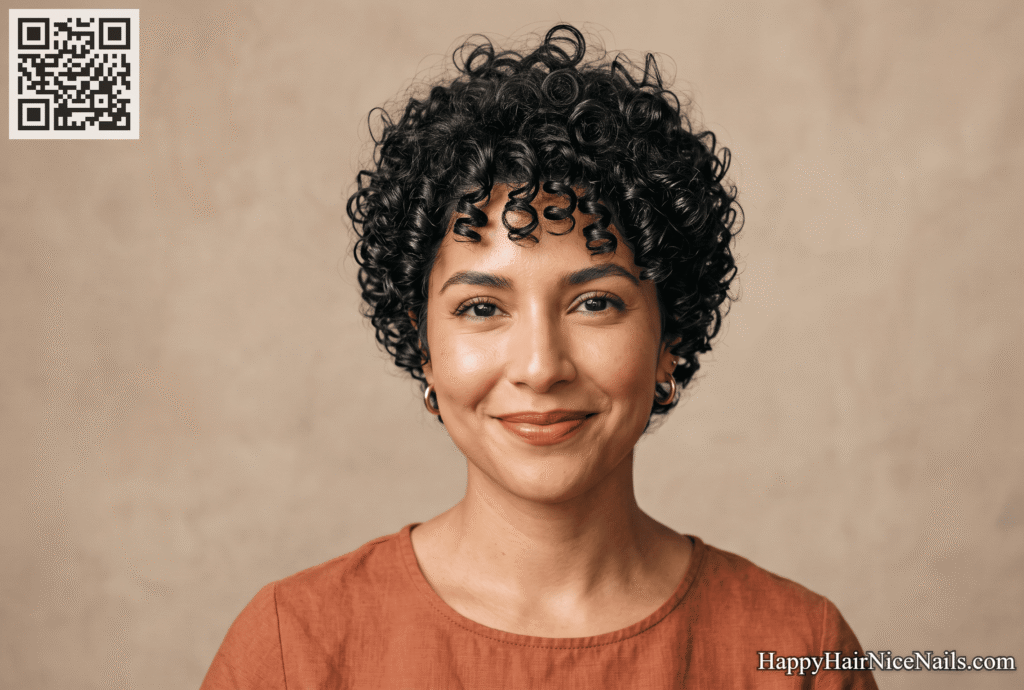
This textured pixie cut keeps length concentrated around the face while the back and crown stay short and close. The face-framing pieces are cut at an angle so they taper toward the jaw rather than sitting straight down. It’s a textured pixie cut built to sculpt and highlight facial structure.
Best for: Wavy, medium-thickness hair
Face shape: Round, square
Styling technique: Flat-ironed with a slight bend
Why it stands out: The tapered face-framing pieces on this textured pixie cut do more shaping work than the rest of the cut combined.
Ideal for: Anyone wanting a pixie cut that visually narrows a fuller face.
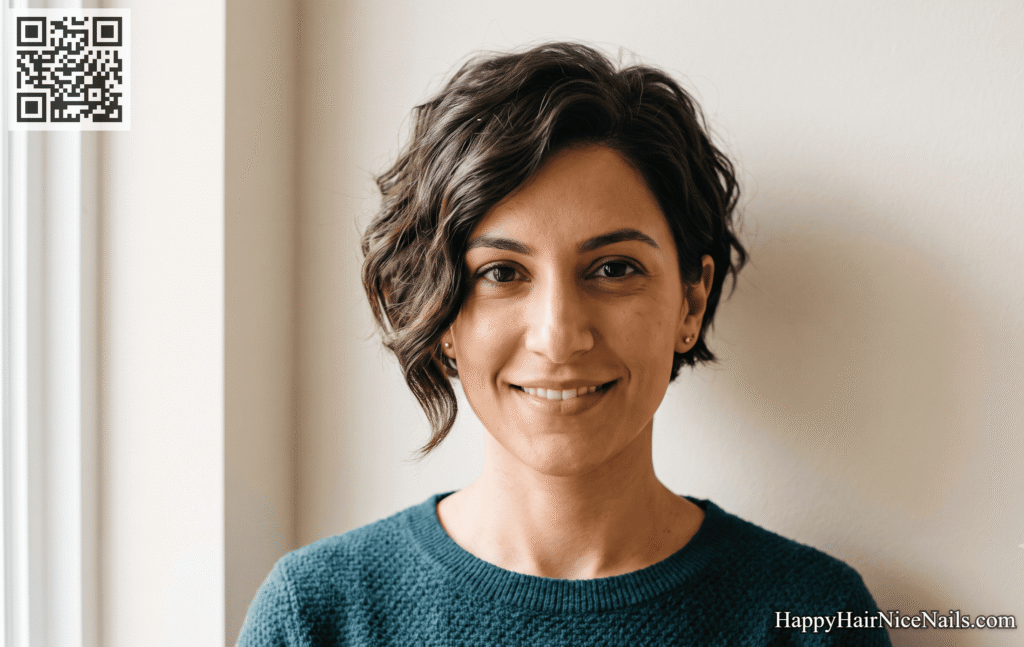
One side is cut noticeably shorter than the other in this asymmetric textured pixie cut, creating an off-balance silhouette that reads as modern and architectural. The longer side carries most of the texture, while the shorter side stays close and clean. This textured pixie cut leans into contrast rather than symmetry.
Best for: Straight, fine-to-medium hair
Face shape: Oval, heart
Styling technique: Blow-dried with a paddle brush
Why it stands out: The deliberate imbalance sets this textured pixie cut apart from every symmetrical option on this list.
Ideal for: Fashion-forward wearers who want a cut that photographs differently from every angle.
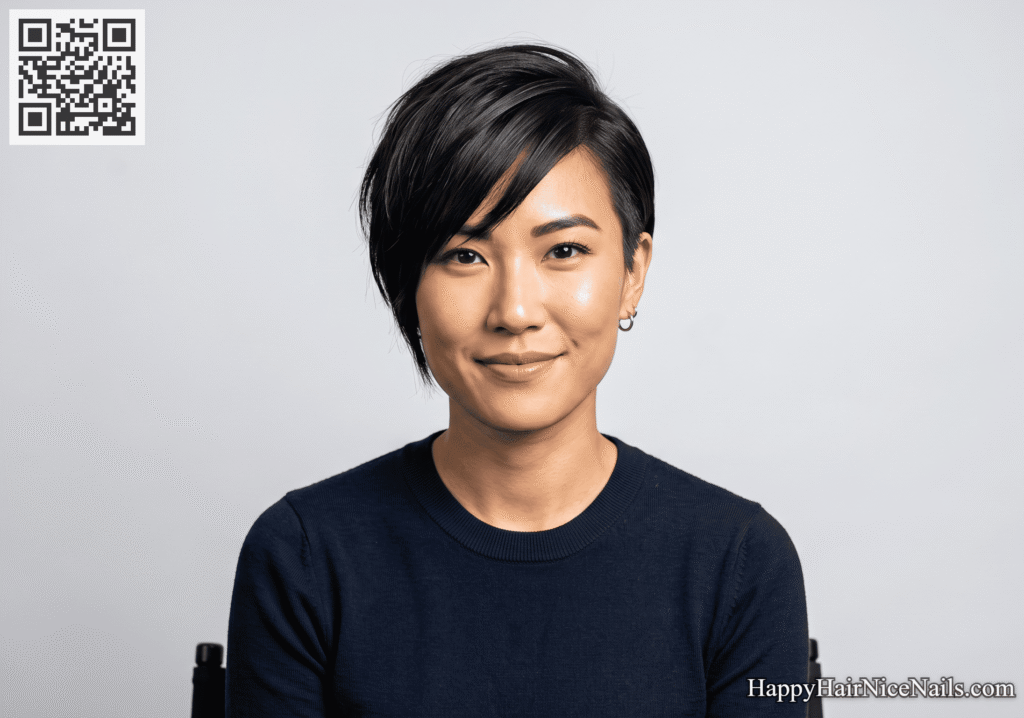
This textured pixie cut combines a blunt perimeter with internal texturizing, so the outer shape stays crisp while the inside carries movement. From a distance it looks structured, but up close the layering breaks up any flatness. It’s a hybrid textured pixie cut for people who want texture without looking undone.
Best for: Medium-density, straight hair
Face shape: Oval, square
Styling technique: Blow-dried smooth with texturizing spray
Why it stands out: The contrast between the sharp blunt edge and the softened interior layers makes this textured pixie cut feel polished and edgy at once.
Ideal for: People who want a low-drama entry into textured pixie cuts.
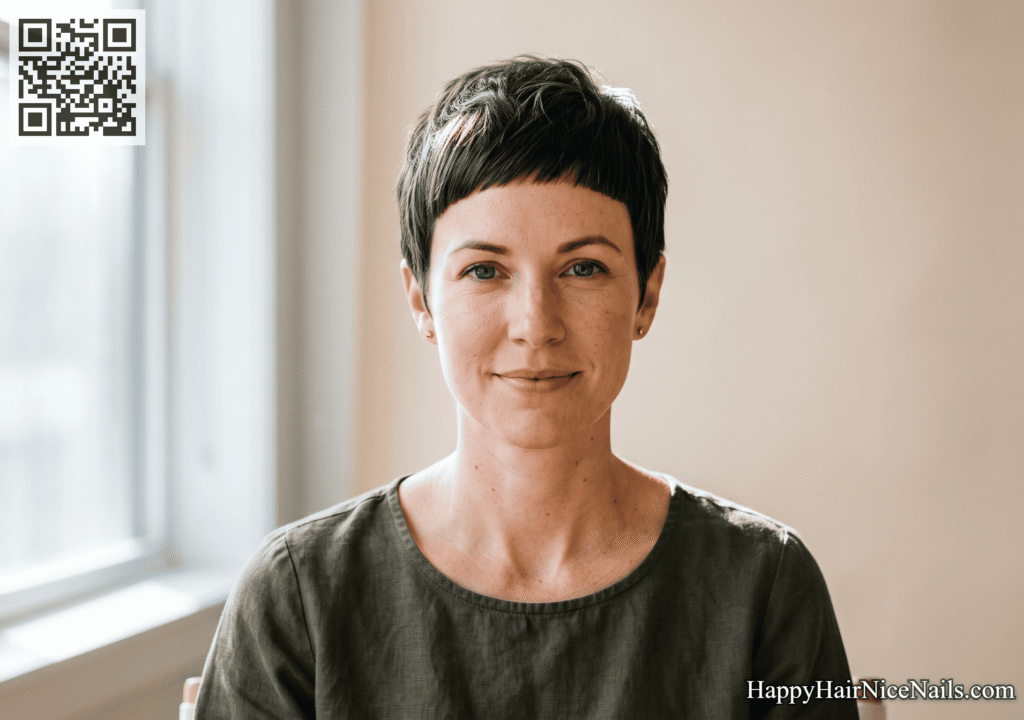
Inspired by curtain bangs, this textured pixie cut parts the fringe down the middle and lets each side sweep outward like a curtain. The layering starts right at the part line, so the fringe blends seamlessly into the sides. This textured pixie cut works especially well for growing out longer bangs.
Best for: Wavy, fine hair
Face shape: Round, oval
Styling technique: Round-brush blowout
Why it stands out: The center part and outward sweep give this textured pixie cut a softer, more open frame around the face than most.
Ideal for: Anyone transitioning from longer bangs into a shorter cut.
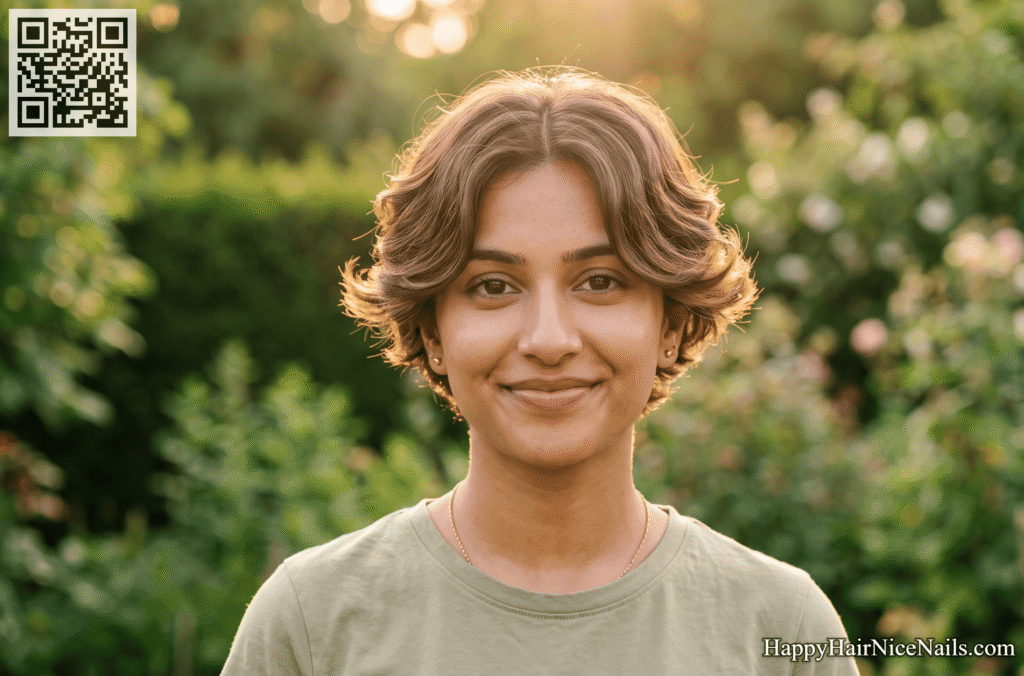
Rather than heavy chunks, this textured pixie cut uses micro-layers so fine that no single layer is visible on its own — only the combined movement shows. The technique keeps fine hair looking full instead of thin and see-through. It’s one of the more subtle entries among textured pixie cuts.
Best for: Fine, low-density hair
Face shape: Oval, heart
Styling technique: Diffused with volumizing mousse
Why it stands out: This textured pixie cut proves that texture doesn’t require visible chunks — the layering here is felt more than seen.
Ideal for: Fine-haired individuals worried texture will make hair look sparse.
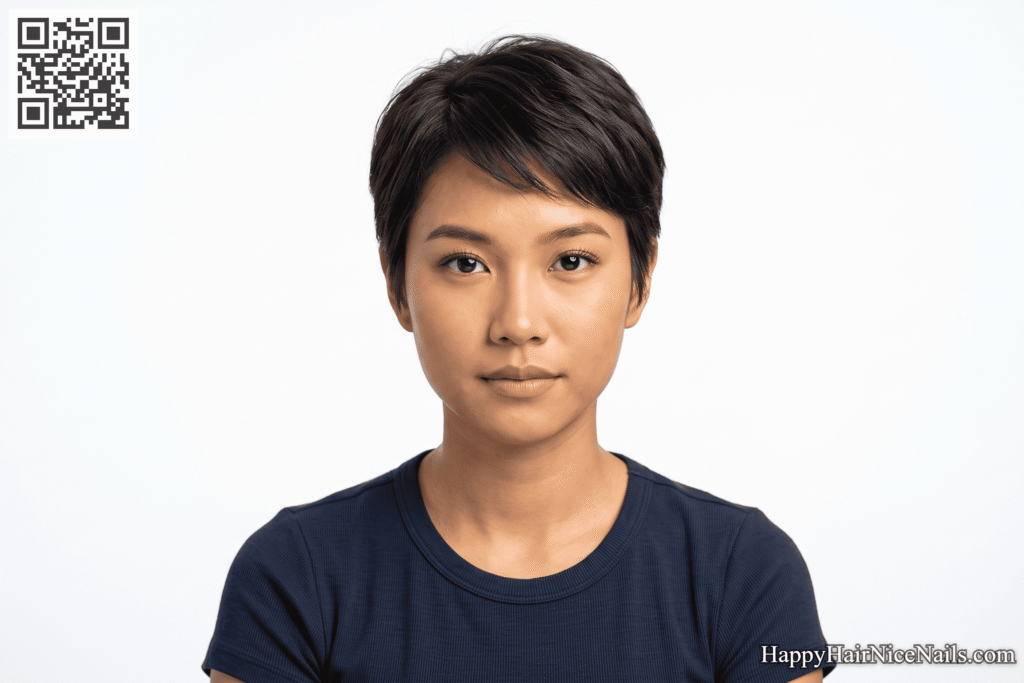
This textured pixie cut keeps the crown and sides very short while leaving the fringe noticeably longer, almost brushing the cheekbone. The length contrast makes the fringe the clear focal point. It’s a bolder take among textured pixie cuts, favoring drama over uniformity.
Best for: Straight, thick hair
Face shape: Oblong, square
Styling technique: Flat-ironed fringe, air-dried crown
Why it stands out: The exaggerated length gap between fringe and crown makes this textured pixie cut instantly recognizable.
Ideal for: Bold style fans wanting maximum contrast in a short cut.
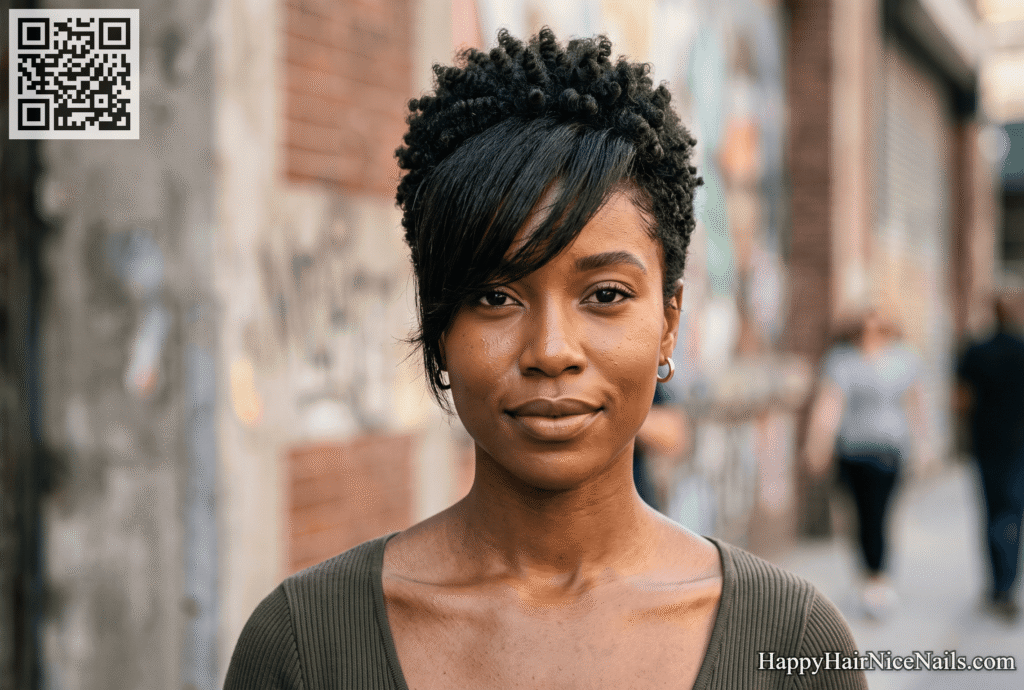
Designed for tightly coiled hair, this textured pixie cut is cut to follow the natural coil pattern rather than force it into a different shape. The layers are shaped in a rounded silhouette that lets each coil sit where it naturally wants to fall. This is one of the more texture-dependent cuts on the list of textured pixie cuts.
Best for: Coily, dense hair
Face shape: Oval, round
Styling technique: Finger-coiled with curl butter
Why it stands out: The rounded shaping works entirely with coil pattern instead of against it, making this textured pixie cut low-maintenance for coily textures.
Ideal for: Naturalistas wanting a short cut that celebrates coil pattern.
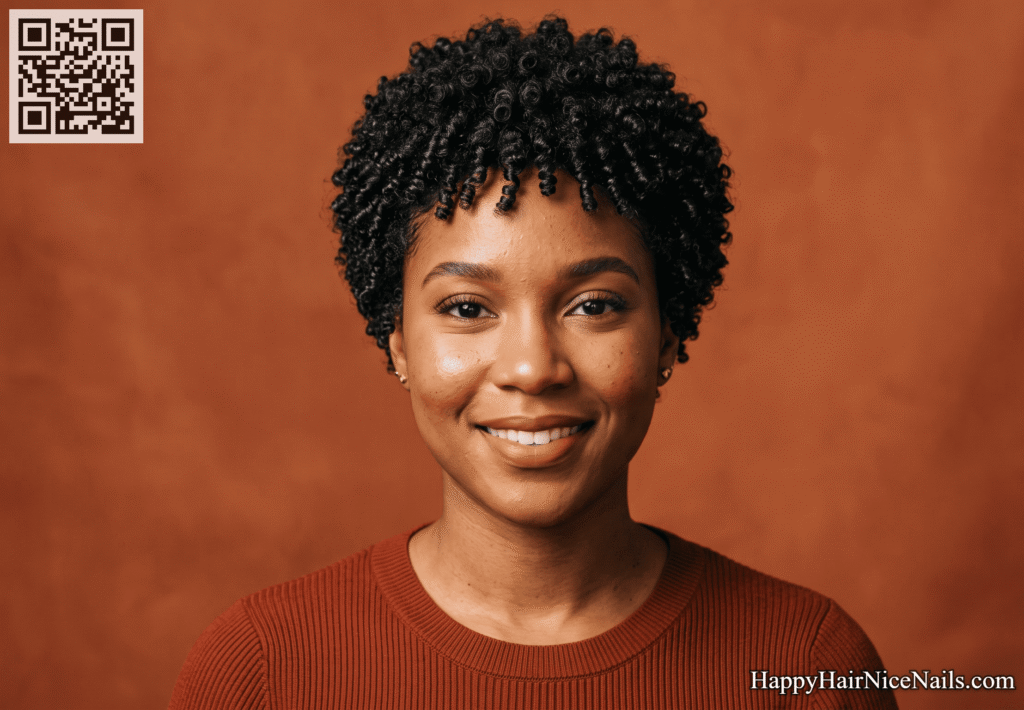
This textured pixie cut leans into natural wave pattern by cutting layers that encourage an S-shaped bend rather than flattening it out. The result is soft, beachy movement across the crown. Among textured pixie cuts, this one photographs especially well in motion.
Best for: Wavy, medium hair
Face shape: Oval, heart
Styling technique: Sea-salt spray, air-dried
Why it stands out: The natural wave becomes the main texture source, so this textured pixie cut needs almost no additional styling effort.
Ideal for: Low-maintenance wearers with naturally wavy hair.
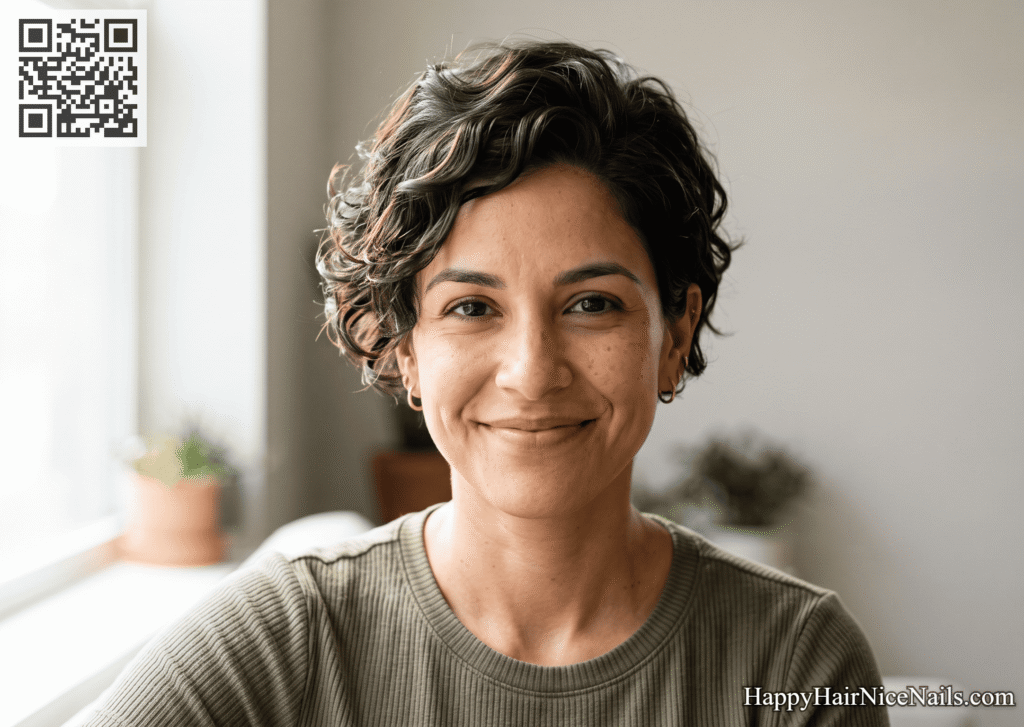
This version pairs a shaved or heavily tapered undercut at the nape with longer, textured layers on top. The contrast between the buzzed sides and the piece-y crown gives this textured pixie cut a sharper, more graphic edge. It’s one of the more statement-making textured pixie cuts.
Best for: Thick, straight hair
Face shape: Oval, square
Styling technique: Piece-y styling with matte clay
Why it stands out: The buzzed undercut creates a hard visual line beneath the soft textured top, a contrast unique to this textured pixie cut.
Ideal for: Wearers wanting a bold, high-contrast short style.
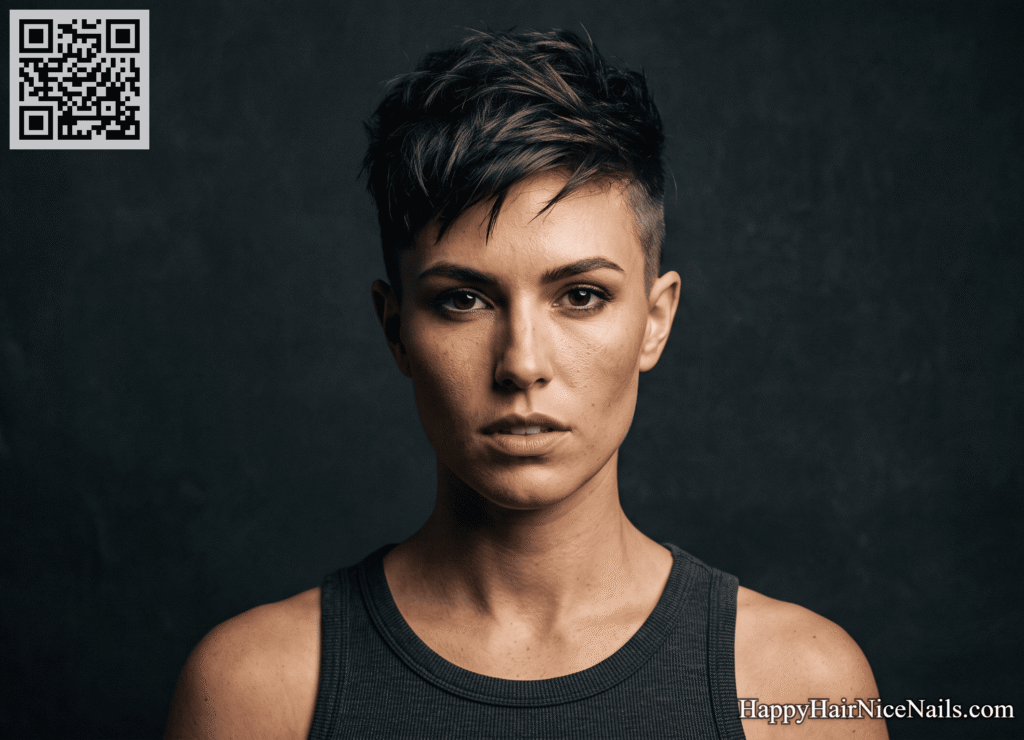
Thick hair often gets weighed down in shorter cuts, so this textured pixie cut removes bulk through deep point-cutting across the mid-lengths. The goal is to thin out density while keeping the overall shape full and rounded. It’s a practical solution among textured pixie cuts for anyone managing heavy hair.
Best for: Thick, dense hair
Face shape: Round, oblong
Styling technique: Blow-dried with a diffuser attachment
Why it stands out: The internal thinning technique makes this textured pixie cut sit lighter than its thickness would suggest.
Ideal for: People with thick hair who struggle with bulky short cuts.
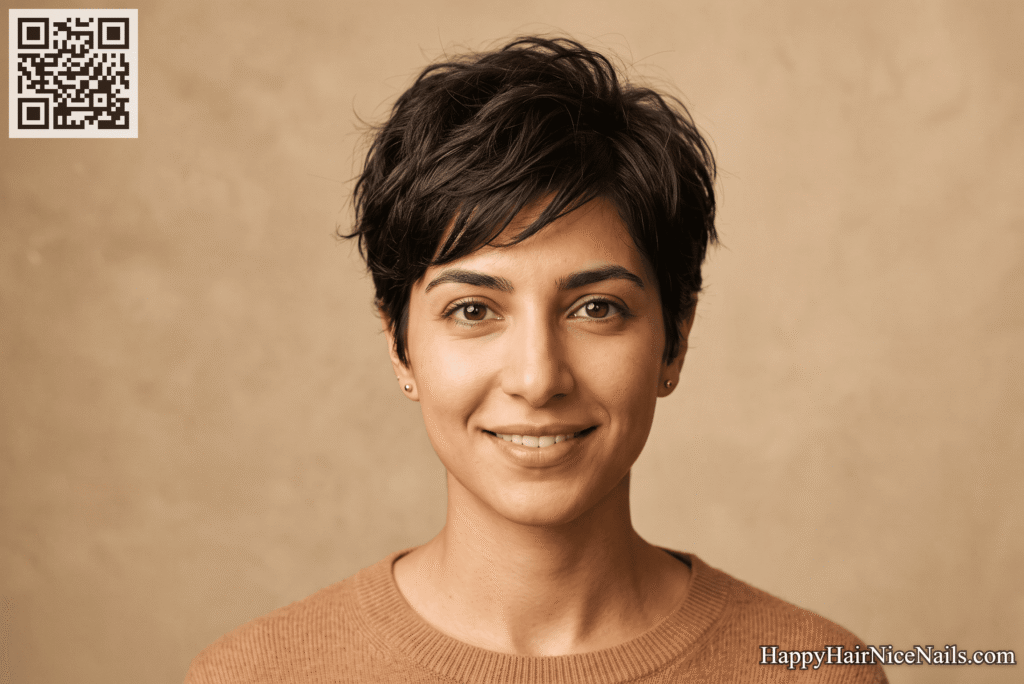
Short, upward-styled pieces define this textured pixie cut, with each section separated using a strong-hold product to create a spiked, graphic texture. The layering is cut short and choppy at the crown specifically to support this styling. It’s one of the more high-energy takes on textured pixie cuts.
Best for: Straight, medium hair
Face shape: Heart, oval
Styling technique: Finger-styled with strong-hold wax
Why it stands out: The deliberate spiked separation gives this textured pixie cut a graphic, almost sculptural quality other entries don’t have.
Ideal for: Wearers who like a high-impact, styled-up finish.
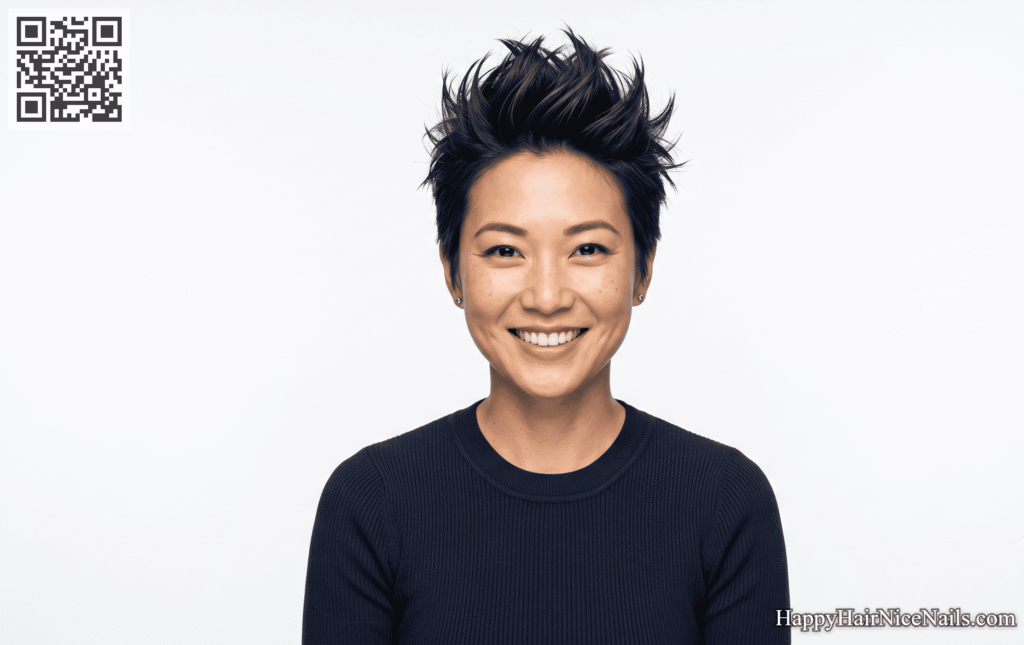
Instead of a center part, this textured pixie cut is styled with a deep side part, letting longer top layers sweep across the forehead. The layering is cut at an angle to support the sweep without needing constant re-styling. It’s a softer-looking entry among textured pixie cuts.
Best for: Straight, fine-to-medium hair
Face shape: Square, oblong
Styling technique: Blow-dried with a paddle brush and side sweep
Why it stands out: The deep side part reshapes the whole face frame, making this textured pixie cut look different from straight-fringe versions.
Ideal for: Those who want a pixie cut with a softer, asymmetrical fringe fall.
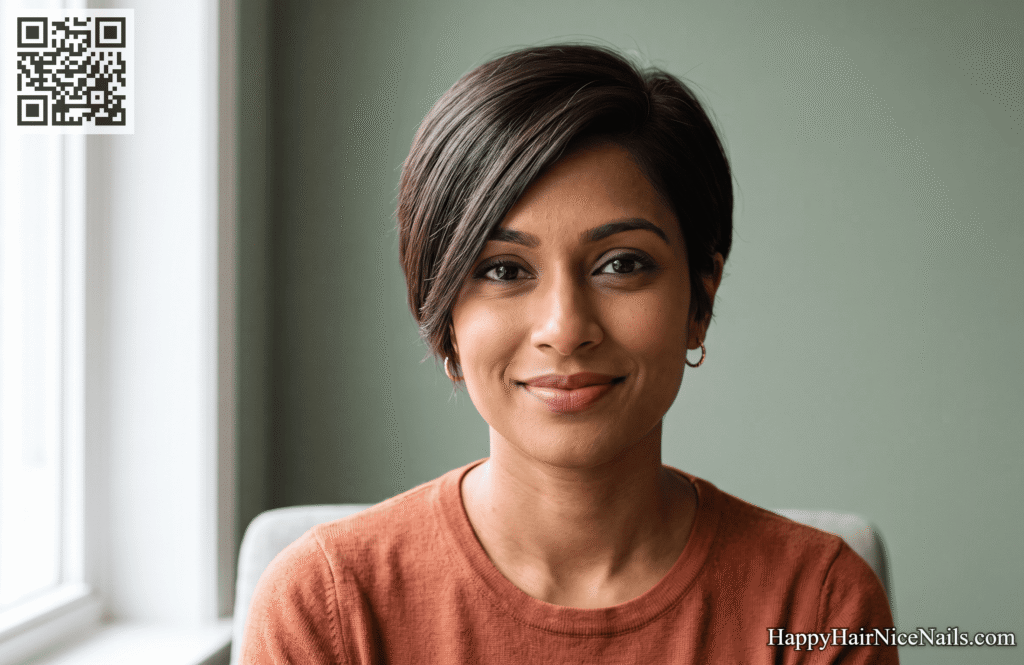
This entry captures the in-between stage where a textured pixie cut has grown past the ear but hasn’t reached a bob yet. Layers are cut to manage the awkward growth phase, keeping the sides tucked and the crown textured. It’s a transitional style among textured pixie cuts.
Best for: Wavy, medium-density hair
Face shape: Oval, round
Styling technique: Air-dried with light-hold cream
Why it stands out: Unlike most textured pixie cuts, this one is designed specifically to manage growth rather than a finished silhouette.
Ideal for: Anyone growing out a pixie cut who still wants it to look intentional.
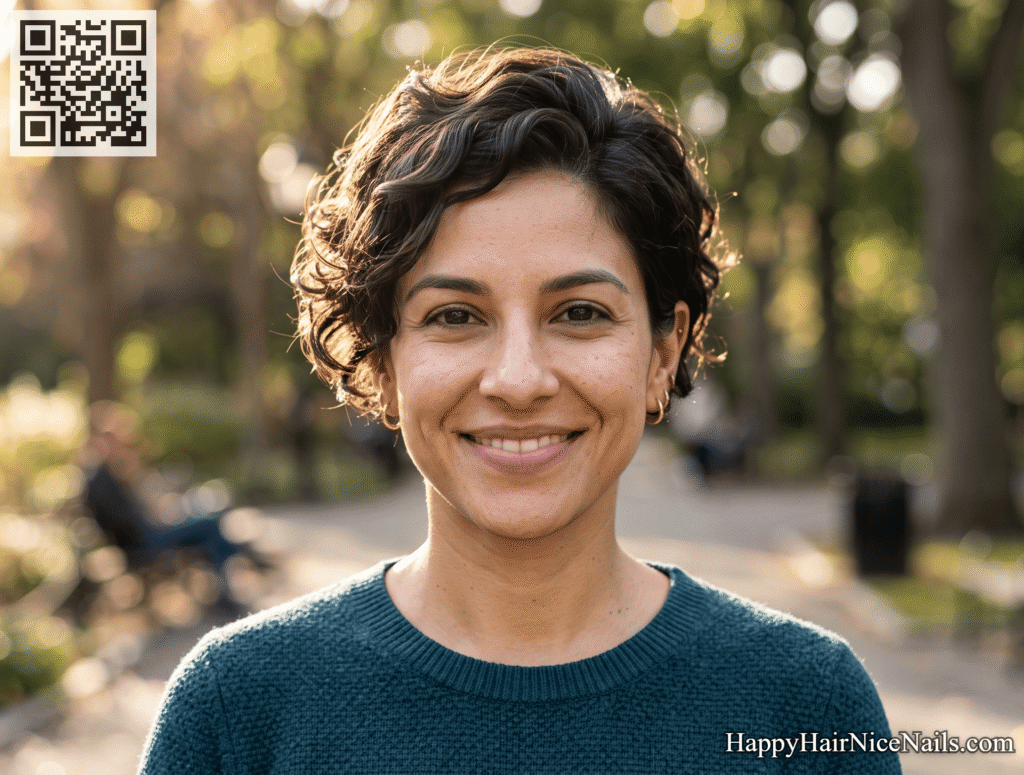
Cut entirely with a razor rather than shears, this textured pixie cut has extra-soft, wispy ends throughout, since the razor technique thins hair as it cuts. The finish is airy rather than blunt anywhere on the head. It’s one of the softest-edged textured pixie cuts on this list.
Best for: Straight, medium-thick hair
Face shape: Oval, heart
Styling technique: Air-dried, scrunched lightly at the ends
Why it stands out: The razor technique itself creates the texture, so this textured pixie cut needs very little additional styling to look finished.
Ideal for: People wanting a naturally soft, wispy short style.
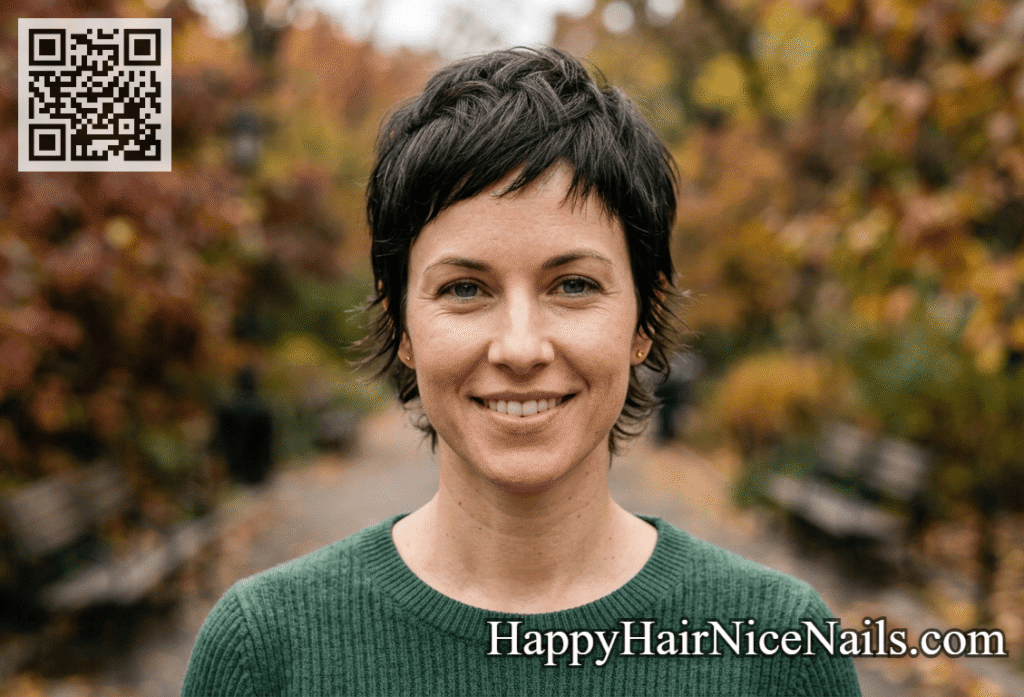
The sides and back gradually taper down toward the nape in this textured pixie cut, while the crown keeps longer, textured layers. The taper is soft rather than sharp, blending rather than creating a hard line. It’s a balanced, wearable entry among textured pixie cuts.
Best for: Coily, medium-density hair
Face shape: Round, oval
Styling technique: Twist-out with defining cream
Why it stands out: The soft taper gives this textured pixie cut a rounded, polished profile that still keeps plenty of texture up top.
Ideal for: Wearers who want shape without a harsh undercut line.
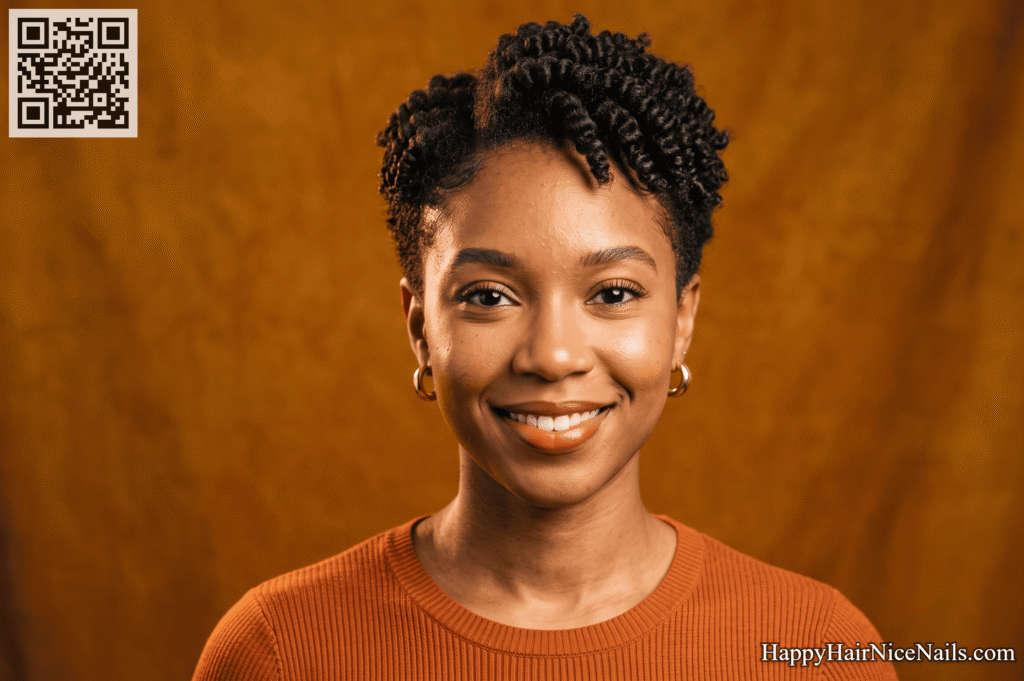
Short, blunt micro-bangs sit just above the eyebrows in this textured pixie cut, contrasting with longer, textured layers everywhere else. The bangs are cut precisely, while the rest of the cut stays loose and piece-y. This is one of the boldest textured pixie cuts for anyone wanting a strong statement.
Best for: Straight, medium hair
Face shape: Oval, long
Styling technique: Flat-ironed bangs, air-dried crown
Why it stands out: The sharp micro-bang contrast against soft textured layers makes this textured pixie cut visually striking from the front.
Ideal for: Confident wearers who want a bold, editorial short look.
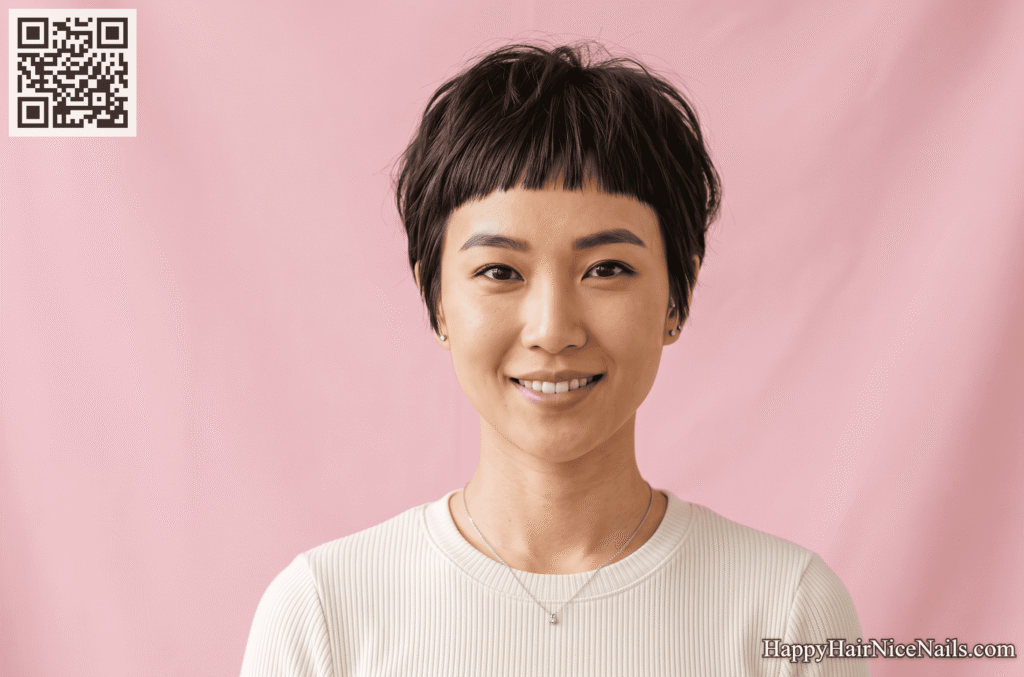
Layers are stacked shortest at the nape and progressively longer toward the crown in this textured pixie cut, building noticeable height at the top of the head. The stacking technique is what creates the lift, rather than backcombing or heavy product. It’s a structural entry among textured pixie cuts.
Best for: Fine, straight hair
Face shape: Round, square
Styling technique: Blow-dried upward with a root-lifting spray
Why it stands out: The stacked layering builds real volume into this textured pixie cut, rather than relying on styling tricks to fake it.
Ideal for: Fine-haired individuals who want built-in height and body.
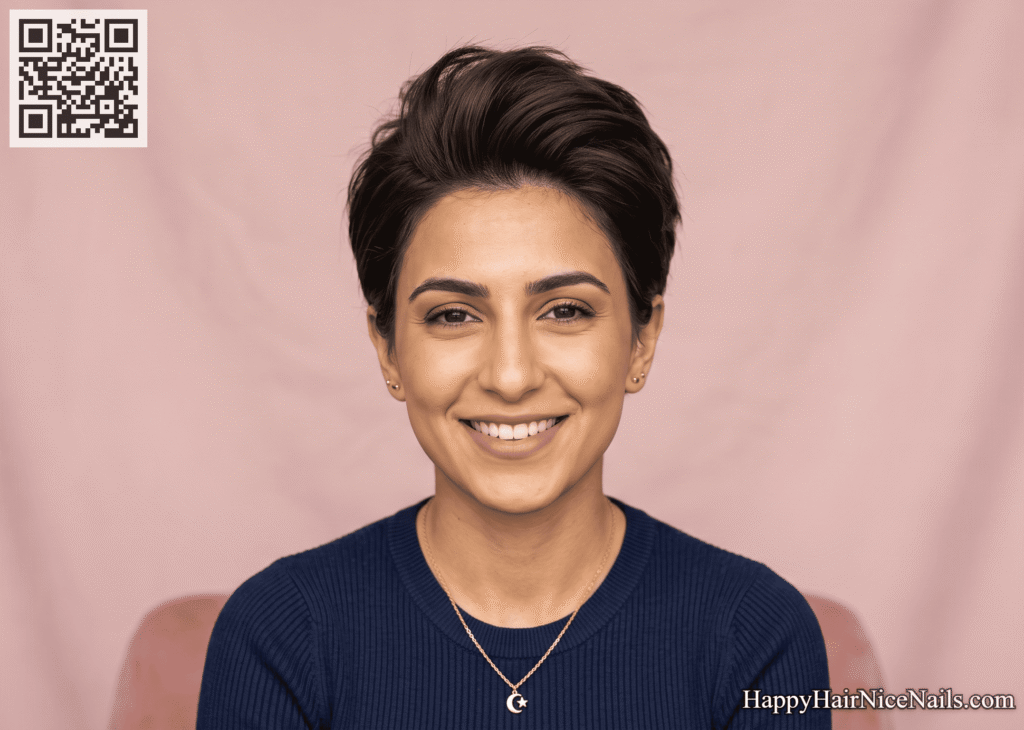
This textured pixie cut is specifically shaped with height at the crown and closeness at the sides to visually elongate a rounder face. The layering avoids adding width anywhere near the cheeks, focusing volume upward instead. It rounds out this list of textured pixie cuts with a face-shape-specific solution.
Best for: Wavy, medium hair
Face shape: Round
Styling technique: Blow-dried with volume at the roots, smooth at the sides
Why it stands out: Every layering decision in this textured pixie cut is built around elongating a round face, unlike more general entries on this list.
Ideal for: Round-faced wearers wanting a slimming, upward-focused silhouette.
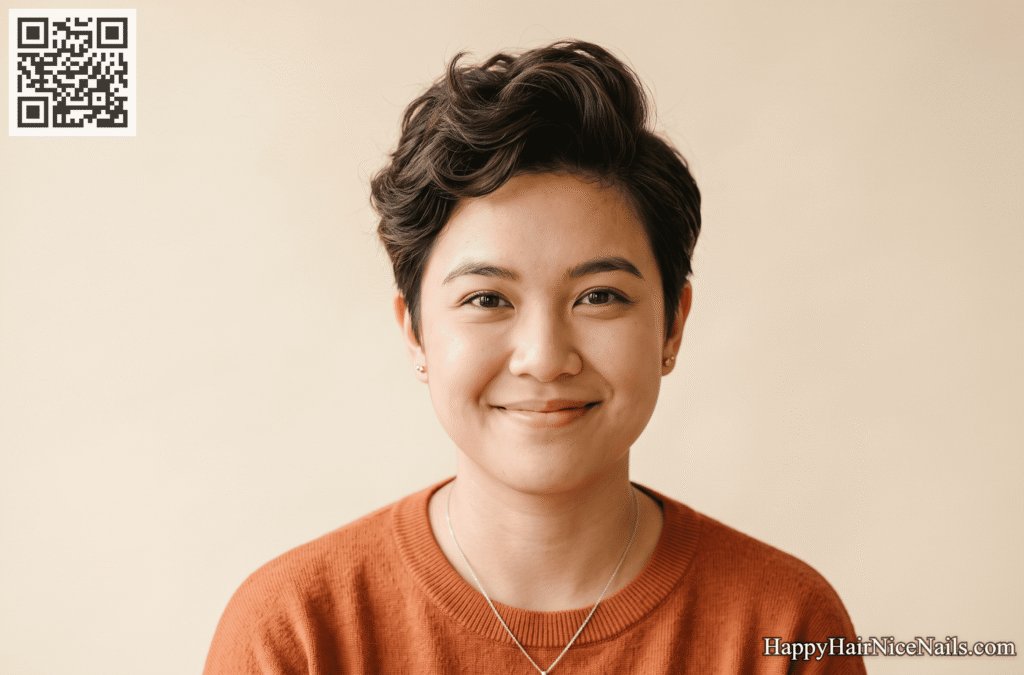
From feathered fringes to coily crowns, these 21 textured pixie cuts show just how much range exists within one sub-style of the broader pixie cuts family. Anyone still deciding on a length or shape can browse the full pixie cuts pillar guide for a wider overview before narrowing down to a textured pixie cut. For related short-hair inspiration, check out blunt bob cuts, italian bob cuts, and bob cuts for thick hair, each covering a different angle on short styling. Pairing a bold new cut with a bold new manicure is always a good idea, so browse minimalist spring nail art ideas for a look that matches the same clean, modern energy as a fresh textured pixie cut.