Physical Address
304 North Cardinal St.
Dorchester Center, MA 02124
Physical Address
304 North Cardinal St.
Dorchester Center, MA 02124
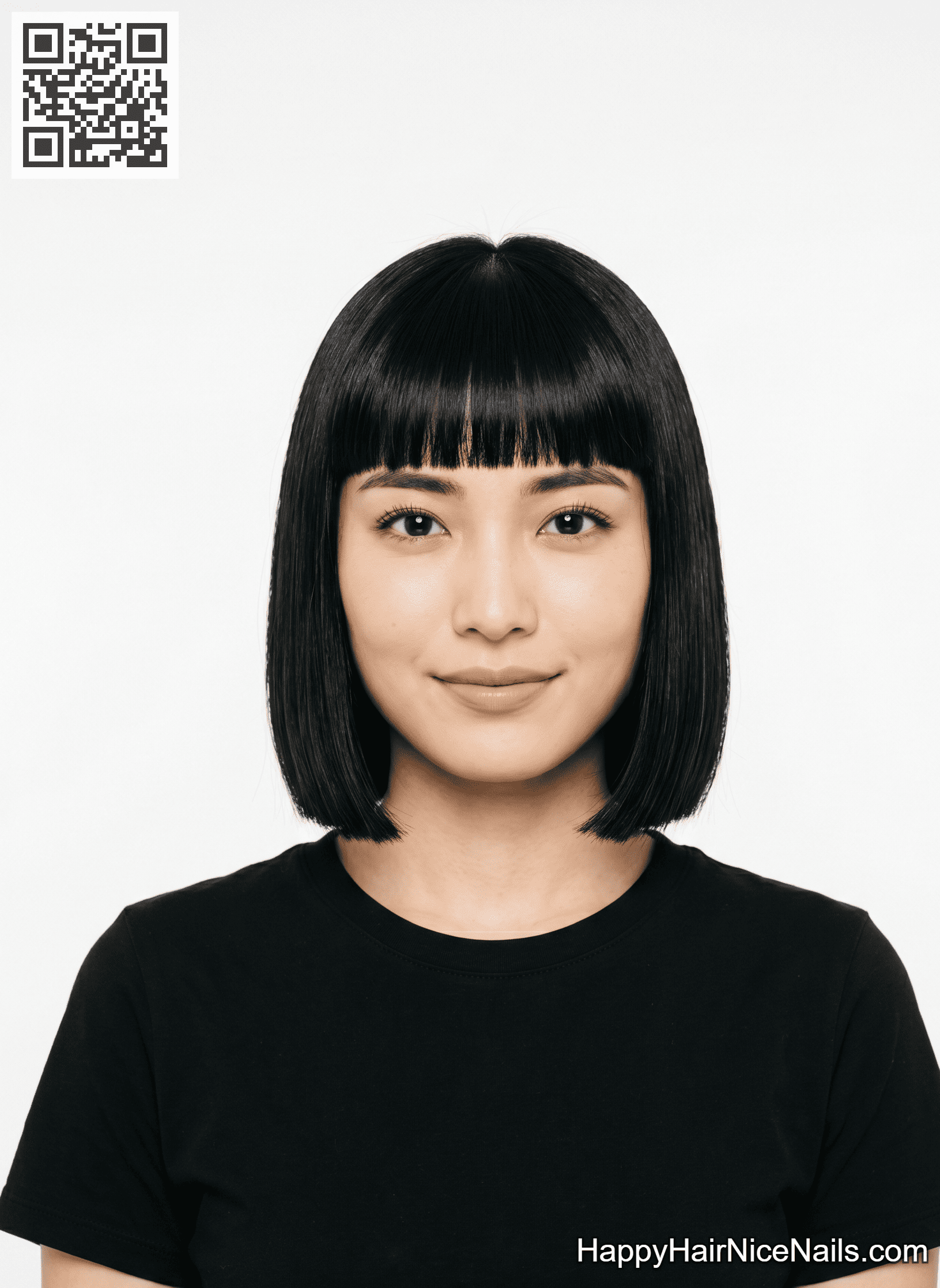
The French bob is one of the most recognizable cuts in the bob hairstyles family — short, deliberate, and unmistakably Parisian in its attitude. It sits higher than a standard chin-length bob, typically landing somewhere between the cheekbone and the jaw, and is almost always paired with some form of fringe. What makes it endlessly interesting is how much the cut can shift depending on the fringe style, the texture of the hair, and the finishing technique used. These 21 hairstyles cover the full range of what this cut can do.
The French bob is a short blunt bob — usually cut at or just below the cheekbone — paired with a fringe that sits at or near the eyebrows. It is closely associated with Parisian and European style culture, where an understated, slightly undone aesthetic has long been the dominant hair identity. The cut gained significant cultural traction in the early-to-mid 20th century and has been repeatedly revived in fashion cycles since.
Structurally, the French bob is characterized by its compact silhouette and strong horizontal lines — the fringe creates one clean line across the forehead, and the perimeter creates another just below the cheekbone or at the jaw. For a detailed look at the bob cut’s broader history and how the French variation fits within it, the Wikipedia article on the bob cut is a well-documented starting point.
Within the bob hairstyles category, the French bob sits at the shorter, more structured end — but as the entries below show, the cut has far more range than its reputation for simplicity suggests.
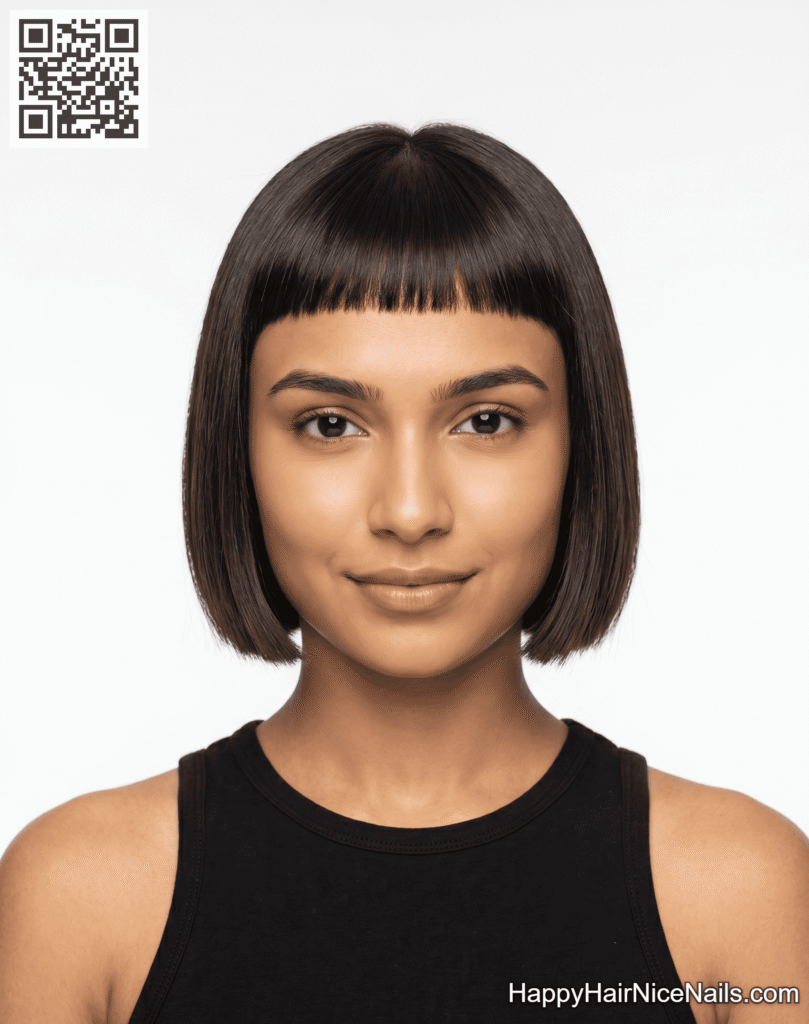
The most foundational version of the French bob — a perfectly blunt perimeter cut at cheekbone level, paired with eyebrow-grazing blunt fringe cut in a clean horizontal line. No layers, no graduation, no internal texture of any kind. Every strand terminates at the same point. The two parallel lines — fringe at the brow, perimeter at the cheek — create a very graphic, contained frame around the face.
Best for: Straight, fine-to-medium density hair
Face shape: Oval, heart
Styling technique: Blowout with a paddle brush, fringe pressed flat with a fine-tooth comb
Why it stands out: The complete absence of texture or layering means every visual element of this French bob comes from the geometry of the two cut lines — the fringe and the perimeter working together as parallel horizontal markers.
Ideal for: Minimalists, those who want a strong visual identity from a single cut, low-maintenance precision lovers.
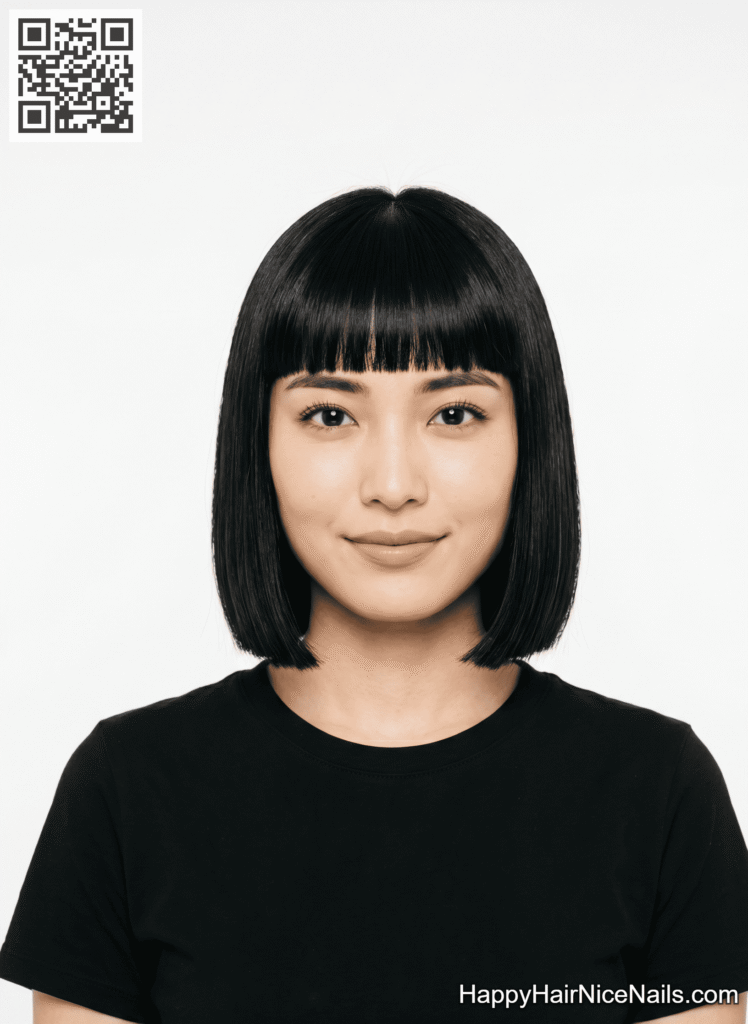
A cheekbone-length French bob where the perimeter has been finished with a razor or feathering shears — the ends are thin, tapered, and scattered rather than blunt. The fringe is also feathered at the tips rather than cut in a hard horizontal line, so both the top and bottom of the cut have the same soft, dissolving quality. The overall effect is a French bob that feels romantic rather than severe.
Best for: Fine to medium, straight to slightly wavy hair
Face shape: Oval, round
Styling technique: Air-dried with a lightweight serum, no heat applied
Why it stands out: Every other aspect of the French bob cuts toward precision — this version deliberately softens both the fringe and the perimeter through feathering, creating a version of the cut that feels delicate rather than graphic.
Ideal for: Those who love the French bob silhouette but find blunt cuts too severe, fine-haired individuals wanting softness.

Instead of the traditional blunt eyebrow-level fringe, this French bob pairs the short cheekbone perimeter with long curtain bangs — parted softly in the center and swept outward past the temples, long enough to blend into the sides of the bob. The curtain fringe removes the hard horizontal line across the forehead while keeping the compact bob length. The result is a softer, more open version of the French bob.
Best for: Wavy to straight, medium density hair
Face shape: Round, square, oblong
Styling technique: Blowout with a round brush, curtain fringe blown outward away from the center
Why it stands out: The curtain fringe fundamentally changes the French bob’s signature graphic quality — instead of a strong fringe line, the forehead is partially open, which shifts the entire feel of the cut from structured to softly framed.
Ideal for: Those wanting the French bob length without the commitment of a full blunt fringe, those softening a wide forehead.

A cheekbone-to-jaw-length French bob where the perimeter has been heavily point-cut into choppy, uneven ends — no single clean line across the bottom. The fringe is also choppy, cut in short, irregular pieces across the brow rather than one smooth horizontal line. The whole cut looks deliberately deconstructed, like someone made purposeful decisions to break up every clean line the standard French bob usually relies on.
Best for: Medium to thick, straight to wavy hair
Face shape: Heart, oval
Styling technique: Rough-dried with a texturizing spray, fingers used instead of a brush
Why it stands out: The French bob is defined by its clean lines — this version systematically dismantles both of them through choppy point-cutting on the fringe and perimeter, creating a French bob that reads as punk and editorial rather than Parisian and refined.
Ideal for: Bold style personalities, those who like their cuts to look undone and deliberate at the same time.
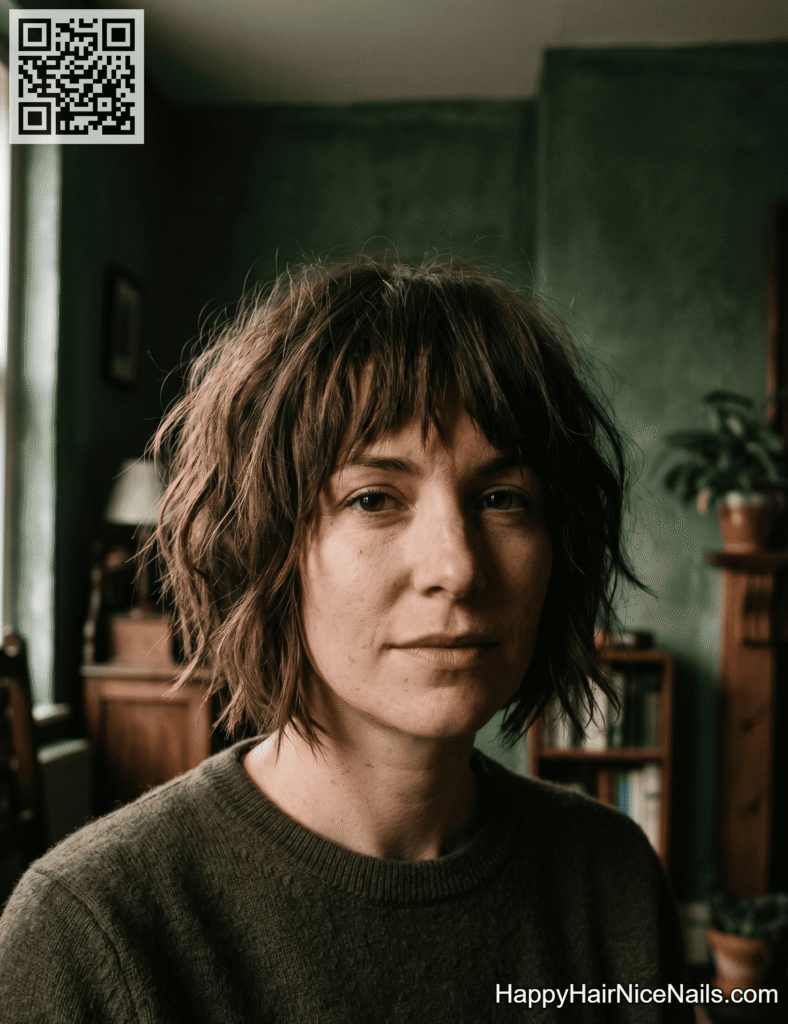
A very short French bob cut at the cheekbone with ultra-wispy, barely-there fringe — the fringe is cut thin enough that the forehead is partially visible through it. The perimeter is also thinned so the ends appear light rather than heavy. On fine hair, the reduced density of both the fringe and the perimeter means the cut doesn’t overwhelm the face with too much weight.
Best for: Fine, straight hair with low density
Face shape: Oval, oblong, heart
Styling technique: Air-dried with no product, or a very small amount of volumizing mousse
Why it stands out: Most French bobs rely on the weight of thick fringe and a heavy perimeter to create their signature shape — this version does the opposite, using thinned fringe and a lightened perimeter to create a barely-there quality that suits very fine hair without looking flat.
Ideal for: Those with fine or low-density hair who find full blunt French bobs too heavy, minimalists wanting a whisper of a fringe.
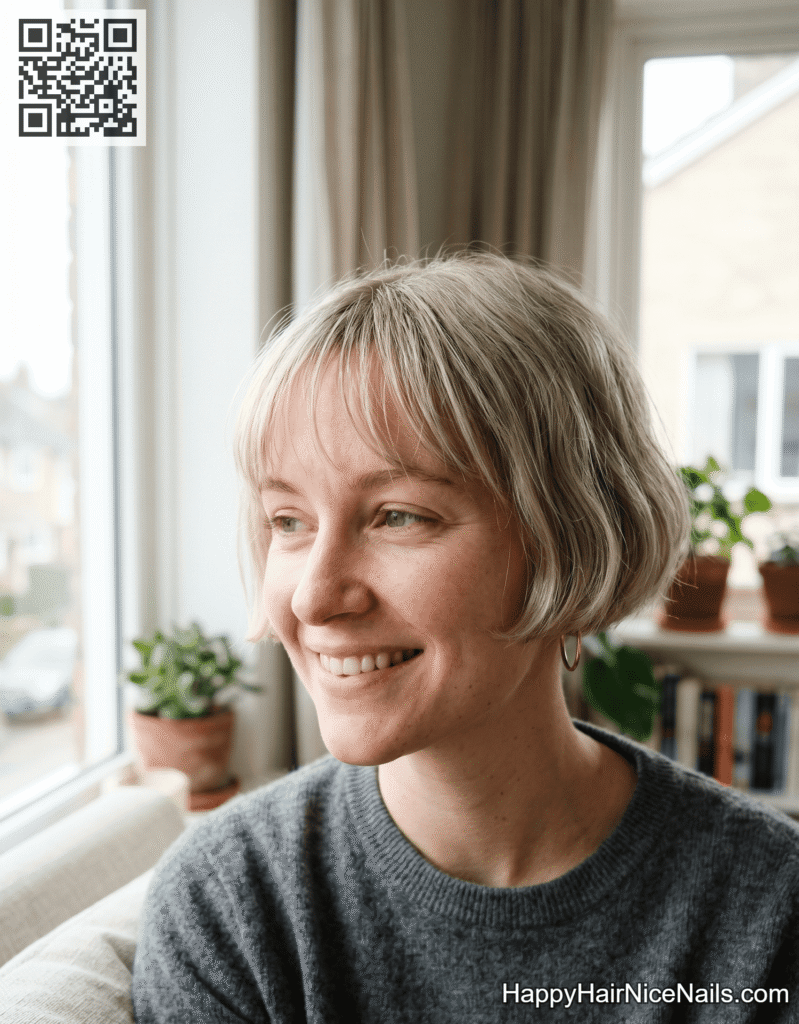
A jaw-grazing French bob on naturally wavy hair — the wave is left fully intact rather than blown straight. The fringe is cut slightly longer than the classic version and left to air-dry into a soft, slightly bent shape rather than lying flat. The whole cut moves and shifts with the wave, so the perimeter doesn’t read as one static line.
Best for: Wavy hair, 2A to 2B wave pattern, medium density
Face shape: Square, oblong
Styling technique: Diffused on damp hair with a curl-enhancing cream, fringe left to air-dry naturally
Why it stands out: The wave pattern transforms the French bob’s famously rigid geometry into something organic — the perimeter ripples slightly and the fringe bends in its own direction, which gives the cut a relaxed Parisian energy that a straight-hair French bob can’t replicate.
Ideal for: Wavy-haired individuals who want the French bob silhouette without blowing it straight, low-manipulation styling lovers.

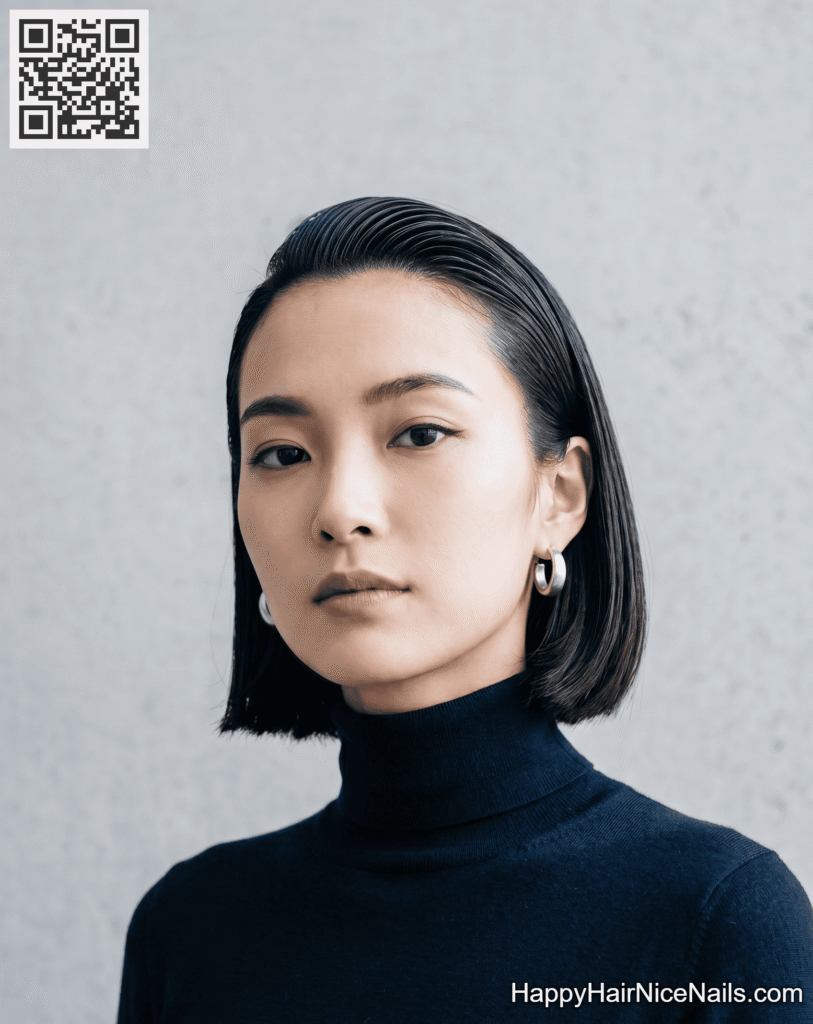
A cheekbone-length French bob where the fringe is deliberately styled back rather than forward — combed or gelled away from the face and swept back toward the crown. The sides and perimeter remain in the standard French bob position, but the absence of forward-falling fringe completely opens up the forehead and changes the entire visual logic of the cut. The slicked fringe reveals the full face.
Best for: Straight to slightly wavy, fine to medium density
Face shape: Oval, oblong
Styling technique: Light gel applied to damp fringe, combed back and allowed to dry in position; rest of bob blown smooth
Why it stands out: The French bob is almost always defined by its forward fringe — this version removes that defining element entirely by sending the fringe backward. The cut becomes something almost unrecognizable as a French bob from the front, but from the side the short length gives it away.
Ideal for: Those who want to experiment with the French bob without committing to forward fringe, high-fashion editorial looks.
A cheekbone-length French bob paired with extremely short fringe — cut well above the eyebrows, closer to the mid-forehead or hairline. The micro fringe exposes the forehead from the brow upward while still covering the upper forehead. The visual tension between the very short fringe and the compact bob creates an edgy, retro-futuristic feel that sits far from the standard French bob aesthetic.
Best for: Straight, medium to thick density hair
Face shape: Oval, heart, oblong
Styling technique: Flat iron on fringe to keep it absolutely flat; rest of the bob blown smooth
Why it stands out: The standard French bob fringe grazes the eyebrow — this version pushes the fringe up to the mid-forehead, which shifts the proportions of the cut dramatically. The extra forehead exposure changes the entire face-framing quality.
Ideal for: Those wanting a bold, fashion-forward version of the French bob, those who suit strong fringe statements.
A classic cheekbone-length French bob where the fringe is cut at brow level but swept entirely to one side rather than hanging straight down. The swept fringe covers one brow and cheekbone while the other side remains open. This creates an asymmetric quality at the top of the cut that contrasts with the blunt, even perimeter at the bottom.
Best for: Straight to slightly wavy, fine to medium hair
Face shape: Round, heart, square
Styling technique: Blowout with a round brush directing the fringe firmly to one side, held in place with light hairspray
Why it stands out: The French bob is a cut of parallel horizontal lines — this version disrupts the top line by sweeping the fringe diagonally, which introduces asymmetry to an otherwise entirely symmetric silhouette.
Ideal for: Those wanting the French bob with visual movement at the fringe, those who prefer not to have fringe sitting flat against the forehead.

A French bob on natural curly hair — cut at cheekbone to jaw level accounting for shrinkage, with a fringe of natural curls at the brow. Because curly hair springs upward when dry, the cut is made slightly longer wet. The dried result is a rounded, compact silhouette with the fringe formed from curl clusters rather than straight strands lying flat.
Best for: Curly hair, 3A to 3C, medium to thick density
Face shape: Oblong, square, oval
Styling technique: Diffused with curl-defining cream applied in sections; fringe defined individually with a small amount of gel
Why it stands out: On straight hair, the French bob fringe lies flat in a clean line. On curly hair, the fringe curls upward and forms individual curl clusters at the brow — the fringe line is still there, but it’s organic and textured rather than geometric and flat.
Ideal for: Natural curl wearers who want the French bob shape without straightening, those who want their curl pattern to define the cut’s structure.
A cheekbone-length French bob that appears blunt from the outside but has subtle internal layers cut to reduce bulk at the mid-shaft — not visible on the surface, just felt in how the hair moves. The fringe is kept blunt and even. From any angle, this looks like a standard blunt French bob; the layers only reveal themselves in how lightly the hair sits and how easily it moves.
Best for: Thick, straight to slightly wavy, high-density hair
Face shape: Oval, square
Styling technique: Blowout with a round brush for smooth finish; the internal layers allow the bob to move without puffing
Why it stands out: On thick hair, a fully blunt French bob can sit stiffly and expand outward. The invisible internal layering removes that rigidity without changing the external appearance — the silhouette is blunt, but the behavior of the hair is completely different.
Ideal for: Those with thick or dense hair who want the clean French bob silhouette without the weight and expansion that usually comes with it.
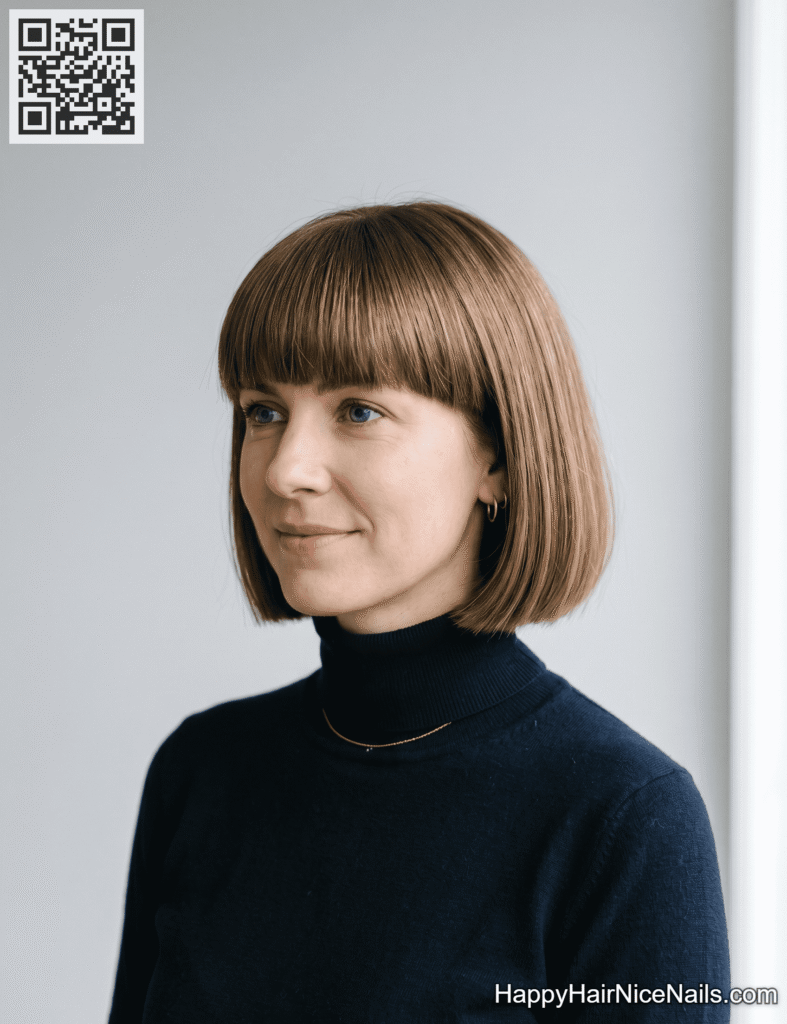
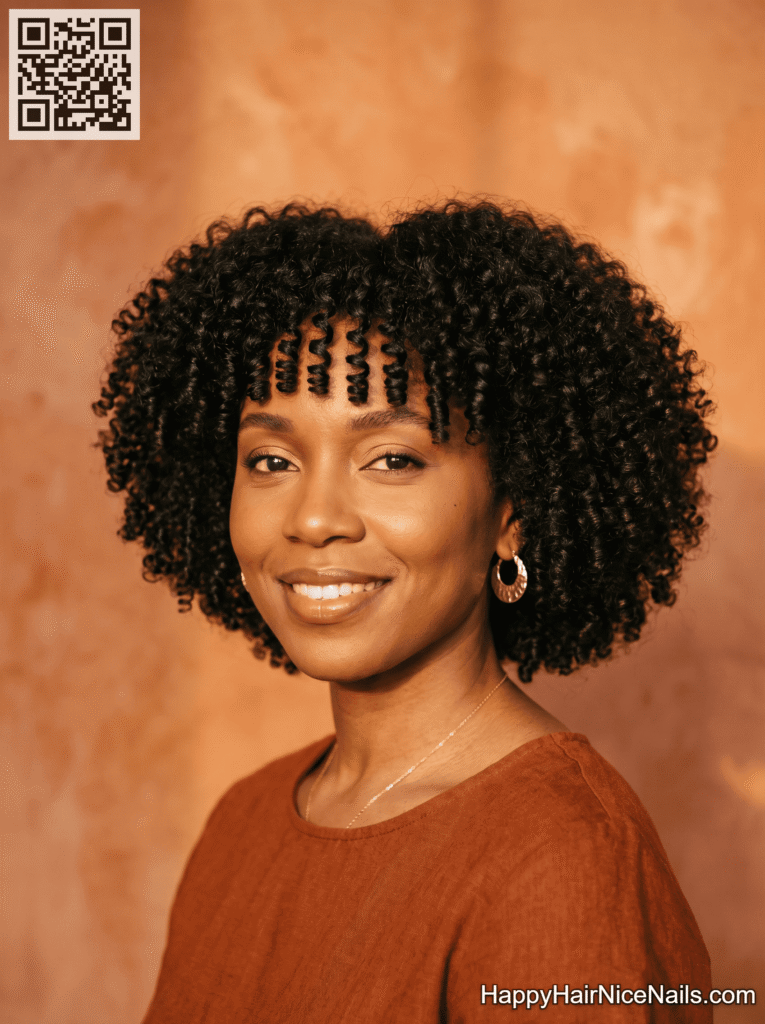
A French bob silhouette on 4A to 4B coily hair — cut longer when wet to account for major shrinkage, the dried result sits at cheekbone to jaw level in a compact, densely volumized shape. The fringe is made up of tight coil clusters at the forehead. This is a French bob defined entirely by the coil pattern rather than any cutting technique.
Best for: Coily hair, 4A to 4B, medium to high density
Face shape: Oblong, heart, oval
Styling technique: Moisturize-and-seal method on damp hair, diffused at low heat; coil fringe defined with a small amount of gel
Why it stands out: The French bob on coily hair creates a silhouette that no other hair type can produce — the coil shrinkage forms a dense, rounded shape and the fringe is composed of tightly sprung coil clusters sitting at the brow like a textured crown.
Ideal for: Natural coily-haired individuals wanting to wear the French bob without any heat manipulation.
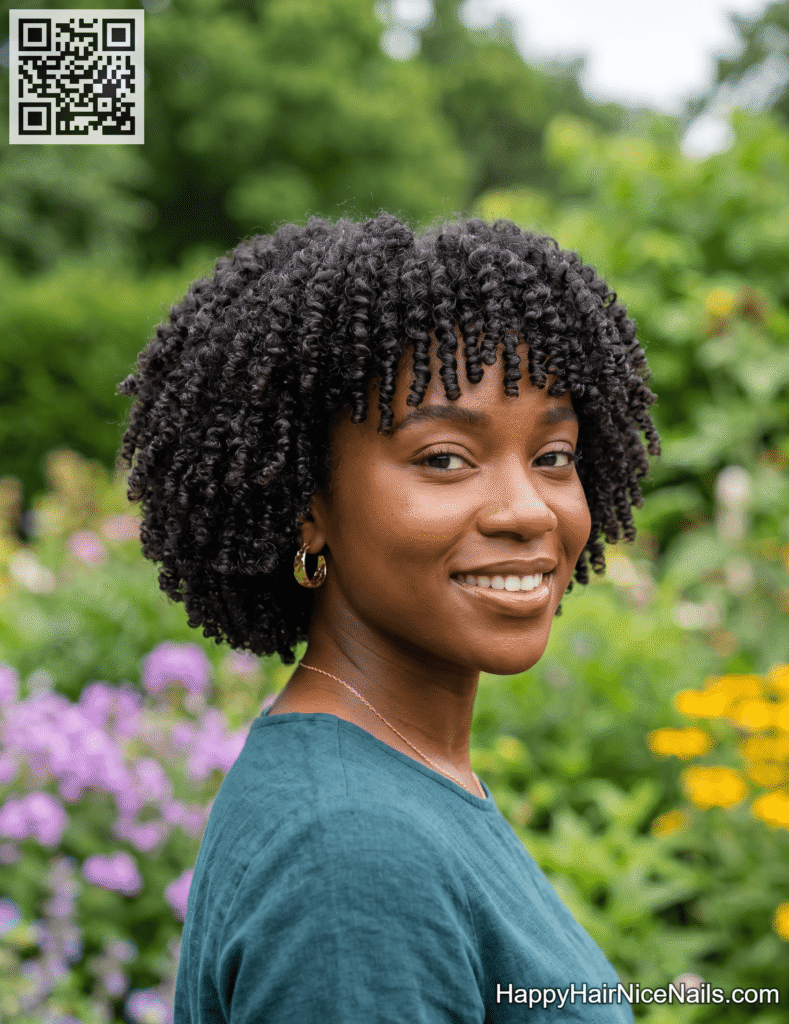
A cheekbone-length French bob where the front sections have been cut with additional shorter layers specifically designed to frame the face. The layers closest to the cheeks are shorter — falling at the mid-cheek rather than the full cheekbone length — and styled to curve inward toward the face. The blunt fringe remains standard while the front panels introduce subtle graduated length around the face.
Best for: Wavy to straight, medium density hair
Face shape: Square, oblong, round
Styling technique: Round brush blowout; face-framing sections curled slightly inward with the brush
Why it stands out: Most French bobs have a uniform perimeter — this version introduces deliberate graduation specifically at the face-framing sections, creating two small panels that hug the cheekbones differently from the rest of the cut.
Ideal for: Those whose face shape benefits from additional framing at the cheekbones, those who find the standard French bob too uniform across the perimeter.

A cheekbone-length blunt French bob on bleached or very light blonde hair with a visible dark root — the natural root growth is left intentionally uncolored so a deep, contrasting shadow sits at the scalp for an inch or two before the hair lightens. The blunt fringe has the same dark-at-root, light-at-tip quality. The contrast of dark roots against a platinum or light perimeter gives the French bob a strong graphic dimension beyond its cut alone.
Best for: Straight to slightly wavy, medium density
Face shape: Oval, heart
Styling technique: Blowout to a smooth finish; color contrast left deliberately untouched
Why it stands out: The color dimension adds a shadow line at the scalp that mirrors the French bob’s structural horizontal lines — the dark root band echoes the fringe line and the perimeter, adding a third visual element to the cut’s geometry.
Ideal for: Those who color their hair and want the grow-out to feel intentional, those who suit high-contrast color placement.
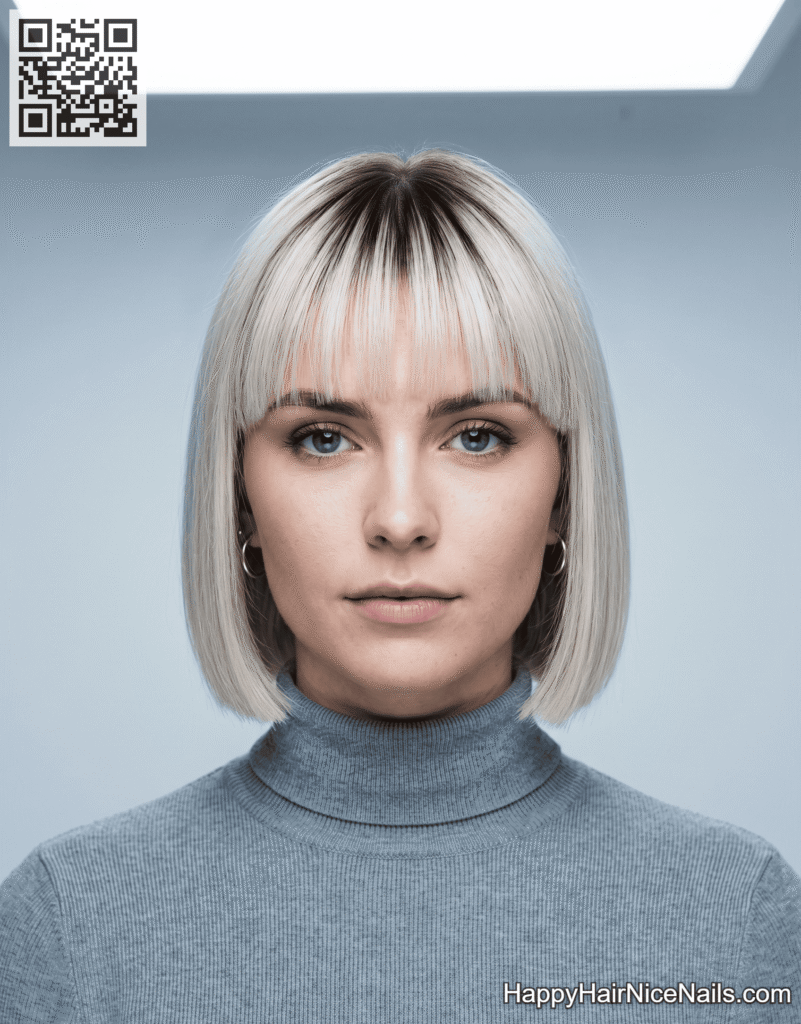
A jaw-grazing French bob with face-framing and internal layers cut throughout — not subtly, but with deliberate weight removal so the hair has visible movement from mid-shaft to end. The fringe is kept blunt and static at the brow while the rest of the bob below the cheekbone is all movement and bend. The contrast between the still fringe and the mobile layers below creates two distinct zones in one cut.
Best for: Medium to thick, wavy or straight hair
Face shape: Heart, oval
Styling technique: Diffused with a curl mousse for wavy hair; blowout for straight hair, with fingers used to separate and move the layers
Why it stands out: The fringe is cut to be immovable and flat — a fixed anchor — while everything below is layered to swing, bend, and shift. The contrast between the two zones is the defining visual element of this French bob.
Ideal for: Those who want a dynamic, movement-forward French bob rather than a structured static one.

A cheekbone-length French bob flat-ironed to an extreme high-gloss, mirror-smooth finish — not a single bend or wave throughout. The fringe is also flat-ironed so it sits completely flush with the forehead. The high-shine finish turns every line of the French bob into a reflective surface, making the geometry of the cut appear even sharper than it would with a standard blowout.
Best for: Straight or chemically treated hair, medium density
Face shape: Oval, oblong
Styling technique: Flat-ironed with a professional-grade iron and followed with a shine serum or gloss spray
Why it stands out: The mirror finish amplifies the geometric structure of the French bob — when the hair is this smooth, the cut lines reflect light like an edge rather than absorbing it, making the blunt perimeter and fringe line appear almost laser-cut.
Ideal for: High-fashion moments, editorial shoots, those who suit severe, highly polished aesthetics.
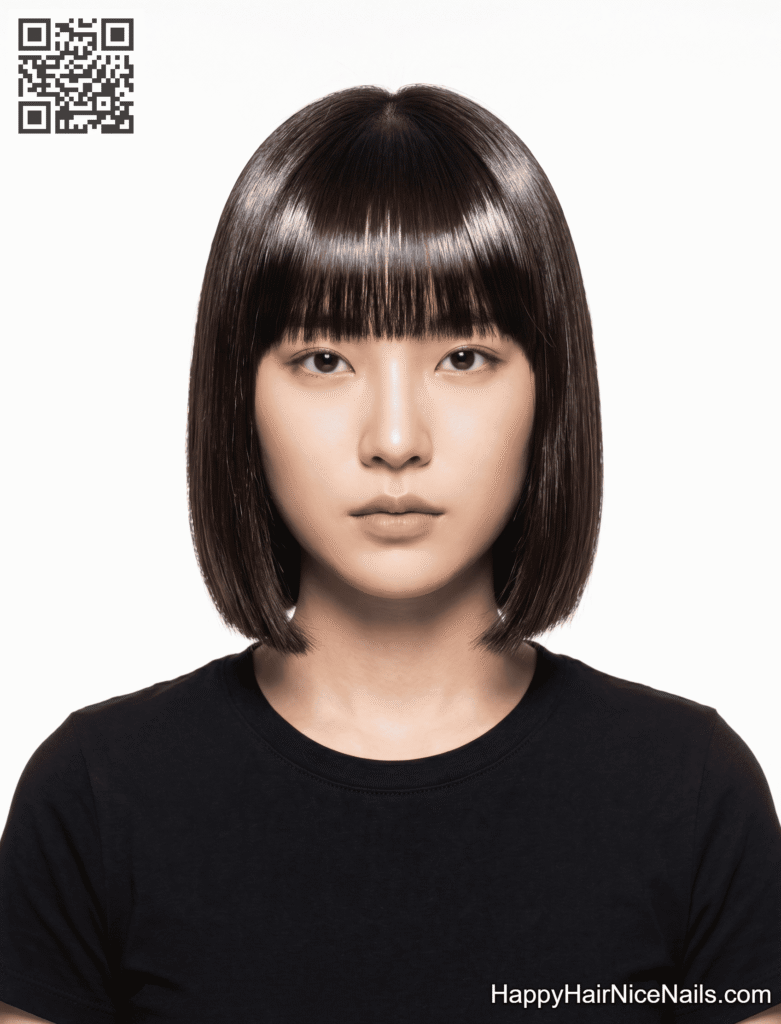
A cheekbone-length French bob where the fringe is cut to brow level but then styled with a small amount of matte paste so the fringe separates into individual pieces — each strand slightly apart rather than lying as one flat curtain across the forehead. The bob body is also styled piece-y with the same paste at the ends. The effect is a deconstructed version of the French bob where no two sections of fringe look the same.
Best for: Fine to medium, straight to slightly wavy hair
Face shape: Oval, round, square
Styling technique: Matte paste worked through fringe and ends with fingertips, separating sections individually
Why it stands out: The piece-y fringe styling completely breaks the clean horizontal line of the standard French bob fringe — instead of one flat block across the brow, individual strands point in different directions and create a graphic, almost editorial texture.
Ideal for: Those who find standard French bob fringe too flat and heavy-looking, fine-haired individuals wanting visual interest without volume.
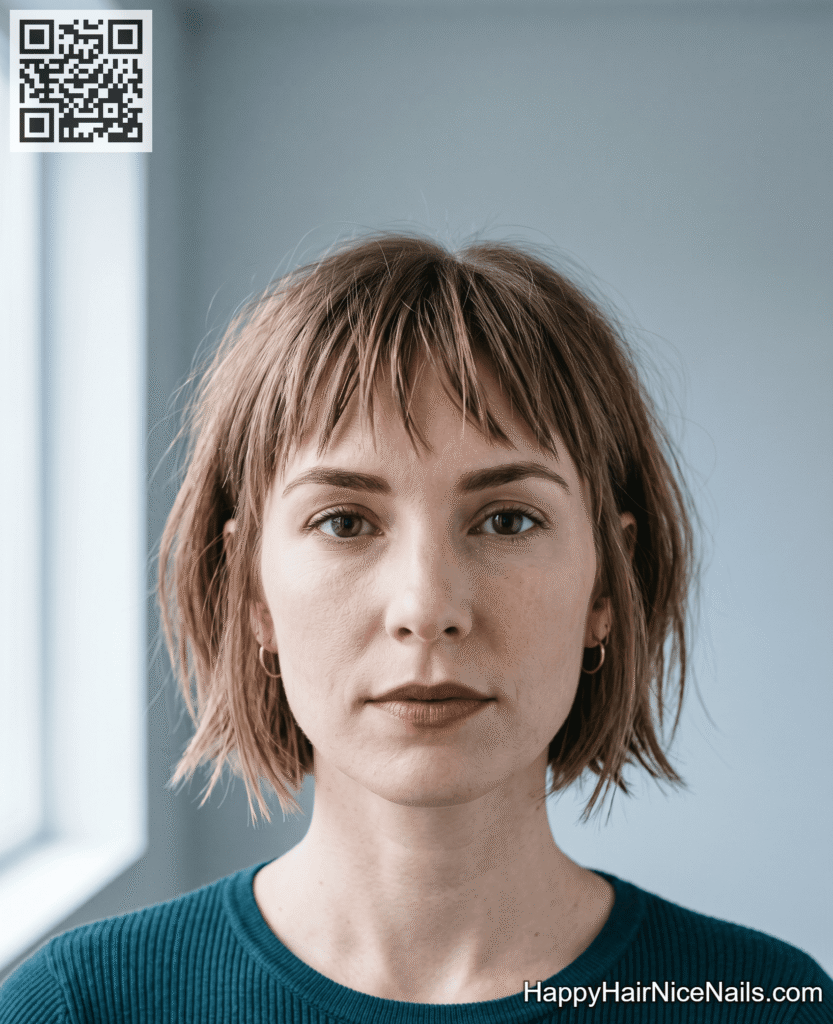
A cheekbone-length blunt French bob paired with classic eyebrow-level fringe, but with an added detail: the nape is tapered — the hair at the very bottom of the nape is clippered or cut close so it graduates from a full bob length at the cheekbone down to almost nothing at the nape. Seen from behind, the taper creates a clean, close finish that reveals the neck entirely. From the front, it reads as a standard French bob.
Best for: Straight to slightly wavy, medium to thick hair
Face shape: Oval, oblong
Styling technique: Blowout for the bob body and fringe; nape tapered with clippers or close-cutting scissors
Why it stands out: The nape taper is completely hidden when the bob is seen from the front — it only reveals itself when viewed from behind. The neck is fully exposed and the nape has a crisp, close-cut finish that most French bob hairstyles don’t have.
Ideal for: Those who want additional polish at the nape, those who prefer the neck and nape area to be clean and close rather than covered.
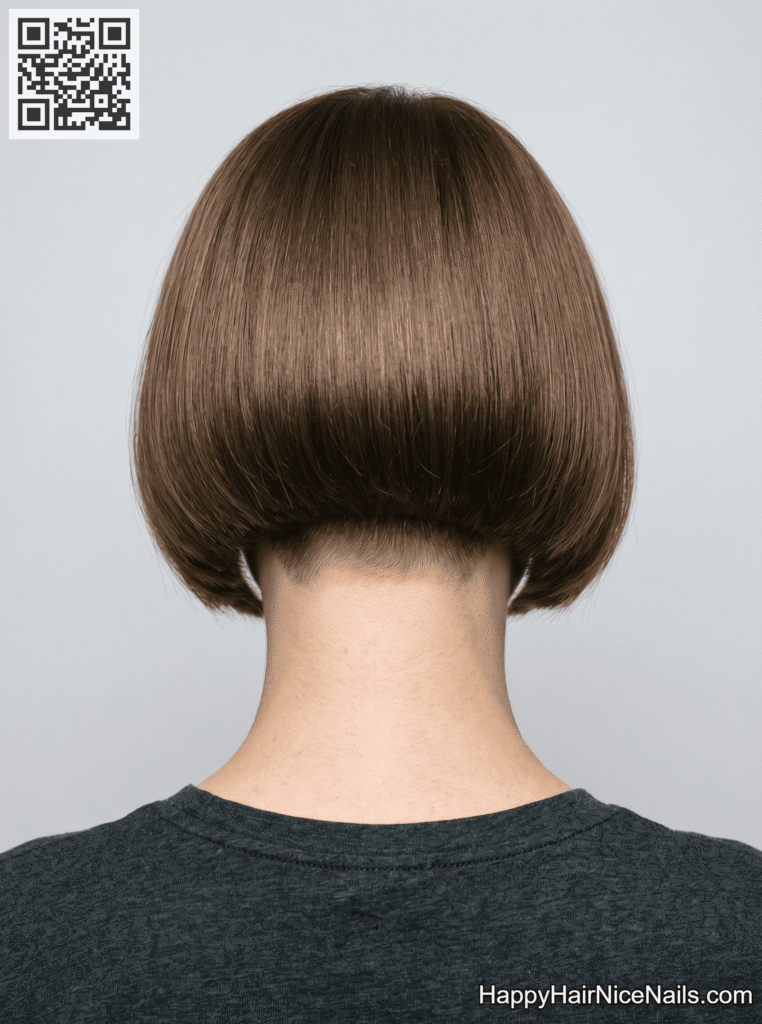
A cheekbone-length French bob where the fringe has been left to grow past its original eyebrow-level cut — it now sits at nose level, long enough to partially cover the eyes. The fringe is not trimmed back; the length is intentional and is styled either parted slightly in the center or swept to one side with a single finger. The oversized fringe gives the French bob an effortlessly undone, grown-out quality.
Best for: Straight to lightly wavy, fine to medium density
Face shape: Oval, oblong, heart
Styling technique: Air-dried or lightly blown; fringe directed with fingers only, no brush
Why it stands out: The French bob’s fringe is usually its most controlled element — this version lets it grow deliberately long, which subverts the cut’s signature precision. The overgrown fringe makes the whole look feel intentionally nonchalant.
Ideal for: Those between fringe trims who want to own the grown-out phase, those who prefer their fringe to partially cover the face.
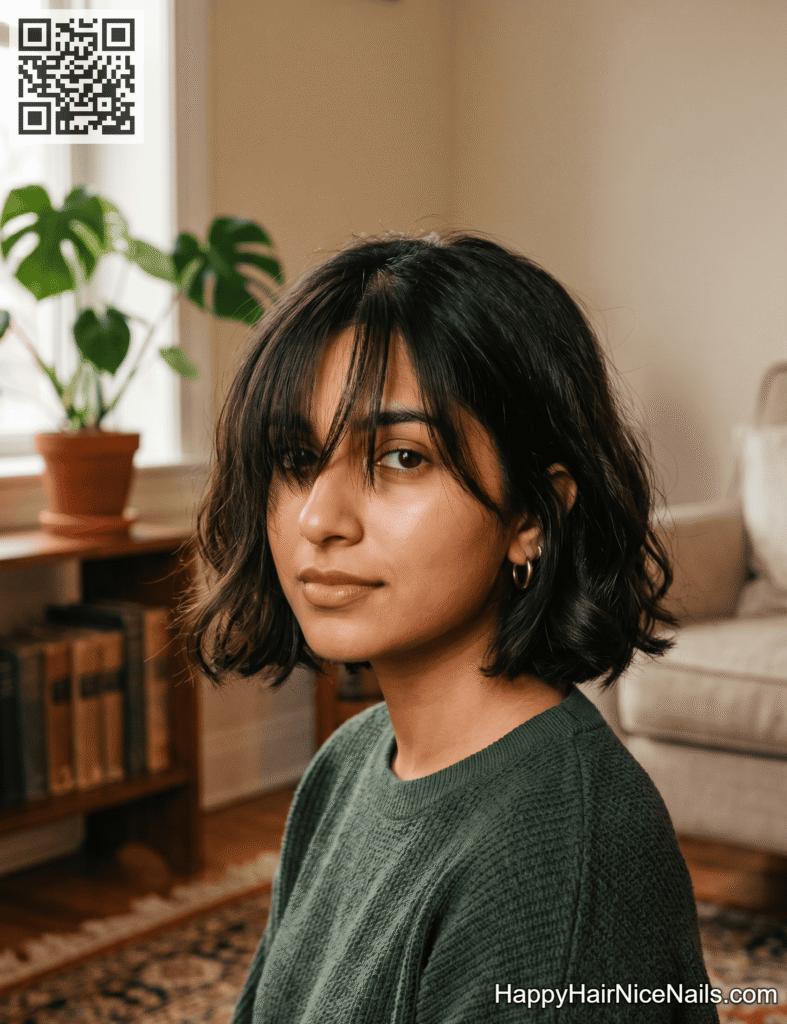
A jaw-length French bob on very thick, dense hair — the blunt perimeter sits heavy and full because of the hair’s density. The blunt fringe is similarly thick and sits as a solid block at the brow. No thinning, no layering — the thickness is embraced and the result is a very dense, structural French bob where every line reads boldly because of the sheer volume of hair behind it.
Best for: Thick, straight to slightly wavy, high-density hair
Face shape: Oval, oblong, square
Styling technique: Blowout directed downward to keep all the thickness smooth and flat
Why it stands out: On fine hair, French bob fringe can look wispy. On thick hair, the same blunt cut creates a completely different result — the fringe is a solid, almost impenetrable-looking block and the perimeter has significant visual weight. The thickness is the statement.
Ideal for: Those with very thick hair who have been told to layer it to reduce bulk — this version says no and leans into the density.
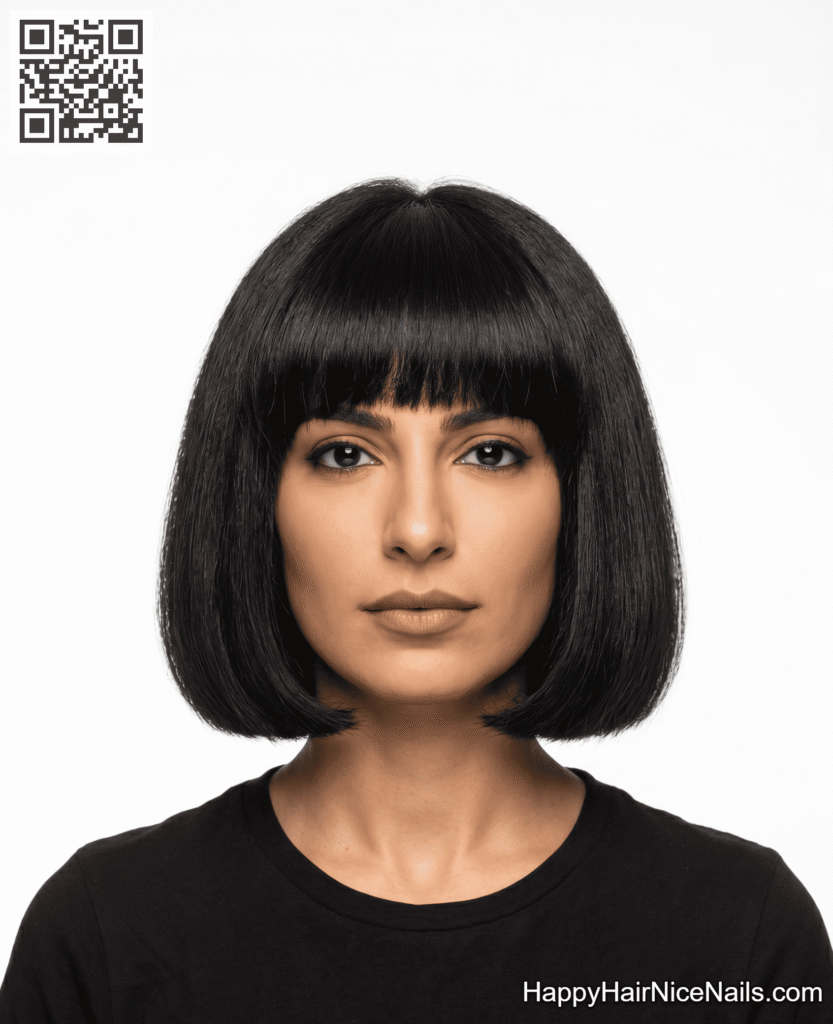
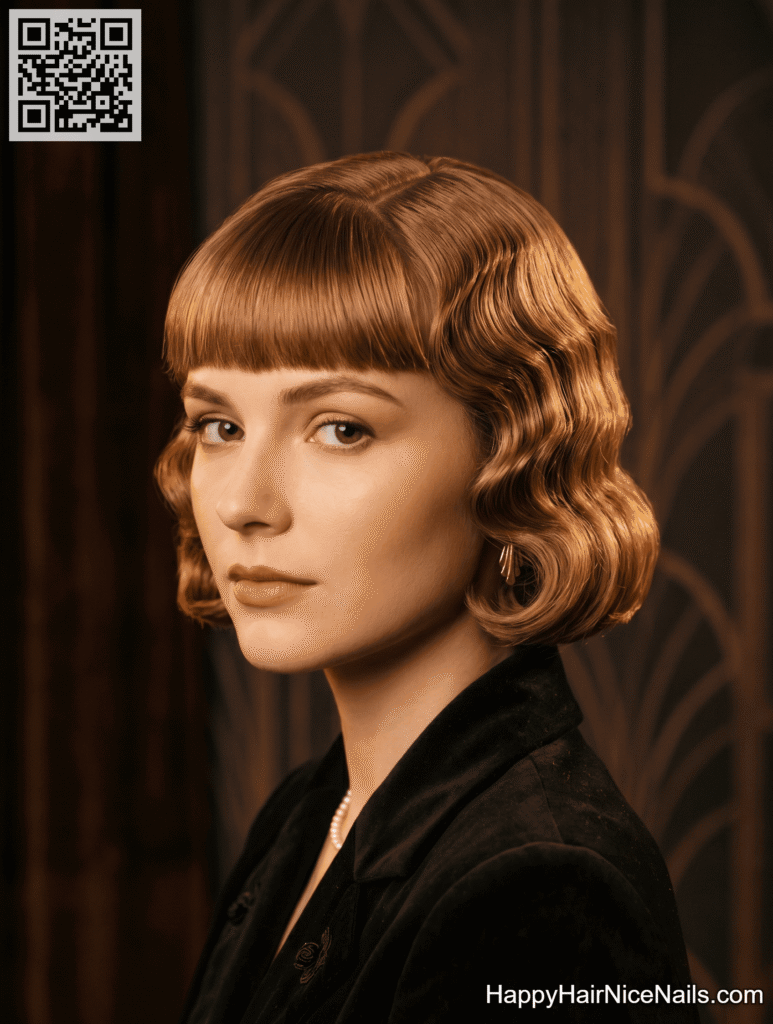
A cheekbone-to-jaw-length French bob styled with finger waves at the sides and crown — the wave pattern is set into the hair using wave clips or a Marcel waving iron and left to dry before the clips are removed. The fringe is flat and smooth, and the waves radiate outward from the part at the crown before curving back toward the ears. The finished look is a French bob with a 1920s-to-1930s wave structure built into it.
Best for: Straight to lightly wavy, medium density hair
Face shape: Oval, heart, oblong
Styling technique: Finger waves set with a setting lotion and wave clips, dried under a hood dryer or air-dried before clips removed
Why it stands out: Every other entry in this list relies on the natural fall or texture of the hair to define the style — this one applies a completely artificial wave pattern onto the French bob, creating a structured retro silhouette that references a specific historical styling technique rather than any modern finishing method.
Ideal for: Vintage aesthetic enthusiasts, editorial looks, special occasion styling, those drawn to old Hollywood references.
French bob hairstyles offer far more variation than the cut’s clean reputation suggests — from coily-hair interpretations that the curl pattern defines entirely to retro-waved versions that reference early 20th-century styling techniques. The short cheekbone-to-jaw perimeter and the fringe remain constant, but everything within those two parameters is open. For anyone narrowing down which French bob works best for their hair type, the entries above are a useful starting point.
And for a different kind of finishing touch to complement a fresh French bob in Springs, a nail art ideas guide is a fun addition to the full look.