Physical Address
304 North Cardinal St.
Dorchester Center, MA 02124
Physical Address
304 North Cardinal St.
Dorchester Center, MA 02124
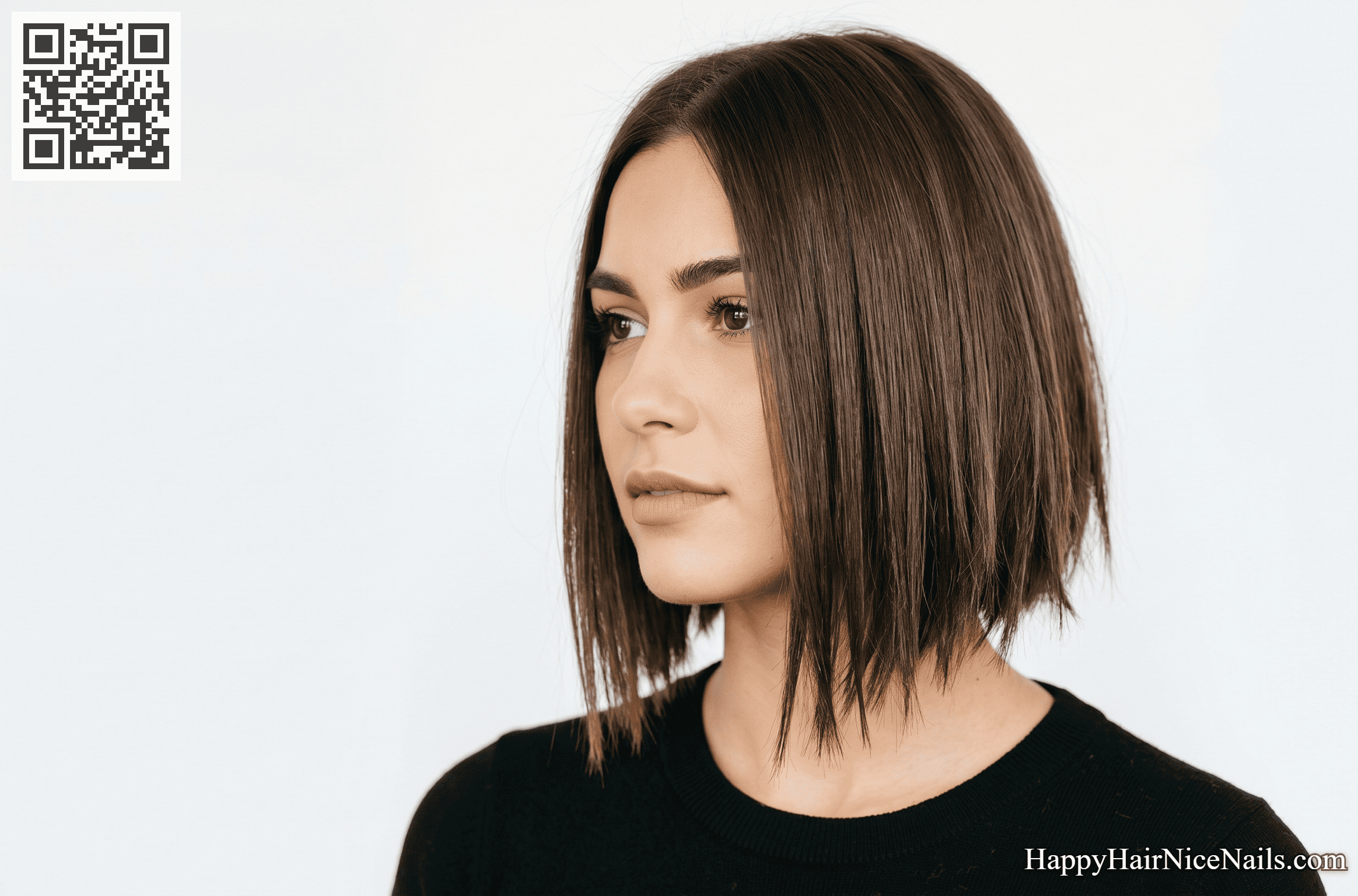
Textured bob hairstyles have quietly taken over every hair board, salon wall, and street-style photo this year — and for good reason. Unlike a flat, one-dimensional cut, a textured bob works with the hair’s natural weight, movement, and density to create something that genuinely looks alive. This sub-topic sits directly under the broader world of bob hairstyles, but narrows in on what happens when technique meets intention: the scrunch, the chop, the feather, the invisible layer, the tousled finish. Whether someone has pin-straight strands, thick coily hair, or a wavy texture that never quite cooperates, there is a textured bob in this list that was made for exactly that hair.
For readers who want to explore the full world this sub-topic sits inside, the complete bob hairstyles guide covers every variation, length, and face-shape recommendation in one place
A textured bob is defined by deliberate manipulation of the hair’s surface — through cutting, layering, finishing, or styling — to create visual depth and movement that a blunt, one-length cut does not naturally produce. This differs from simply having layered hair; texture in this context refers to the intentional disruption of the hair’s silhouette, whether through point-cutting, razor-slicing, or strategic diffusing.
According to Wikipedia’s entry on hair cutting techniques, point cutting and slide cutting are among the most common methods stylists use to remove weight and add softness to the ends of a cut — both central to what defines a textured bob. The difference between a textured bob and a regular bob lies almost entirely in what happens at the ends, inside the layers, and in how the finish is applied. A blunt bob is architectural. A textured bob hairstyle is sculptural — it breathes.
A jaw-length bob where the ends are point-cut at uneven intervals, creating a deliberately fragmented, shattered effect along the perimeter. No two strands end at the same place, which gives the cut a raw, editorial quality. The interior is kept mostly one-weight, so the shape stays structured while the ends look like they’ve been broken apart rather than trimmed. Works beautifully on medium-density straight hair where the shattered ends catch the light and stay visible rather than blending into a mass.
Best for: Medium-density, straight hair
Face shape: Oval, oblong
Styling technique: Flat iron with downward motion, then finger-separated ends
Why it stands out: The perimeter design is the whole point — this is not about layers inside the cut but about deconstructing the very edge of the bob into a fractured, intentional finish that flat-ironed hair makes hyper-visible.
Ideal for: Those who want an edgy, effortless aesthetic with a precise cut that doesn’t require daily restyling.
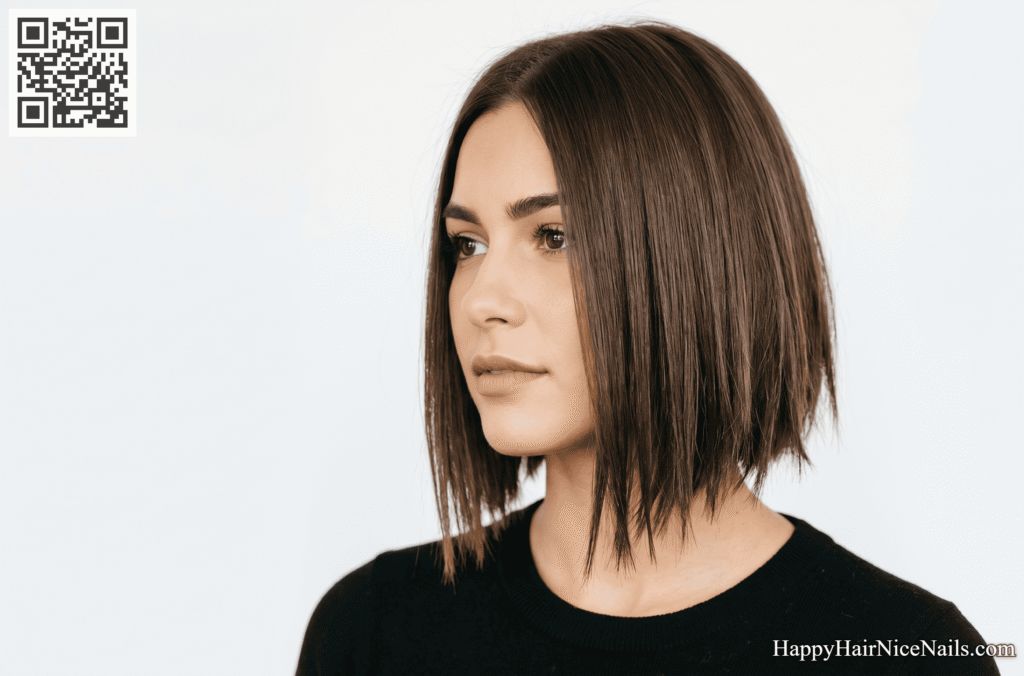
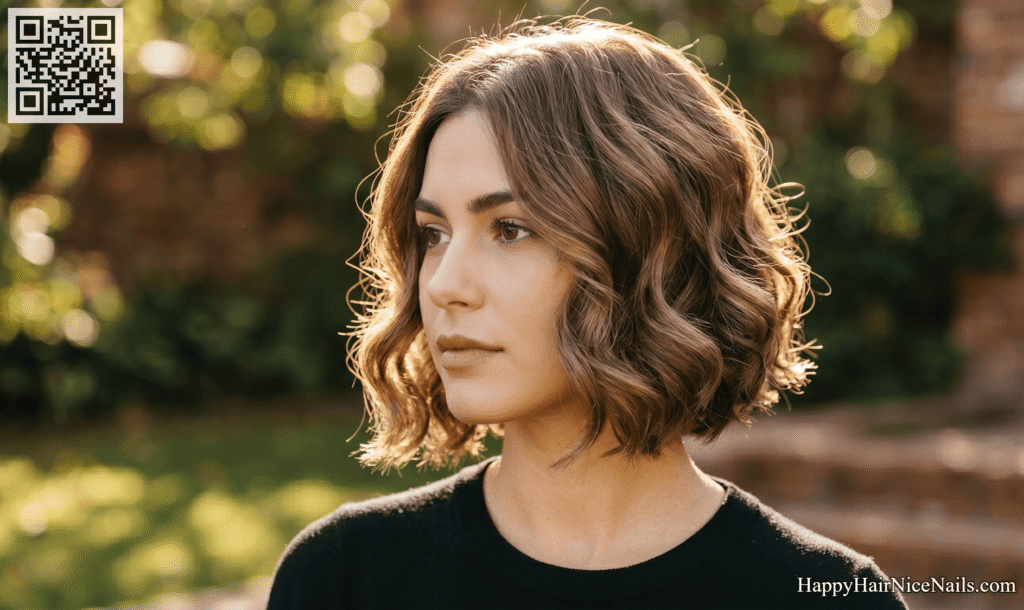
A short bob sitting just above the shoulders where the hair has been set in large, ribbon-like curls using a 1.5-inch barrel, then brushed out slightly to loosen the definition. The result is a soft, wavy-curly blend — not ringlets, not beach waves, something in between. The shape puffs out gently at the sides and tapers slightly at the nape for a cleaner underside. Ideal on naturally wavy hair that takes curl well but tends to drop quickly without the brush-out trick.
Best for: Naturally wavy, medium-density hair
Face shape: Square, heart
Styling technique: Large-barrel curl, brushed out with a paddle brush post-set
Why it stands out: The brushed-out ribbon curl creates a texture that looks natural rather than styled — a hybrid between effortless and intentional that wavy hair types achieve more convincingly than any other.
Ideal for: Wavy-haired individuals wanting definition without crunch, and those who prefer a polished but not stiff look.
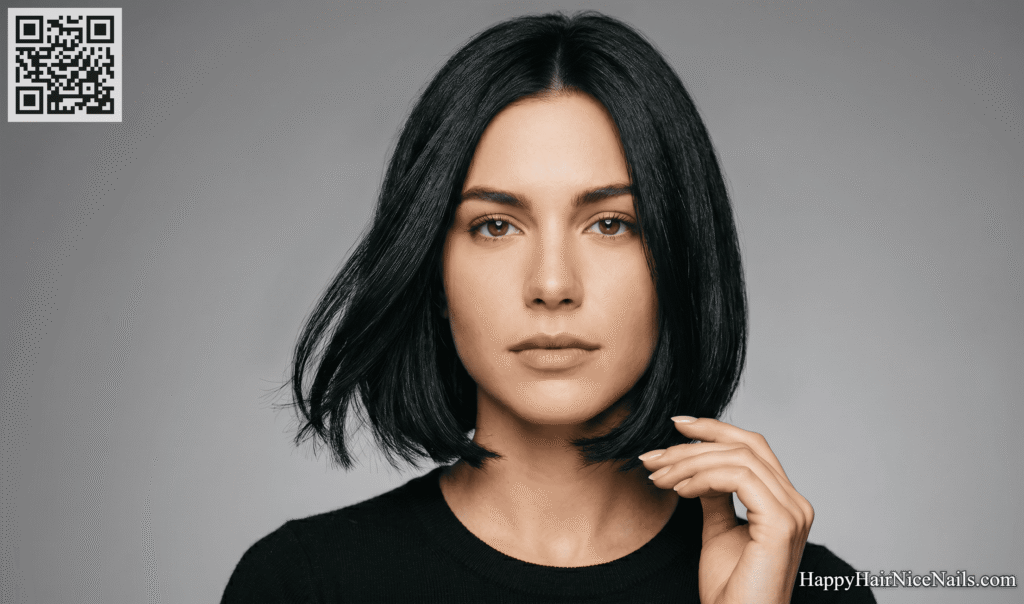
A chin-length bob that looks completely blunt from the outside but has invisible internal layers cut throughout the mid-shaft. These layers remove weight without changing the perimeter, so the silhouette stays crisp while the interior moves. Thick, heavy hair benefits enormously from this — the cut prevents the signature “triangle” bulk that thick bobs often develop and allows the hair to swing rather than sit stiffly. From the front, it looks like a sleek one-length bob. From behind, the movement tells a different story.
Best for: Thick, coarse straight hair
Face shape: Round, square
Styling technique: Blowout with a denman brush, minimal product
Why it stands out: All the texture work is invisible — this is a structural cut, not a visual one. The magic is in how the hair moves, not in any visible layer or chopped end.
Ideal for: Those with heavy, thick hair who want a sleek bob silhouette that doesn’t sit like a helmet.
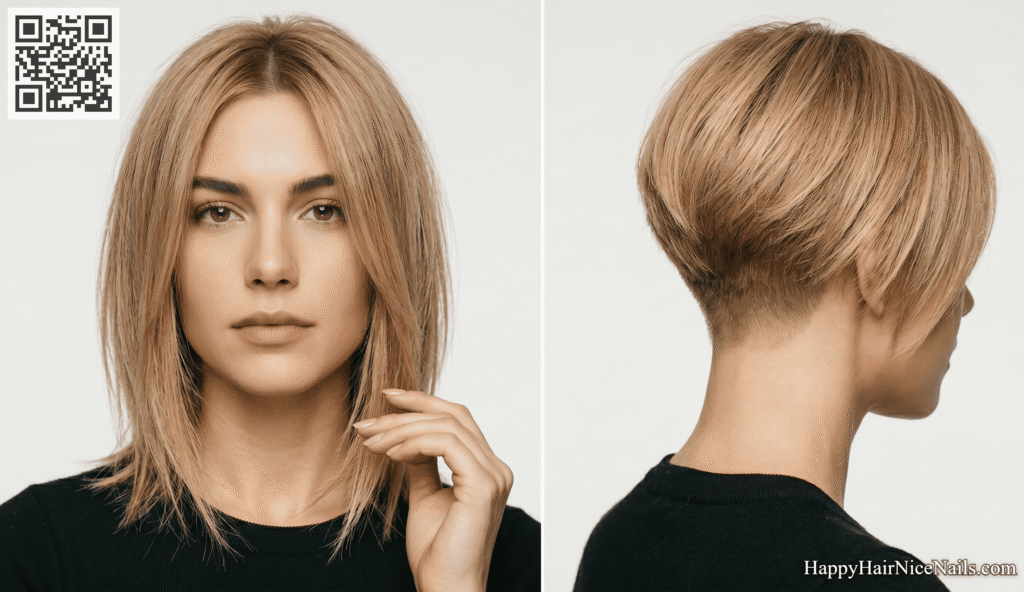
A bob that sits at the collarbone in front but is cut very tight and tapered at the nape, with feathered, razor-thin ends throughout. The feathering begins at the ear level and continues down to the tips, giving every strand a tapered point rather than a blunt finish. The shape creates a long, narrow silhouette from the front and a dramatic, close-cropped underside from behind. Best suited to fine, limp hair that needs structure at the top without bulk at the bottom.
Best for: Fine, limp straight hair
Face shape: Oblong, oval
Styling technique: Blow-dried smooth with a flat brush, edges pressed flat
Why it stands out: The contrast between the long front panels and the close-tapered nape creates a silhouette that changes dramatically depending on the viewing angle — front looks classic, back looks almost architectural.
Ideal for: Those who love a sleek, modern finish with zero bulk and strong nape definition.
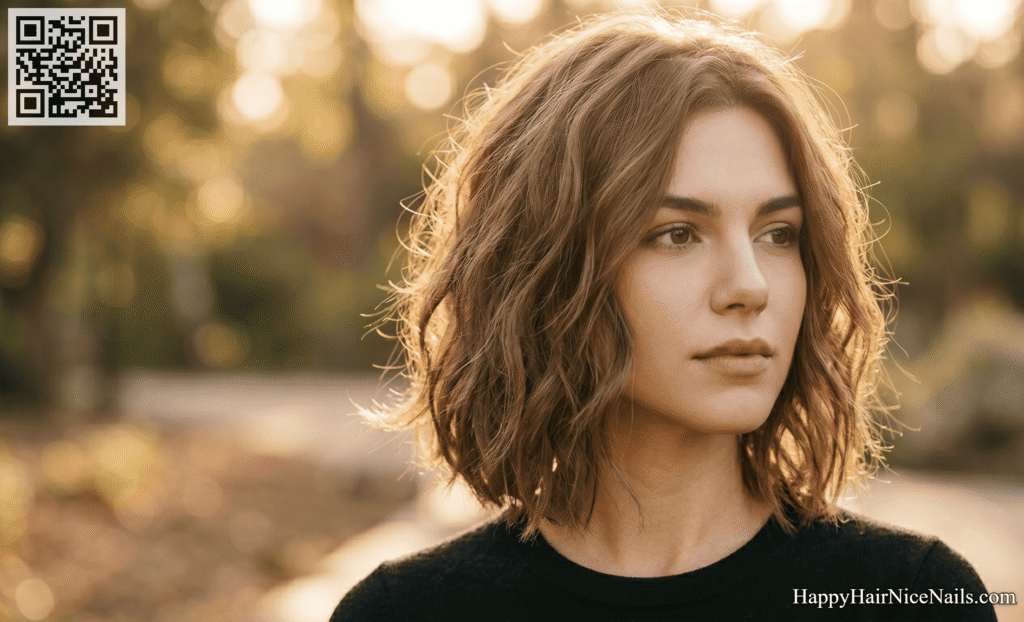
A mid-length bob sitting between the chin and collarbone, finished with a dry texturizing spray and scrunched by hand into a deliberately undone shape. The cut itself is lightly point-cut at the ends to allow the tousle to form naturally, but the styling — not the cut — does most of the heavy lifting here. Best on hair with a slight natural wave that doesn’t quite commit to a curl. The result looks like someone slept on it perfectly.
Best for: Slightly wavy, medium-density hair
Face shape: Heart, oval
Styling technique: Air-dried, scrunched with texturizing spray mid-dry
Why it stands out: The styling IS the texture. This bob would look flat and unremarkable if blowdried — the whole concept depends on the scrunched, air-dried, undone finish rather than any structural cut element.
Ideal for: Low-maintenance wearers, those with barely-there wave patterns, and anyone who finds “effortless” hard to achieve.
A bob where internal layers stack dramatically at the crown, creating a rounded, lifted top section with shorter underlying layers and longer outer lengths. The top of the head has visible volume and lift while the outer perimeter falls smoothly around the face. This is a textured bob hairstyle where the cut creates the shape rather than styling products. Coily or tightly curled hair benefits most here — the stacked layers work with the curl’s natural spring to build height that straight hair could never achieve from this cut alone.
Best for: Coily, tightly curled hair (Type 4A/4B)
Face shape: Round, heart
Styling technique: Diffused with a curl cream, picked at the crown post-dry
Why it stands out: The stacking at the crown is engineered specifically for coily hair’s shrinkage — the shorter interior layers sit at the right point to maximize volume after the curl contracts, something that would read completely differently on straight or wavy hair.
Ideal for: Coily-haired individuals who want a defined shape without sacrificing natural curl pattern.
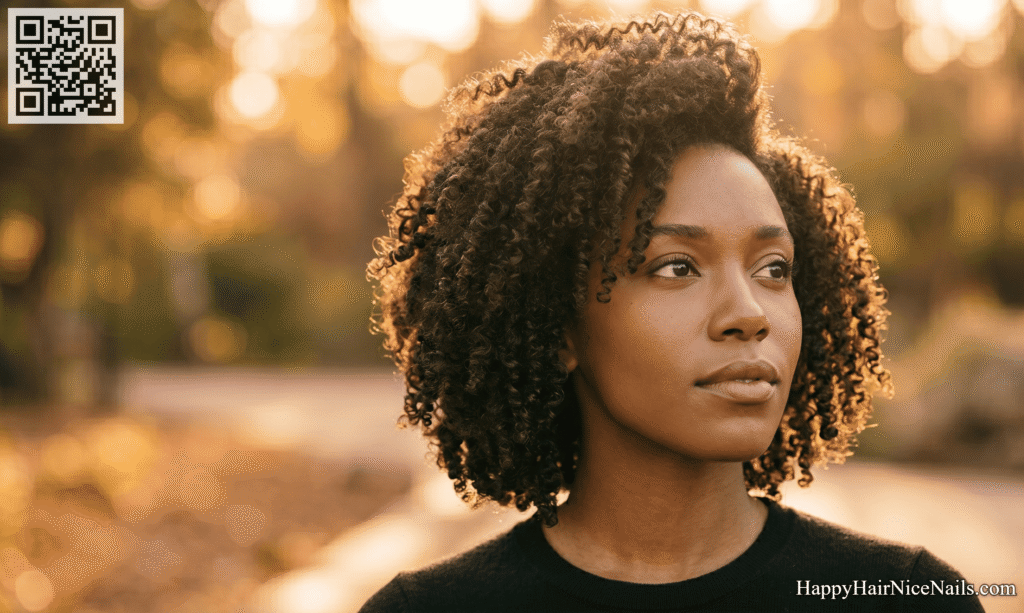
A collarbone-length textured bob hairstyle with curtain bangs that part naturally at the center and sweep softly to either side of the forehead. The bangs are point-cut at the ends to blend seamlessly into the face-framing front sections of the bob, creating a continuous flow from fringe to length. The rest of the bob has minimal layering, keeping the back dense and the front light. Works particularly well on straight or very slightly wavy hair where curtain bangs fall with the most control.
Best for: Straight to slightly wavy, medium-density hair
Face shape: Oval, square
Styling technique: Round brush on the bangs, rest air-dried or lightly diffused
Why it stands out: The continuity between the curtain bang and the face-framing front sections is what sets this apart — there’s no visible transition, making the whole front of the bob feel custom-draped around the face.
Ideal for: Those who love a soft, face-framing effect without committing to a full fringe.
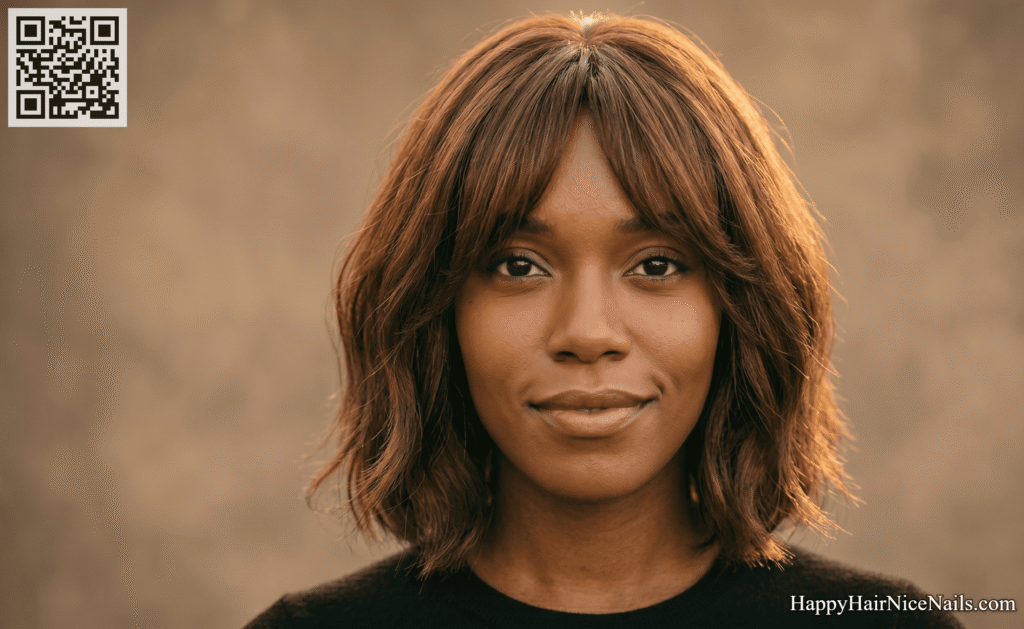
A bob where a single, bold underlayer of contrasting color is hidden beneath the top section. The underlayer is visible only when the hair moves — a gust of wind, a head tilt, or a deliberate flip reveals the hidden color. The textured bob hairstyle here is medium-length with a blunt perimeter, and the contrast layer is cut slightly shorter than the top to ensure it frames the underside when exposed. Most striking on dark hair with a vivid underlayer in burgundy, copper, or bleach-blonde.
Best for: Medium-density, straight to slightly wavy hair
Face shape: Oval, oblong
Styling technique: Blowout with a paddle brush, then a light press to keep the top smooth
Why it stands out: The texture here is visual and conceptual rather than structural — the “reveal” element is the entire point, making this a bob that interacts with movement in a way most cuts don’t.
Ideal for: Bold-style fans who want a professional look at rest and a statement look in motion.
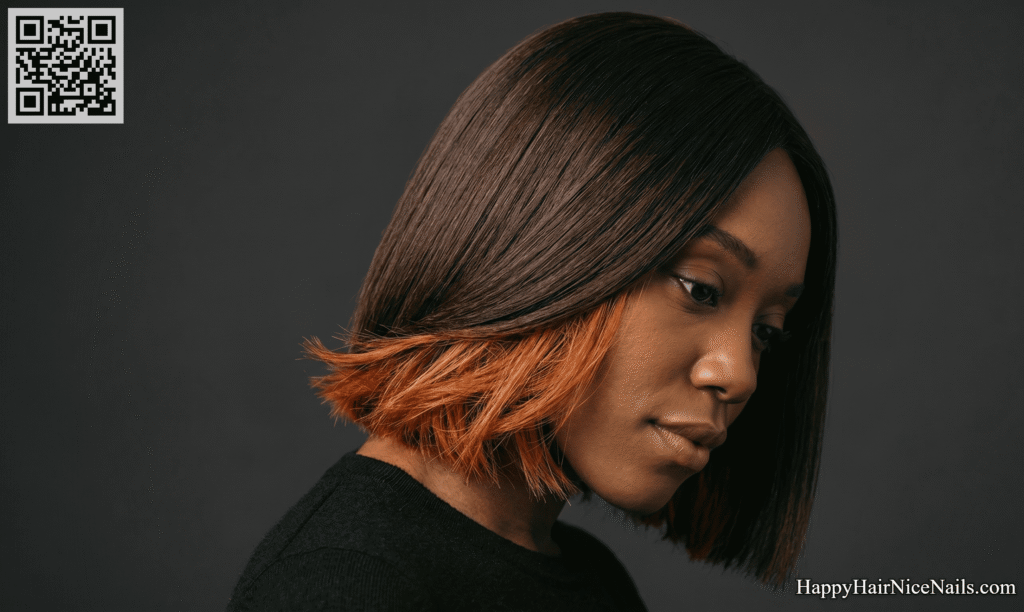
A shoulder-length bob where the only layers are two long, tapered face-framing pieces cut to begin at the cheekbones. The rest of the bob is completely blunt and one-length. The face-framing pieces are razor-cut at the ends for a wispy, feathered finish that draws the eye inward toward the face without disrupting the overall weight of the cut. A deliberate choice for thick hair that needs to look polished from behind while staying interesting from the front.
Best for: Thick, straight to wavy hair
Face shape: Round, square
Styling technique: Blowout, with a curling wand used only on the face-framing pieces
Why it stands out: The restraint is the design decision — by putting all the layering in exactly two places and leaving everything else untouched, this cut creates a bob that looks tailored rather than layered.
Ideal for: Those with heavy, thick hair who want a defined shape with selective softness exactly where the face needs it.
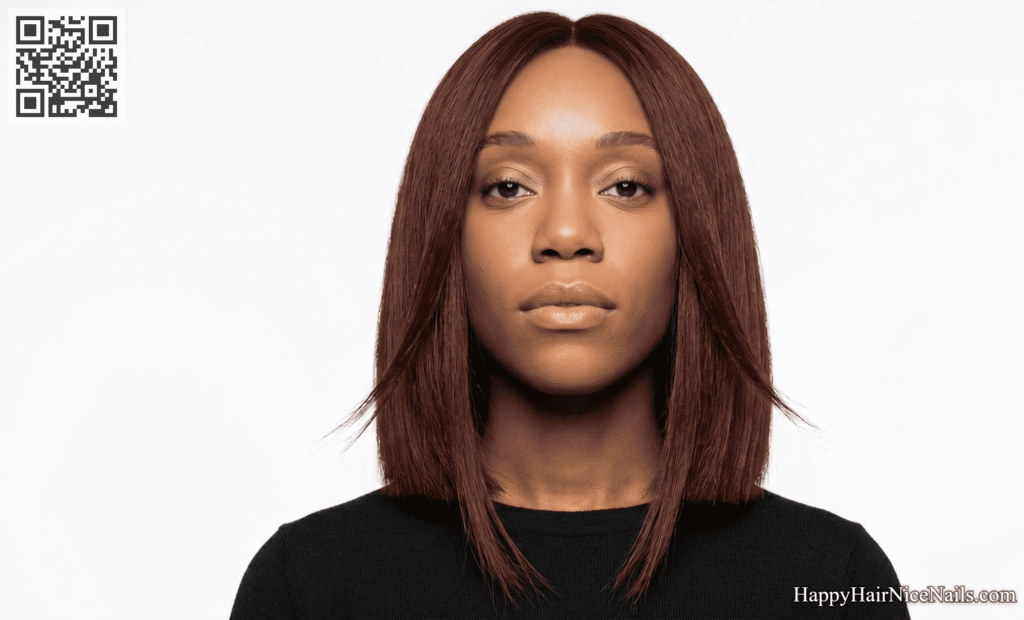
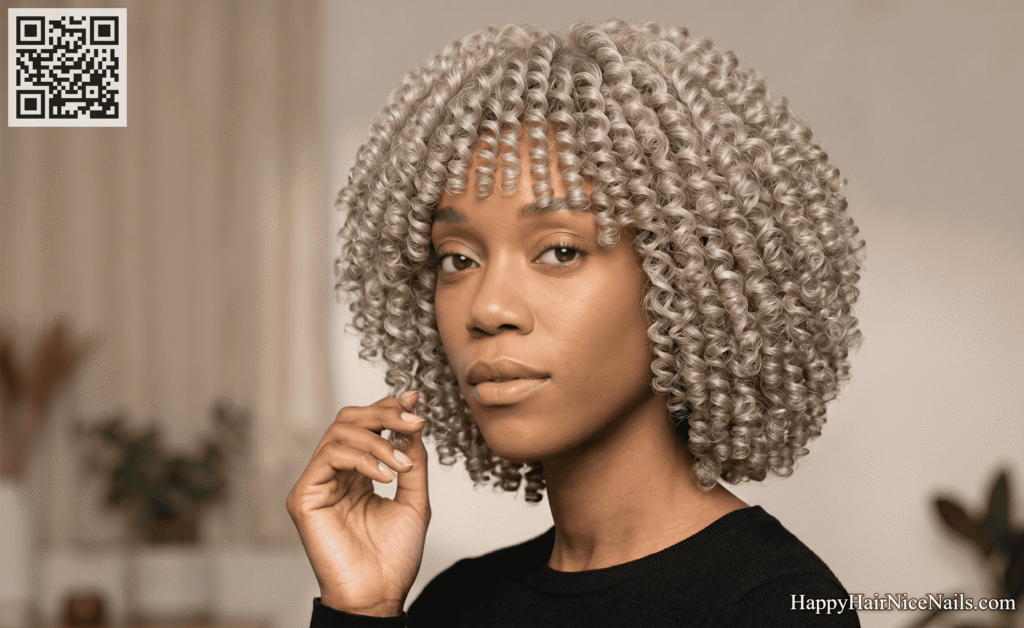
A short bob at the jaw where the hair has been set in spiral rods overnight and left to form tight, spring-like coils, then separated and fluffed the next morning. The coils don’t maintain ringlet precision — they spread slightly into a dense, textured mass that holds the bob shape. This is a rare styling technique on a bob, typically associated with longer styles, and creates a uniquely retro-modern look. Works best on fine-to-medium hair that holds a curl well but struggles to maintain volume without help.
Best for: Fine-to-medium hair that holds curl
Face shape: Heart, oval
Styling technique: Overnight spiral rods, separated and fluffed post-removal
Why it stands out: The rod-set method on a bob-length creates a density and spring that modern wand curls cannot replicate — the coils have a structured, almost vintage quality that looks editorial without feeling costume-like.
Ideal for: Fine-haired individuals who want serious volume and texture without relying on daily heat tools.
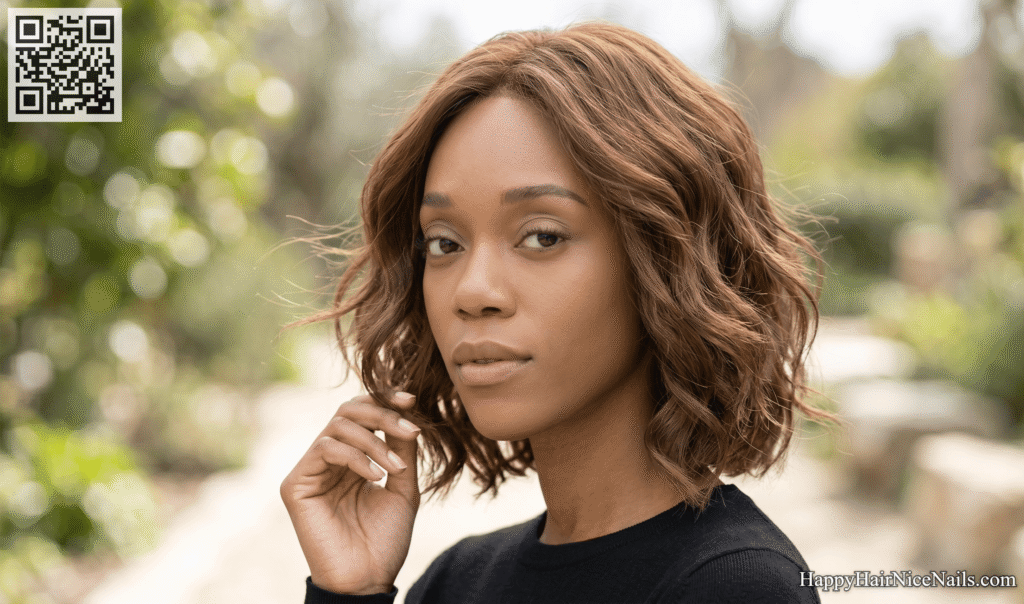
A mid-length bob with layers cut in an overlapping brick pattern rather than in straight horizontal sections. The result is a bob where the layers don’t have a visible “step” — each layer offsets from the one above it, creating seamless transitions and a more organic movement. The hair looks layered but not dissected into tiers. Best on medium-to-thick wavy hair where the wave pattern itself adds further randomness that aligns with the offset layering.
Best for: Medium to thick, wavy hair
Face shape: Oblong, oval
Styling technique: Diffused halfway, then scrunch with a curl cream to define waves
Why it stands out: Most layered bobs create horizontal weight lines. The brick-cut pattern eliminates those lines completely, making the interior texture feel like it grew that way rather than being engineered by scissors.
Ideal for: Those with wavy hair who want layers that look natural and unforced.
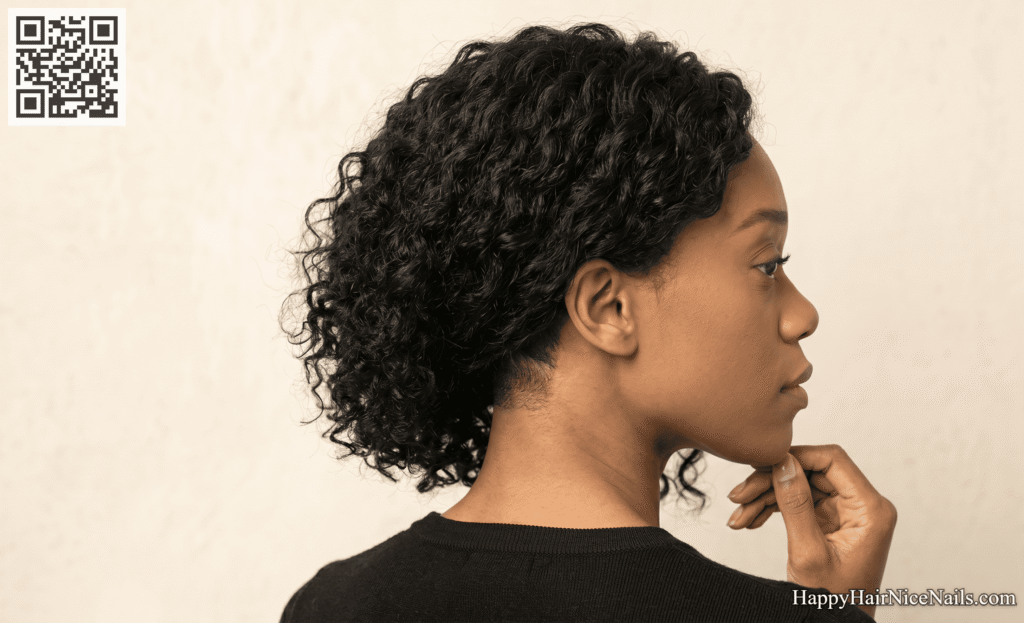
A chin-length bob with a hidden undercut at the nape — the hair above the occipital bone is full-length, but the bottom inch or two of the nape section is clipper-cut close to the skin. The textured bob hairstyle above sits over the undercut naturally when the hair is down, revealing the contrast only when the hair is pulled up or the back is exposed. The bob itself is lightly point-cut throughout for movement. Particularly bold on curly or coily hair where the undercut’s contrast with the natural texture above it is most dramatic.
Best for: Curly to coily hair, medium to high density
Face shape: Square, heart
Styling technique: Diffused with a lightweight mousse, undercut edges cleaned with a trimmer
Why it stands out: The undercut element turns a textured bob into a style with two personalities — traditional when worn down, sculptural when worn up or viewed from behind.
Ideal for: Bold-style enthusiasts who want a wearable everyday look with a hidden edge detail.
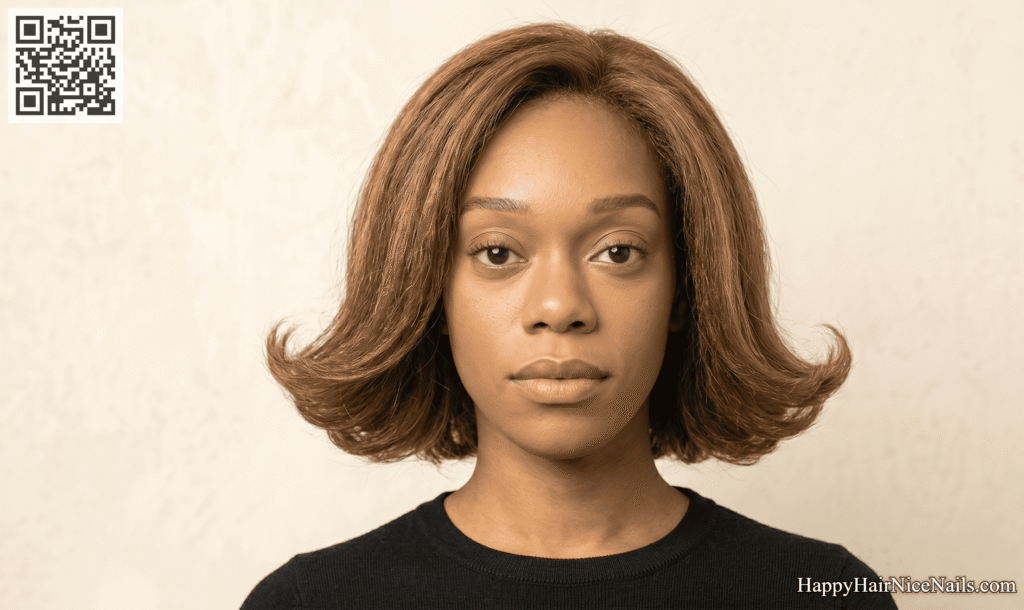
A shoulder-skimming bob where the ends are intentionally styled to flip outward all the way around the perimeter — not inward in a classic pageboy curl, but outward in a straight-out or slightly upward flip. The cut is one-length with light point-cutting at the ends to allow the flip to form without the weight dragging it down. Gives the bob a playful, retro-modern personality. Works best on hair with a slight natural bend that helps the ends cooperate with the flip direction without extreme heat.
Best for: Slightly bent, medium-density hair
Face shape: Round, oval
Styling technique: Round brush blowout, directing ends outward; finished with a light-hold spray
Why it stands out: The outward flip reverses the classic inward-curl bob completely, changing the silhouette from one that closes around the face to one that opens away from it — a different spatial relationship between the hair and the face.
Ideal for: Those who loved the ’60s flip aesthetic and want a modern, wearable take on it.
A jaw-length textured bob hairstyle where the front sections are styled into distinct, separated pieces using a strong-hold paste. Each piece sticks together in a small clump, creating defined, almost spiked-but-soft sections along the front perimeter. The back of the bob is diffused softly for contrast. The piecey front technique works best on fine-to-medium straight hair where the paste holds individual pieces without creating an oily, flat look.
Best for: Fine-to-medium, straight hair
Face shape: Oval, heart
Styling technique: Diffuse back section; apply paste to front sections, separate with fingers
Why it stands out: The piecey texture at the front is almost graphic — it creates a deliberate, editorial fringe-line that regular layers cannot achieve, and the contrast with the soft diffused back gives the cut a dual texture personality.
Ideal for: Fine-haired individuals who want texture without volume and a look that photographs well up close.
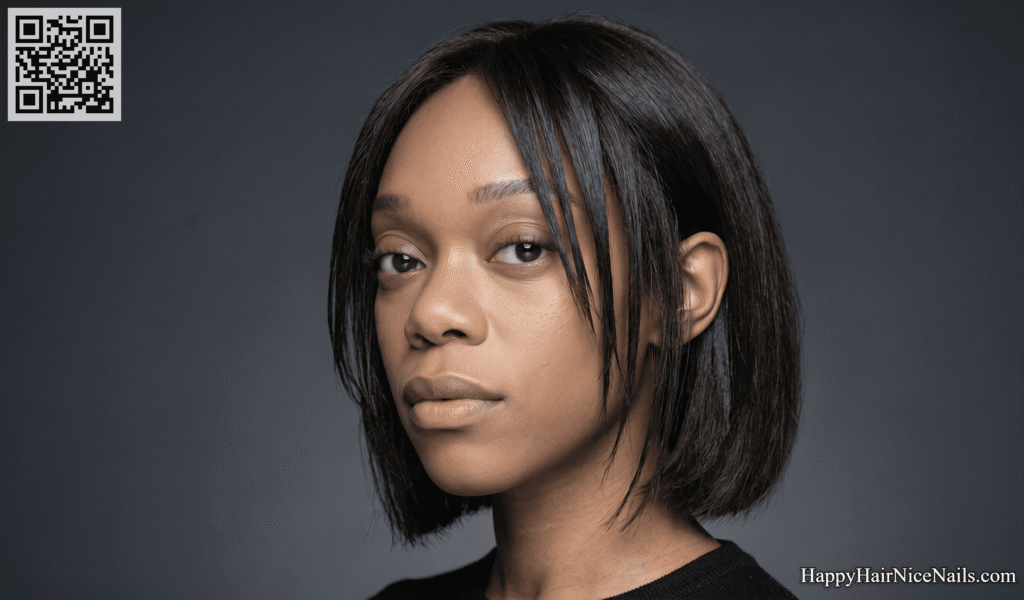
A medium bob at the collarbone where a smudged root — a shadow root color technique — adds visual depth that enhances the appearance of texture even before any styling begins. The dark root bleeding into a lighter mid-length and end creates the illusion of dimension across the bob. The cut itself is lightly razored at the ends for added softness. A visual texture technique rather than a purely structural one, this style blurs the line between color and cut.
Best for: Medium-density, straight to wavy hair
Face shape: Oblong, oval, square
Styling technique: Air-dried with a curl-enhancing serum for a glassy, smudged finish
Why it stands out: The texture here comes as much from the color dimension as from the cut — the smudged root makes the hair look more layered and textured than it actually is, which is a fundamentally different approach from every other entry on this list.
Ideal for: Color-lovers who want low-maintenance regrowth and a textured look that starts at the root.
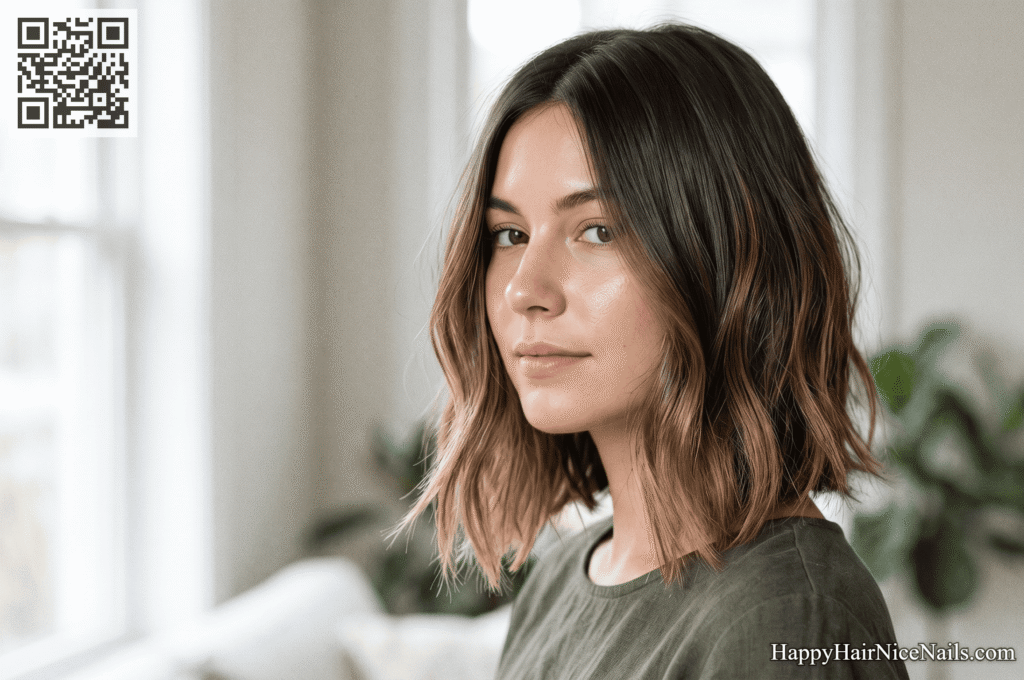
A bob that sits at the mid-neck where the nape section is cut longer than the sides and front, creating a low, soft point or wispy tail at the back center. The sides and front are layered lightly, but all the textured interest lives in the nape — where the hair tapers into a few soft, stray strands that extend past the main bob length. Works exceptionally well on hair with fine ends or natural taper, where the wispy nape reads as a styling choice rather than damage.
Best for: Fine-tipped, medium-density hair; natural taper at the ends
Face shape: Oval, oblong
Styling technique: Blowout with a flat brush, leave nape section air-dried for organic softness
Why it stands out: The back is the focal point, not the front — this textured bob hairstyle inverts the usual frame-the-face logic and puts its most interesting design element where most cuts try to clean things up.
Ideal for: Those who want something unusual that’s still work-appropriate from the front.
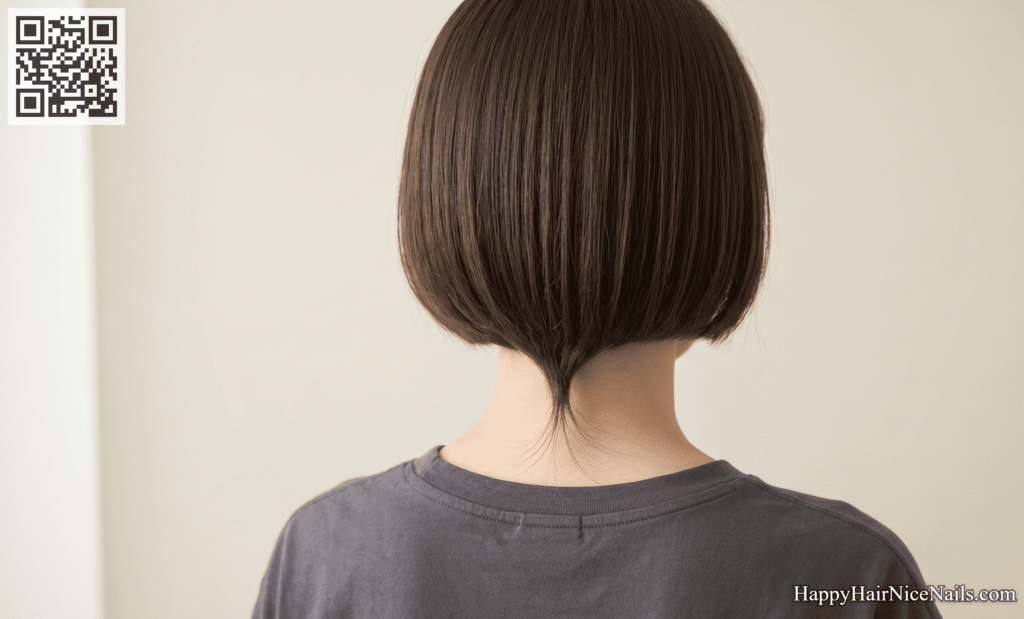
A short bob at the jaw designed specifically for coarse, wiry hair where a razor is used throughout the entire cut — not just at the ends — to remove bulk and create elasticity in each strand. The razor cuts coarse hair into thinner, more pliable sections that move and swing rather than sticking outward. The result looks more like a refined, structured bob than a coarse-hair cut typically achieves. Finished without product to show the haircut’s clean silhouette.
Best for: Coarse, wiry, straight to slightly wavy hair
Face shape: Square, round
Styling technique: Blow-dried on medium heat with a round brush; no product on dry hair
Why it stands out: This is a hair-type-specific solution first and an aesthetic choice second — the razor technique is entirely in service of making coarse hair behave in a way that scissors alone cannot achieve at bob length.
Ideal for: Those with very coarse, heavy hair who have struggled to find a short cut that doesn’t puff or splay outward.
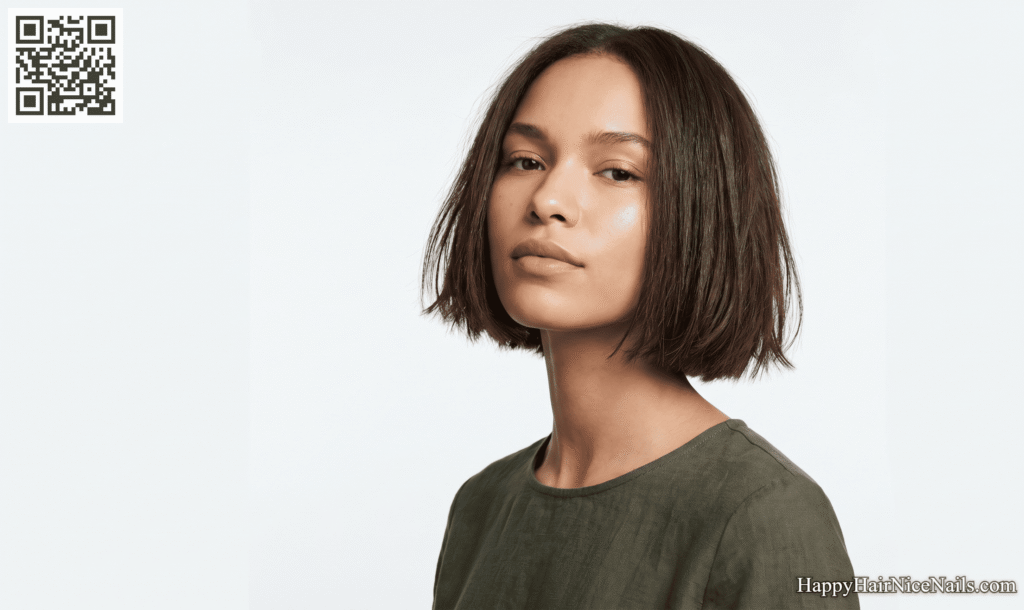
A longer bob sitting just past the collarbone — technically on the lob end of the bob spectrum — where all the volume is engineered internally through layers that sit inside the mid-shaft rather than at the surface. The outer silhouette looks sleek and one-length from a distance, but the interior layers lift the hair off the head and create a rounded, full shape. Finished with a diffuser on wavy hair, the invisible internal volume becomes organic-looking fullness.
Best for: Wavy, medium-density hair
Face shape: Heart, oval
Styling technique: Diffuse with a hair diffuser attachment; scrunch gently at the roots mid-dry
Why it stands out: The internal volume architecture is hidden beneath a sleek-looking exterior — this textured bob hairstyle rewards close observation because the fullness only becomes apparent when the light hits the interior wave from a specific angle.
Ideal for: Wavy-haired individuals who want body without pouf, and those who often feel their hair looks flat despite having natural texture.

A bob where the top center section runs from the forehead to the crown in a strip of noticeably more volume and lift than the sides, creating a subtle Mohawk ridge effect within the bob silhouette. The sides are smoothed down flat, and all the texture and height lives along this central strip. The cut achieves this through layers concentrated only at the top center and left flat on the sides. A surprisingly wearable style that reads as edgy up close but professional from a distance.
Best for: Medium-density, straight to wavy hair
Face shape: Oblong, oval
Styling technique: Blow-dry sides flat with a paddle brush; diffuse or volumize only the center strip
Why it stands out: The textured zone is architecturally specific — this is not a uniform textured bob but one where the texture has a direction, a path, and a deliberate contrast with the flat sides. The structural logic is borrowed from an entirely different hairstyle category.
Ideal for: Those who want something visually unique that still fits a chin-length bob silhouette.
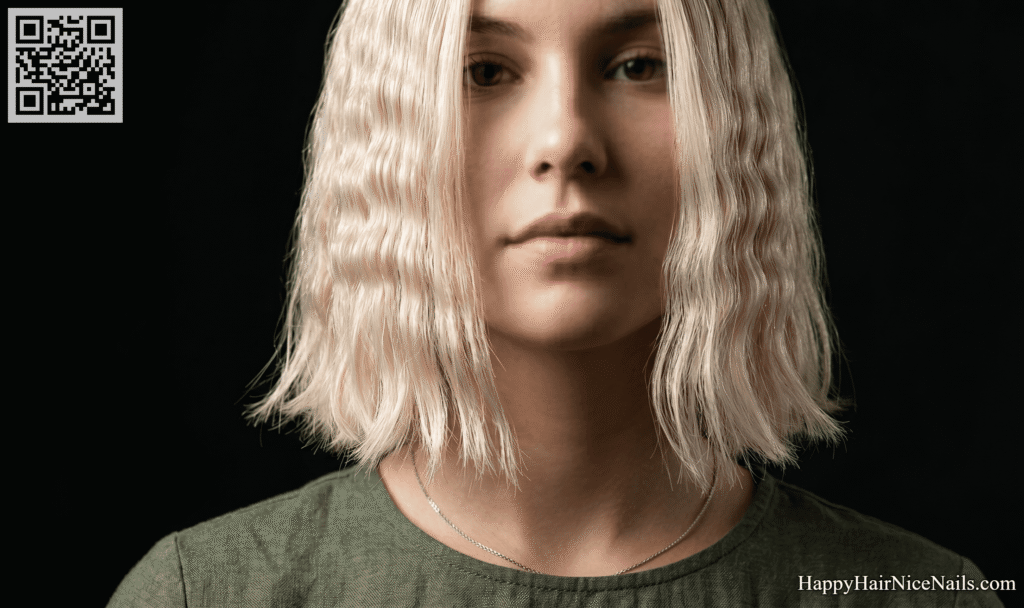
A bob where the hair is set in very small, tight flat waves using a narrow waving iron — smaller than traditional finger waves but with more definition than a simple crimped finish. The waves run horizontally across the bob from root to mid-shaft, then soften out into slightly looser movement at the ends. The overall texture is graphic and almost Art Deco in feel. Works best on fine-to-medium straight hair where the wave pattern holds its shape without expanding into frizz.
Best for: Fine-to-medium, straight hair
Face shape: Round, heart
Styling technique: Narrow waving iron from root to mid-shaft; light-hold spray throughout
Why it stands out: The micro-wave pattern is a technically unusual choice for a modern bob — it borrows from formal vintage styling but applies it in a way that feels current rather than costume, particularly when the waves dissolve into softer ends.
Ideal for: Style enthusiasts who want a graphic, high-fashion finish that stands apart from typical textured cuts.
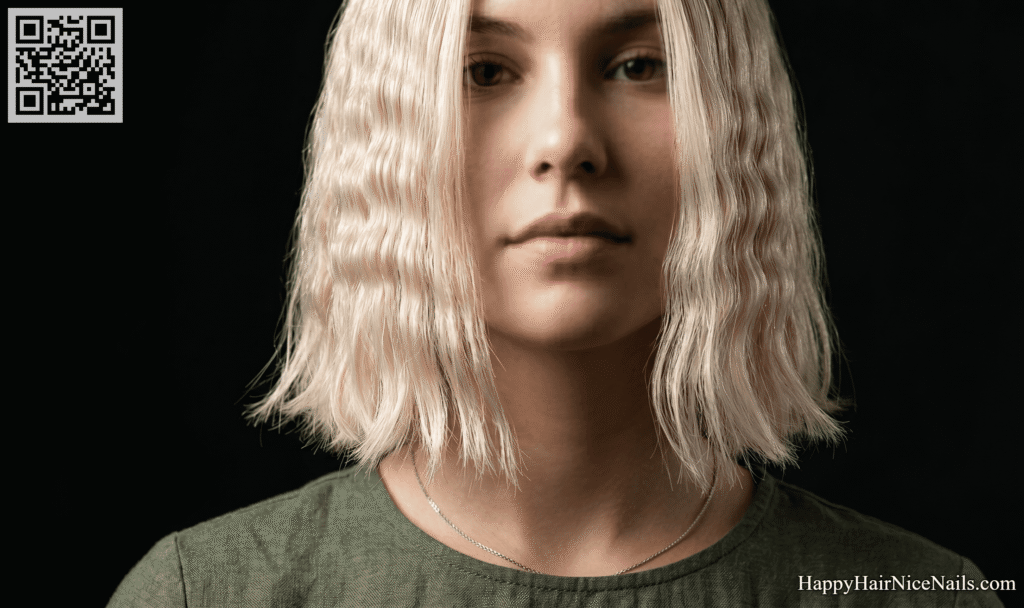
A bob in the “growing out” phase — sitting between the chin and shoulder — where the previously blunt ends have naturally softened into a lightly textured perimeter over weeks of growth. Rather than trimming this phase away, this style leans into it: the grown-out ends are point-cut just enough to remove splits but keep the soft, imprecise finish, and the rest of the cut is left fully intact. The look is intentionally in-between — not quite a bob, not yet a lob — and styled with a sea salt spray to make the imprecision look deliberate.
Best for: All hair types; especially medium-density, straight to wavy hair
Face shape: Oval, oblong, square
Styling technique: Sea salt spray, scrunch, and air-dry for a lived-in finish
Why it stands out: Most hairstyle entries celebrate a cut at its peak. This one celebrates the transition — the moment a bob is growing out is usually treated as a problem, but here it is reframed as the entire aesthetic intention, which is both honest and genuinely useful.
Ideal for: Those between cuts, anyone embracing a low-maintenance style, and people who want a natural, undone look that doesn’t require precision upkeep.

These 21 textured bob hairstyles cover a range of hair types, face shapes, and styling philosophies — from the structurally invisible to the visually graphic, from the coily-hair specific to the fine-hair solution. Each one represents a genuinely different way to think about texture at bob length. . For those already committed to a textured approach, the sister articles on layered bob hairstyles, italian bob hairstyles, and french bob hairstyles each dig deeper into their respective cut methods.